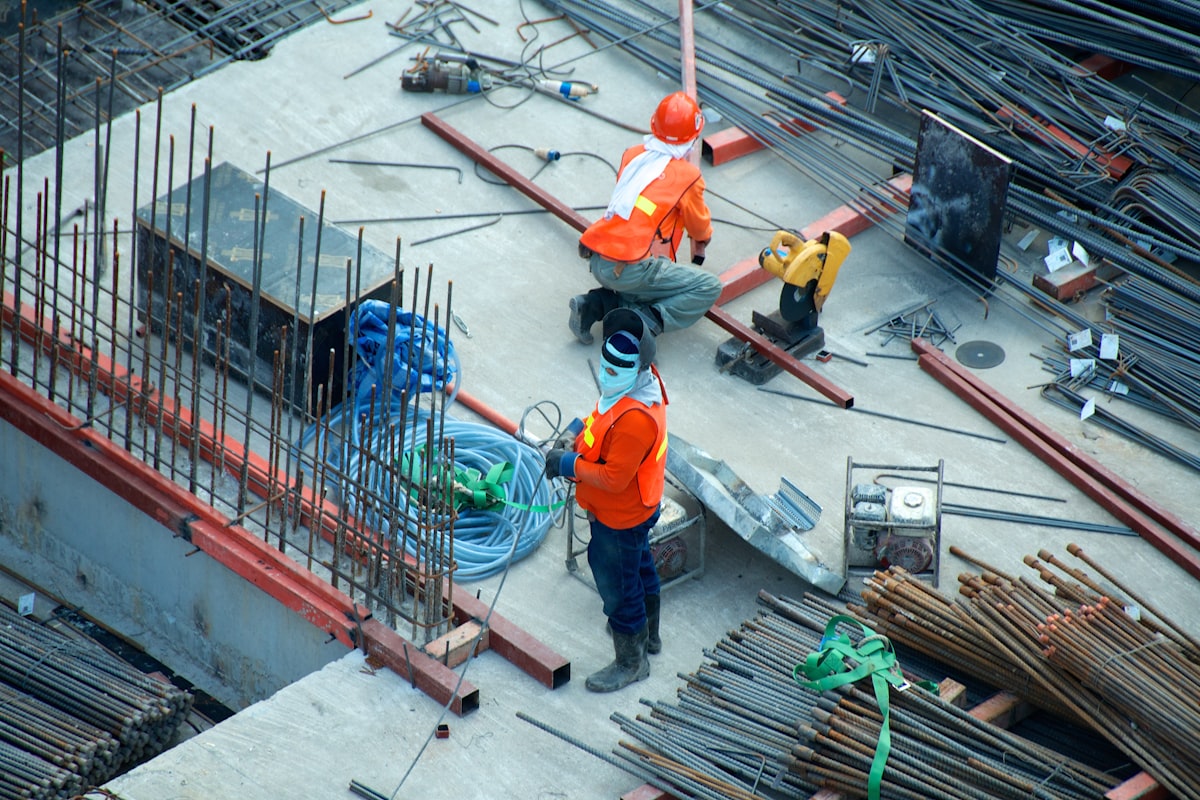
Your painter drops a tin of oil-based paint onto your new hardwood floors. Your electrician’s apprentice puts a boot through the ceiling while running cable in the roof space. Your landscaper reverses a bobcat into your neighbour’s fence. These things happen on Australian worksites every day. The question is: who pays?
If your tradie carries public liability insurance, their insurer covers the damage. If they do not, you could be left paying for repairs out of your own pocket, or worse, defending a claim from an injured third party. With over 178,000 licensed tradespeople listed on TradieVerify, the overwhelming majority carry insurance. But “most” is not “all”, and checking before work starts takes five minutes.
This guide explains what public liability insurance is, how much cover a tradie should carry, how you verify it, and what happens when things go wrong without it.
What Is Public Liability Insurance?
Public liability insurance protects against financial loss from claims involving property damage or personal injury caused by a tradesperson’s work. If a plumber floods your kitchen, an electrician starts a fire, or a visitor trips over materials left on your path, the tradie’s public liability policy covers the cost of repairs, medical expenses, and legal fees.
What it covers:
- Damage to your property caused during the work
- Injury to you, your family, or visitors (third parties) during or because of the work
- Damage to neighbouring properties (a common scenario with fencing, excavation, and tree work)
- Legal defence costs if a claim goes to court
- Compensation payable if the tradie is found liable
What it does not cover:
- Defective workmanship itself (that falls under contractual warranties and consumer law)
- Damage to the tradie’s own tools or equipment (that is tool insurance)
- The tradie’s own injuries (that is workers’ compensation or personal accident cover)
- Deliberate damage or criminal acts
- Work performed outside the scope of the policy
Public liability insurance is different from home warranty insurance, which protects you if a builder becomes insolvent or dies before completing or rectifying major residential work. Both are relevant when hiring tradies, but they cover different risks.
How Much Coverage Should a Tradie Carry?
Coverage levels in Australia follow a rough industry standard:
| Coverage Level | Typical Use | When You Should Expect It |
|---|---|---|
| $5 million | Minimum for most trades | Small domestic jobs, sole traders doing low-risk work |
| $10 million | Industry standard | Most residential projects, the level recommended by trade associations |
| $20 million | Commercial and high-risk work | Large renovations, multi-storey work, jobs near public areas, government contracts |
$10 million is the benchmark. The Housing Industry Association (HIA), Master Builders Australia, and most state regulators recommend $10 million as the standard minimum for residential building and trade work. If your tradie quotes $5 million, that is acceptable for smaller jobs. If they quote less than $5 million, ask why.
For high-risk trades like roofing, demolition, and tree lopping, $20 million is common because the potential for third-party injury or large-scale property damage is higher. If a roofer drops materials onto a parked car, or a demolition contractor sends debris into a neighbouring property, claim values escalate quickly.
The cost to the tradie is modest. Annual premiums for $10 million public liability typically run between $400 and $1,500 depending on the trade, turnover, and claims history. For a $20 million policy, expect $800 to $3,000. Any tradie who says insurance is “too expensive” is telling you something about their business.
Is Public Liability Insurance Compulsory for Tradies?
This is where it gets complicated. There is no single federal law requiring all Australian tradies to hold public liability insurance. Requirements vary by state, trade, and the type of licence held.
Trades Where Insurance Is Commonly Required for Licensing
| Trade | States Where Insurance Is Required for Licensing | Notes |
|---|---|---|
| Electricians | QLD, VIC, TAS, SA, WA, NSW | Electrical contractor licences in most states require proof of public liability insurance |
| Plumbers | VIC, QLD, SA | Some plumbing contractor licences require insurance as a condition of licensing |
| Builders | QLD, VIC, NSW, WA, SA, TAS, ACT | QBCC requires minimum $5M for contractor licences; other states have similar requirements |
| Gas fitters | QLD, VIC, SA | Contractor licences typically require insurance |
| Roofers | QLD, NSW, VIC | High-risk classification often triggers insurance requirements |
| Demolition contractors | All states | Universally required due to high-risk classification |
The Practical Reality
Even where public liability insurance is not a strict licensing requirement, most tradies carry it because:
- Site access rules require it. Most builders and head contractors require subcontractors to show a certificate of currency before stepping on site.
- Industry associations require it. HIA, Master Builders, and trade-specific associations typically mandate insurance as a membership condition.
- Clients require it. Homeowners, body corporates, and strata managers increasingly ask for proof of insurance before approving work.
- Banks require it. If your renovation involves a construction loan, your bank will often require all contractors to hold public liability insurance.
The bottom line: a professional tradie in Australia will have public liability insurance regardless of whether their specific licence demands it. If someone tells you they do not need it, treat that as a red flag.
Typical Insurance Requirements by Trade
Different trades carry different risk profiles, which affects both the type of insurance they need and the coverage levels you should expect.
| Trade | Recommended Minimum PL Cover | Other Insurance to Check | Key Risks |
|---|---|---|---|
| Builder | $20 million | Home warranty, contract works, workers’ comp | Structural damage, site injuries, defects |
| Electrician | $10 million | Professional indemnity (some states) | Fire, electrocution, property damage |
| Plumber | $10 million | Workers’ comp | Water damage, flooding, contamination |
| Roofer | $20 million | Workers’ comp, height cover | Falls, material drops, storm damage during work |
| Gas fitter | $10 million | Workers’ comp | Explosion, CO poisoning, fire |
| Painter | $5–10 million | Workers’ comp | Property damage, falls from ladders |
| Concreter | $10 million | Workers’ comp | Vehicle damage, site damage, trip hazards |
| Landscaper | $10 million | Workers’ comp | Excavation damage, underground services, tree falls |
| Tiler | $5–10 million | Workers’ comp | Water damage from poor waterproofing |
| Demolition | $20 million | Workers’ comp, contract works | Structural collapse, neighbouring property damage, asbestos |
| Pest control | $5–10 million | Professional indemnity | Chemical damage, health effects, contamination |
| Glazier | $10 million | Workers’ comp | Glass injury, property damage |
These are guidelines, not hard rules. The right level depends on the size and risk of your specific project. A painter doing a single bedroom needs less cover than one repainting an entire three-storey apartment building.
How to Check a Tradie’s Public Liability Insurance
Verifying insurance is straightforward. Do it before work starts, not after something goes wrong.
Step 1: Ask for a Certificate of Currency
A certificate of currency (CoC) is a one-page document issued by the insurer confirming the policy is active. It shows:
- The policyholder’s name and ABN
- The type of insurance (public liability)
- The coverage amount
- The policy start and expiry dates
- The insurer’s name and contact details
Any insured tradie can produce a CoC within minutes. Most insurers let policyholders download them directly from an online portal. If a tradie says they need “a few days” to get one, that is a warning sign.
Step 2: Check the Details
Once you have the certificate, verify:
- The name matches. The business name on the certificate should match the entity quoting you. If “John Smith Plumbing Pty Ltd” is quoting but the certificate is in the name of “John Smith” as a sole trader, the coverage may not extend to the company’s work.
- The policy is current. Check the expiry date. Policies that expired last month do not count.
- The coverage amount is adequate. For most residential work, $10 million is the benchmark. For larger or higher-risk projects, look for $20 million.
- The trade is covered. Some policies exclude certain types of work. A general tradesperson policy might not cover demolition or asbestos removal.
Step 3: Call the Insurer (for Large Jobs)
For major renovations or builds over $50,000, consider calling the insurer’s number on the certificate to confirm the policy is genuine and current. Certificate fraud is rare but not unheard of. A two-minute phone call gives you peace of mind on a large financial commitment.
Step 4: Keep a Copy
Save the certificate with your contract and quotes. If something goes wrong during the project, you will need to reference it when making a claim.
For a broader pre-hire checklist, see our guide on 10 questions to ask before hiring any tradie.
What Happens If Your Tradie Has No Insurance?
Hiring an uninsured tradie exposes you to real financial risk. Here is what can go wrong.
Property Damage to Your Home
If an uninsured tradie damages your property, your only recourse is to pursue them personally for the cost of repairs. That means small claims court or a state tribunal. If the tradie is a sole trader with few assets, you may win the case but never recover the money.
Your own home insurance may cover some accidental damage, but many policies exclude damage caused by tradespeople or contractors working on your property. Check your home and contents policy before assuming you are covered.
Injury to Third Parties
If a tradie’s work injures someone, say a visitor trips over materials or a neighbour is hit by debris, the injured person can sue the tradie. If the tradie has no insurance and no assets, the injured party may also pursue you as the property owner who engaged the contractor. Property occupier liability is a real risk under Australian common law.
Your Home Insurance Claim Gets Denied
Many home insurance policies contain clauses that reduce or deny claims where the homeowner has not taken reasonable steps to engage qualified, insured tradespeople. If your kitchen catches fire because of faulty electrical work done by someone without insurance (or a licence), your insurer has grounds to dispute the claim.
No Access to Dispute Resolution
Some state regulators will only investigate complaints against insured, licensed tradespeople. If you hire someone without insurance and they do poor work, you may find the regulator cannot help you. See our guide on what happens if you hire an unlicensed tradie for the full picture.
Workers’ Compensation Exposure
If an uninsured tradie (or their worker) is injured on your property and they do not have workers’ compensation cover, you could face a common law claim for damages. This is separate from public liability. In some states, the property owner can be treated as a “deemed employer” if the relationship looks more like employment than a genuine contractor arrangement.
Public Liability Insurance vs Other Insurance Types
Homeowners often confuse different insurance types. Here is how they compare.
| Insurance Type | What It Covers | Who Needs It | Homeowner Action |
|---|---|---|---|
| Public liability | Third-party injury and property damage | All tradies | Ask for certificate of currency |
| Home warranty | Builder insolvency, death, disappearance | Builders (above state thresholds) | Check it exists before signing contract |
| Workers’ compensation | Tradie/employee injuries on the job | Any tradie with employees | Ask if they have employees; if yes, request proof |
| Professional indemnity | Errors in professional advice or design | Designers, engineers, some building practitioners | Required in VIC, QLD, WA, NT; NSW from July 2026 |
| Contract works | Damage to the work in progress | Builders on larger projects | Confirm who insures the works in your contract |
For residential projects, the two you should always check are public liability and workers’ compensation (if the tradie has employees). For builds over your state’s home warranty threshold, add home warranty insurance to the list.
Red Flags That a Tradie May Be Uninsured
Watch for these warning signs:
- They refuse to show a certificate of currency. No legitimate reason exists for withholding this document.
- They offer a steep discount for cash payment. Cash jobs often signal a tradie operating outside normal business structures, including insurance.
- They have no ABN or cannot provide one. No ABN usually means no insurance, no GST registration, and no accountability.
- They are not listed on any state register. Use TradieVerify’s search to check their licence status. An unlicensed tradie is almost certainly uninsured for the work they are doing.
- Their quote is significantly cheaper than competitors. Insurance is a business cost. Tradies who skip it can undercut on price, but you absorb the risk.
- They want to start immediately with no paperwork. Professional tradies who carry insurance are accustomed to providing documentation. Those who rush past the paperwork stage often have something to hide.
For more on spotting problems before they cost you money, see our guide on how to read and compare trade quotes.
State-by-State: Where to Report Insurance Issues
If you discover a tradie has been working without required insurance, or has provided a fraudulent certificate, report it to the relevant state regulator:
| State | Regulator | Website |
|---|---|---|
| QLD | Queensland Building and Construction Commission (QBCC) | qbcc.qld.gov.au |
| NSW | NSW Fair Trading | fairtrading.nsw.gov.au |
| VIC | Victorian Building Authority (VBA) | vba.vic.gov.au |
| WA | Department of Energy, Mines, Industry Regulation and Safety (DEMIRS) | demirs.wa.gov.au |
| SA | Consumer and Business Services (CBS) | cbs.sa.gov.au |
| ACT | Access Canberra | accesscanberra.act.gov.au |
| TAS | Consumer, Building and Occupational Services (CBOS) | cbos.tas.gov.au |
| NT | NT Building Advisory Services | nt.gov.au |
You can also verify a tradie’s licence status on TradieVerify before hiring. A current licence is a strong indicator (though not a guarantee) that insurance is in place, since many licensing schemes require it.
Frequently Asked Questions
Is public liability insurance compulsory for all tradies in Australia?
No. There is no single federal law requiring it. However, many state licensing schemes require it as a condition of holding a contractor licence, particularly for electricians, builders, and plumbers. Even where it is not legally required, industry practice means the vast majority of professional tradies carry it. If a tradie tells you they do not have public liability insurance, consider hiring someone who does.
How much public liability cover should my tradie have?
For most residential work, $10 million is the industry standard recommended by the HIA and Master Builders Australia. For higher-risk jobs like roofing, demolition, or large renovations, $20 million is appropriate. The minimum acceptable level for any job is $5 million.
Can I make a claim on my tradie’s public liability insurance?
You do not make the claim directly. If the tradie’s work causes damage or injury, you notify the tradie and they lodge a claim with their insurer. The insurer then assesses the claim and pays compensation. If the tradie refuses to lodge a claim, you can contact their insurer directly using the details on the certificate of currency, or pursue the matter through your state’s tribunal (NCAT in NSW, VCAT in VIC, QCAT in QLD).
What is a certificate of currency and how do I get one?
A certificate of currency is a document from the insurer confirming a tradie’s insurance policy is active. It shows the policyholder name, coverage amount, policy dates, and insurer details. Ask your tradie for it before work starts. Any insured tradie can produce one in minutes from their insurer’s online portal. It costs the tradie nothing to provide.
Does my home insurance cover damage caused by a tradie?
It depends on your policy. Some home and contents policies cover accidental damage by contractors, but many exclude or limit claims where the damage results from trade work. If the tradie was unlicensed or uninsured, your insurer has stronger grounds to deny the claim. Always check your own policy wording and always verify your tradie’s insurance before work begins.
What is the difference between public liability and home warranty insurance?
Public liability insurance covers damage to property and injury to people caused during the work. Home warranty insurance covers you if the builder dies, disappears, or becomes insolvent before completing or fixing the work. They protect against different risks. For building projects above your state’s threshold (typically $12,000 to $20,000), you need both.
Key Takeaways
- Public liability insurance protects you from financial loss if a tradie damages your property or their work injures someone.
- The industry standard is $10 million cover for residential work. For high-risk trades or large projects, expect $20 million.
- Always ask for a certificate of currency before work starts. Any professional tradie can provide one in minutes.
- Check that the business name, coverage amount, and policy dates on the certificate match what you expect.
- Hiring an uninsured tradie puts you at risk: property damage costs, injury claims, and denied home insurance claims are all possible outcomes.
- Many state licensing schemes require public liability insurance. A current licence on TradieVerify is a good starting indicator.
- If in doubt, search for licensed tradespeople in your area on TradieVerify and check their credentials before hiring.
Sources
- Housing Industry Association (HIA) — Insurance requirements for members and recommended coverage levels — hia.com.au
- Master Builders Australia — Insurance and risk management guidance for residential building — masterbuilders.com.au
- Queensland Building and Construction Commission (QBCC) — Minimum financial requirements including insurance for contractor licences — qbcc.qld.gov.au
- Victorian Building Authority (VBA) — Registered building practitioner insurance requirements — vba.vic.gov.au
- NSW Fair Trading — Home building licence conditions and insurance obligations — fairtrading.nsw.gov.au
- Energy Safe Victoria (ESV) — Electrical contractor licence requirements including insurance — esv.vic.gov.au
- Australian Securities and Investments Commission (ASIC) — Certificate of currency and insurance verification guidance — asic.gov.au
- Insurance Council of Australia — Public liability insurance explained for consumers — insurancecouncil.com.au