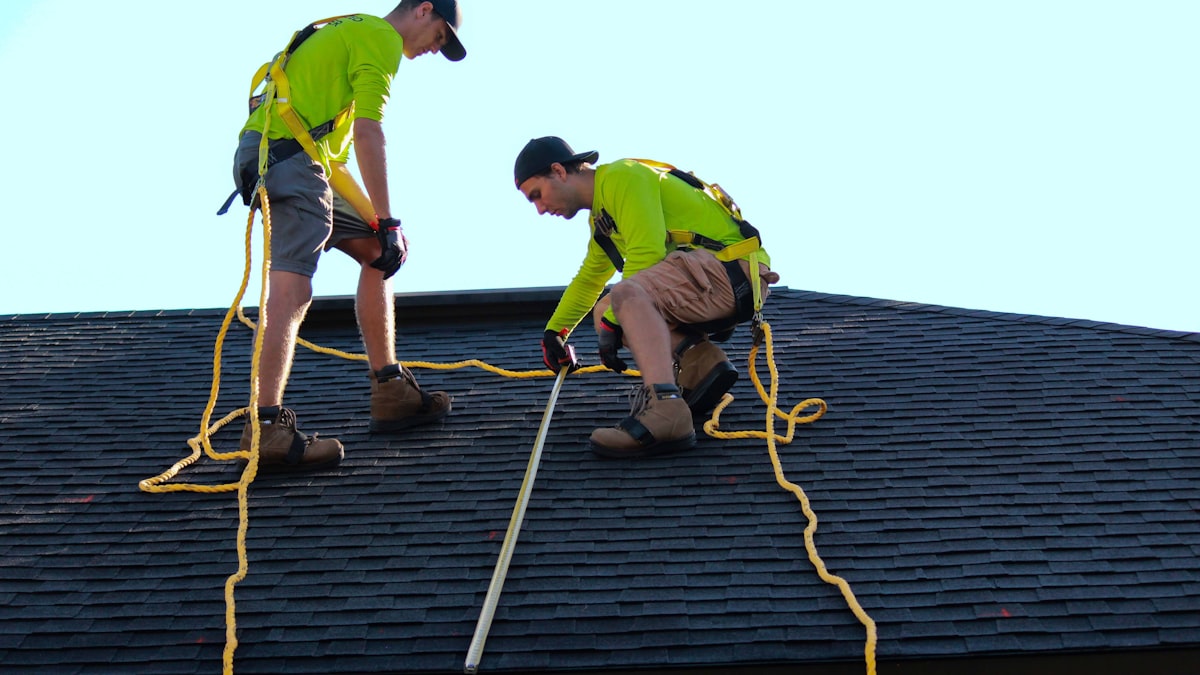
You have signed up for solar. The quotes are in, the installer is booked, and you are picturing a lower electricity bill by summer. But between signing the contract and watching panels go onto your roof, there are a dozen things that can delay or complicate the job if you are not ready. A cracked roof tile, an outdated switchboard, an insurer who was not told about the upgrade — any of these can add weeks and unexpected costs to what should be a straightforward installation.
This checklist covers everything Australian homeowners need to do before solar panels are installed. Work through it in the weeks leading up to your installation date and you will avoid the problems that catch most people off guard. If you have not yet chosen an installer, start with our guide on how to hire a licensed solar installer in Australia first.
1. Check Your Roof Condition
Solar panels last 25 years or more. Your roof needs to last at least as long, because removing panels to fix roofing problems later is expensive and voids some panel warranties.
What to inspect:
- Tiles. Walk the perimeter and look for cracked, slipped, or missing tiles. If you can see daylight through the roof space, there is a problem.
- Metal roofing. Check for rust, particularly around screw penetrations and joins. Surface rust can be treated, but structural corrosion means the sheet needs replacing.
- Flashing and gutters. Look at the flashing around vents, skylights, and chimneys. Damaged flashing leaks, and a panel array over the top makes the leak harder to find and fix.
- Structural integrity. A standard 6.6 kW system with 15 panels adds roughly 315 kg to your roof. Most Australian roof structures handle this without issues, but if your home is pre-1970 or has been modified, get a structural check.
If your roof is more than 15 years old and approaching the end of its lifespan, re-roof before the panels go on. Coordinating both jobs at the same time often saves money because the roofer is already on site and the solar installer mounts to fresh material. See our roof replacement cost guide for typical pricing.
Asbestos roofs. If your home was built before 1990, the roof sheeting may contain asbestos. Accredited solar installers cannot mount panels to asbestos roofing. Your options are professional asbestos removal and re-roofing (typically $15,000 to $30,000 for a standard home), or a ground-mounted solar system that bypasses the roof entirely. A licensed asbestos assessor can confirm whether your roof contains asbestos. See our asbestos guide for more detail.
2. Assess Shading and Manage Trees
Even partial shade on a solar panel can reduce its output by 20 to 25 per cent. A single shaded cell affects the entire string of panels on some inverter configurations.
What to do before installation:
- Map the shade. Stand in your yard at 9am, noon, and 3pm on a sunny day and note what casts shadows on the roof where panels will go. Trees, neighbouring buildings, chimneys, antennas, and satellite dishes are the usual culprits.
- Trim overhanging branches. If trees on your property shade the roof, arrange trimming before the installation date. Council regulations on tree trimming vary, so check whether your tree is protected before cutting.
- Neighbour’s trees. If shade comes from a neighbour’s property, you cannot trim their trees without permission. Talk to them early. Some councils have mediation processes for vegetation disputes.
- Plan for growth. A sapling that clears the roofline today may shade your panels in three years. Factor in future growth when choosing panel placement with your installer.
Your installer will do a detailed shading analysis during the site assessment, but addressing obvious shading issues beforehand avoids redesign surprises on the day.
3. Review Your Electrical System
Your home’s electrical system needs to support the solar inverter and export power safely to the grid. Older homes frequently need upgrades.
Switchboard. Open your switchboard and check:
- Circuit breakers with RCDs (safety switches). Modern switchboards have RCDs that trip when they detect a fault. If your switchboard still has ceramic fuses or rewirable fuse wire, it must be upgraded before solar can be connected. Cost: $1,500 to $3,000 for a full switchboard upgrade.
- Asbestos. Switchboards in homes built before 1985 may have asbestos backing boards. Your electrician must replace these before any new circuits are added.
- Spare capacity. The solar inverter needs its own dedicated circuit breaker. If your switchboard is full, additional circuit capacity may be needed.
Wiring. Homes with very old wiring (cloth-insulated or lead-sheathed cable) may need partial rewiring to meet current AS/NZS 3000 standards. Your installer should flag this during the site inspection, but raising it early avoids delays. See our electrical rewiring cost guide for typical pricing.
Meter. You need a digital smart meter (Type 4 or Type 4A) to receive feed-in tariff credits for exported solar power. If you still have an old accumulation or analogue meter, your electricity retailer will arrange a smart meter installation. Some retailers provide this at no charge; others charge around $300. Ask your retailer about the timeline, as meter installations can take one to four weeks to schedule.
4. Understand Your Energy Usage and Size the System Right
Oversizing wastes money upfront. Undersizing means you are still paying high electricity bills. Take 15 minutes to review your energy usage before confirming your system size.
How to review your usage:
- Pull up your last 12 months of electricity bills. Note your average daily usage in kWh. Most bills show this figure.
- Check your peak usage season. Homes with ducted air conditioning use significantly more in summer. Homes with electric heating spike in winter.
- Consider future changes. Are you planning to add an electric vehicle, a pool pump, or a home battery in the next few years? Size for where you are heading, not just where you are now.
System sizing guide:
| System Size | Daily Output (approx.) | Suited For |
|---|---|---|
| 3 kW | ~12 kWh | Small home or unit, 1-2 people, low usage |
| 5 kW | ~20 kWh | Average family, moderate usage |
| 6.6 kW | ~26 kWh | Larger family, higher usage, the most common size installed in Australia |
| 10 kW | ~40 kWh | High usage, EV charging, home business |
| 13.3 kW | ~53 kWh | Large home, battery storage, multiple EVs |
The national average system size has climbed to around 9 kW, but 6.6 kW remains the sweet spot for most households because it maximises Small-scale Technology Certificate (STC) rebate value on a single-phase connection [1].
If you have a three-phase power supply, you can install larger systems without export restrictions. Ask your installer what your connection supports.
5. Know Your Rebates and Financial Incentives
Federal and state incentives reduce the upfront cost of solar in Australia. Claiming them correctly can save you thousands.
Federal: Small-scale Technology Certificates (STCs)
Every eligible solar installation generates STCs based on the system size, your location, and how many years remain until 2030 (when the scheme ends). Your installer typically handles the STC paperwork and applies the discount to your invoice at the point of sale.
For a 6.6 kW system installed in Sydney in 2026, the STC rebate is approximately $1,800 to $1,900. The rebate reduces each year as the 2030 end date approaches, so there is no financial advantage in waiting [2].
Federal: Cheaper Home Batteries Program
From 1 July 2025, eligible households can claim a rebate on home battery installations. The rebate is $336 per kWh of battery capacity before May 2026, dropping to $272 per kWh from May to December 2026. If you are considering a battery alongside solar, the timing works in your favour [3].
State-by-state incentives:
| State | Program | Benefit |
|---|---|---|
| VIC | Solar Homes rebate | Up to $1,400 off solar PV + optional interest-free loan |
| ACT | Sustainable Household Scheme | Zero-interest loan up to $15,000 for solar and battery |
| SA | City of Adelaide solar rebate | 20% rebate, up to $1,000 for systems under 10 kW |
| QLD | Supercharged Solar for Renters | Up to $3,500 for landlords installing solar on rental properties |
| NT | Super Feed-in Tariff | 18.66 c/kWh for export between 3pm and 9pm (from July 2025) |
| NSW | No state solar rebate | Federal STCs and battery program are the main incentives |
| TAS | No state solar rebate | Federal STCs apply |
| WA | No state solar rebate | Federal STCs apply |
Eligibility conditions vary. The Victorian rebate requires owner-occupancy, a household income under $210,000, and a property value under $3 million. Check each program’s website for current conditions before committing [4].
6. Choose a Qualified, Accredited Installer
Since February 2024, installer accreditation in Australia has been managed by Solar Accreditation Australia (SAA), which took over from the Clean Energy Council. To generate STCs and access state rebates, your system must be installed by an SAA-accredited installer using products on the CEC Approved Products list [5].
Before you sign:
- Verify accreditation. Check your installer’s status at the SAA accreditation status checker (saaustralia.com.au). An accredited installer will hold GCPV (Grid-Connected Photovoltaic) certification at minimum.
- Get three written quotes. Compare system size, panel brand, inverter type, warranty terms, and total installed price. Quotes should be itemised, not lump sum.
- Check reviews and licence status. Search for solar installers on TradieVerify to verify their licence and see where they operate.
- Ask about warranty. Panels typically carry a 25-year performance warranty. Inverters carry 5 to 12 years (string inverters) or 25 years (microinverters). Your installer should provide a workmanship warranty of at least 5 years.
- Confirm the products. Ask for the specific panel and inverter model numbers. Verify they appear on the CEC Approved Products list. From 1 April 2025, all modules must meet IEC 61215:2021 standards to be eligible for STCs [6].
7. Handle Permits, Approvals, and Grid Connection
Most residential solar installations in Australia do not need council planning approval, but there are exceptions.
Council approval may be required if:
- Your property is heritage listed or in a heritage conservation area
- You live in a strata-titled property (apartment, townhouse, or unit complex) — you need body corporate or owners’ corporation approval
- The panels will be visible from the street in some heritage-sensitive council areas
- Your system exceeds local size thresholds (rare for residential)
Grid connection. Your installer submits a connection application to your local Distribution Network Service Provider (DNSP) on your behalf. This is the company that owns the poles and wires, not your electricity retailer.
Key DNSPs by state:
| State | DNSP(s) |
|---|---|
| QLD | Energex (SE QLD), Ergon Energy (regional) |
| NSW | Ausgrid, Endeavour Energy, Essential Energy |
| VIC | CitiPower, Powercor, Jemena, AusNet, United Energy |
| SA | SA Power Networks |
| WA | Western Power, Horizon Power |
| TAS | TasNetworks |
| ACT | EvoEnergy |
| NT | Power and Water Corporation |
DNSP approval can take two to eight weeks depending on the network and whether your area has export restrictions. Your installer handles this, but be aware it is often the longest part of the timeline. Some DNSPs restrict how much solar power you can export to the grid based on local network conditions. If your system is export-limited, a battery becomes more valuable because it stores power you would otherwise lose [7].
8. Update Your Home Insurance
This is the step most homeowners forget. If solar panels are damaged by a storm, fire, or fallen tree, your home insurance covers the repair or replacement. But only if you have told your insurer the panels are there.
What to do:
- Call your insurer before installation day and let them know you are adding solar panels.
- Increase your sum insured to cover the replacement cost of the system. A 6.6 kW system installed for $6,000 should be added to your building sum insured.
- Ask about premium changes. Adding solar typically increases your building insurance premium by $50 to $150 per year.
- Confirm coverage for accidental damage. Most policies cover storm, fire, and impact damage to solar panels. Wear and tear, possum damage, and manufacturing defects are generally excluded.
Failing to notify your insurer does not automatically void your coverage, but it can complicate claims. If the insurer finds you underinsured at claim time, they may reduce your payout proportionally [8].
9. Prepare for Installation Day
The physical installation of a standard 6.6 kW residential system takes one to two days. Here is what to do the day before and on the morning of the installation.
The day before:
- Clear the driveway and path to the house. The installation crew will arrive in a van or truck with panels, racking, inverter, and tools. They need close vehicle access to the house.
- Clear access to the roof. If panels are going on a rear section of roof, make sure the side gate is open and the path is clear. Remove trampolines, outdoor furniture, or anything blocking ladder placement.
- Secure pets. Dogs and cats should be kept indoors or in a separate area. An open gate and strangers carrying equipment is a recipe for an escape.
- Clear the inverter location. The inverter is usually mounted on a garage wall or the side of the house near the switchboard. Clear at least one metre of space around the planned location.
- Check your internet connection. Most modern solar systems include monitoring that connects to your home WiFi. Make sure your router is working and note the WiFi password for the installer.
On installation day:
- Be home or ensure another adult is available. The installer may need to ask questions about cable routing, inverter placement, or access.
- Power will be off briefly. The installer will switch off the mains to connect the inverter to the switchboard. This usually takes 30 to 60 minutes. Unplug sensitive electronics (computers, NAS drives) beforehand.
- Expect noise. Drilling into roof rafters and running conduit is loud. If you work from home, plan around it.
- Ceiling dust. If cable runs go through the roof space, expect some dust in rooms below. Cover computers and bookshelves with a drop sheet.
10. After Installation: Grid Connection and Activation
The panels are on the roof, but your system is not fully operational until the grid connection is activated and your meter is set up for export.
Typical post-installation timeline:
| Step | Timeframe |
|---|---|
| Installer submits connection paperwork to DNSP | Same day or next business day |
| DNSP processes and approves connection | 5-20 business days |
| Smart meter installed (if needed) | 1-4 weeks (arranged by retailer) |
| Feed-in tariff activated by retailer | 1-5 business days after meter install |
What to check:
- Certificate of Compliance for Electrical Work (CCEW). Your installer must provide this document. It confirms the electrical work meets Australian standards. Keep it with your other home documents.
- STC assignment paperwork. If your installer applied the STC discount upfront, you will have signed an STC assignment form. Keep a copy.
- Monitoring app. Most systems come with a monitoring app (e.g., SolarEdge, Fronius, Enphase). Set it up on your phone and check that it is recording data from day one.
- Meter reads. Once your smart meter is active, your retailer will switch your billing to reflect solar export. Check your next bill to confirm the feed-in tariff is being applied.
In the meantime. Between installation and meter activation, your system will generate power for your home but you will not receive feed-in credits for any excess exported. Minimise waste by running heavy appliances (dishwasher, washing machine, pool pump) during daylight hours.
Your Complete Pre-Installation Checklist
Print this list and work through it in the weeks before your installation date.
4-8 weeks before:
- Inspect roof condition and arrange repairs if needed
- Trim trees and address shading issues
- Get switchboard assessed (upgrade if ceramic fuses or asbestos)
- Review energy bills and confirm system size with installer
- Apply for state rebates (VIC, ACT, SA) if eligible
- Verify installer’s SAA accreditation
- Check strata/heritage approval requirements
- Notify home insurer and increase sum insured
1 week before:
- Confirm installation date with installer
- Ask retailer about smart meter timeline
- Clear driveway, side access, and roof ladder points
- Clear space at inverter mounting location
- Note your WiFi network name and password
Day before:
- Secure pets in a separate area
- Cover furniture and electronics below roof work area
- Unplug sensitive electronics
- Ensure an adult will be home during installation
After installation:
- Receive and file CCEW certificate
- Set up monitoring app
- Confirm feed-in tariff activation with retailer
- Check first bill for correct solar credits
Frequently Asked Questions
How long does a solar panel installation take?
The physical installation takes one to two days for a standard residential system up to 10 kW. The full process from signing the contract to having an active, grid-connected system takes four to ten weeks, with most of that time consumed by DNSP approval and smart meter scheduling.
Do I need to be home during the installation?
It is best to have an adult home for at least part of the day. The installation crew may need to access the switchboard inside the house, ask about cable routing preferences, or confirm the inverter location. If you cannot be home all day, arrange to be available for the first hour and reachable by phone afterward.
Will solar panels damage my roof?
A properly installed system should not damage your roof. Panels are mounted on racking that is bolted through the roofing material into the rafters, with waterproof flashings or feet at each penetration point. Damage occurs when installers cut corners on flashing or drill into the wrong location. Choosing an SAA-accredited installer reduces this risk.
What happens if my roof needs repairs after panels are installed?
The panels and racking must be removed, the repairs done, and the panels reinstalled. This typically costs $1,000 to $3,000 depending on the number of panels and the extent of the roof work. It is one of the main reasons to get your roof right before the panels go on.
Can I install solar panels on a flat roof?
Yes. Tilt frames are used to angle the panels for optimal sun exposure on flat or low-pitch roofs. Tilt frames add $200 to $500 to the installation cost and require additional wind load engineering in some areas. Your installer will specify the correct tilt angle for your latitude.
Do solar panels work on cloudy days?
Yes, but at reduced output. Panels produce 10 to 25 per cent of their rated capacity on overcast days. Australia’s high average solar irradiance means that even southern states like Victoria and Tasmania generate enough annual output to make solar financially worthwhile.
Key Takeaways
- Inspect your roof before installation. Panels last 25 years and removing them for roof repairs later is expensive.
- Budget $1,500 to $3,000 for a switchboard upgrade if your home has ceramic fuses or pre-1985 wiring.
- Federal STC rebates reduce a 6.6 kW system by roughly $1,800 to $1,900. State rebates in VIC, ACT, SA, and QLD can add further savings.
- Notify your home insurer and increase your sum insured before installation. Forgetting this step can complicate claims.
- The full timeline from contract to grid activation is four to ten weeks. The physical installation is just one to two days.
- Verify your installer’s SAA accreditation and get three written quotes before committing.
- Search for licensed solar installers on TradieVerify to compare options in your area.
Sources
- Clean Energy Regulator. “Small-scale Renewable Energy Scheme — Rooftop Solar.” cer.gov.au. Accessed March 2026.
- Australian Government. “Solar — Size Your Solar System.” energy.gov.au. Accessed March 2026.
- Department of Climate Change, Energy, the Environment and Water. “Cheaper Home Batteries Program.” dcceew.gov.au. Accessed March 2026.
- Solar Victoria. “Solar Panel Rebate.” solar.vic.gov.au. Accessed March 2026.
- Solar Accreditation Australia. “About Accreditation.” saaustralia.com.au. Accessed March 2026.
- Clean Energy Council. “PV Module Standards Change.” cleanenergycouncil.org.au. Accessed March 2026.
- Australian Government. “Solar — Get Connected.” energy.gov.au. Accessed March 2026.
- CHOICE. “Are Solar Panels Covered by Home Insurance?” choice.com.au. Accessed March 2026.