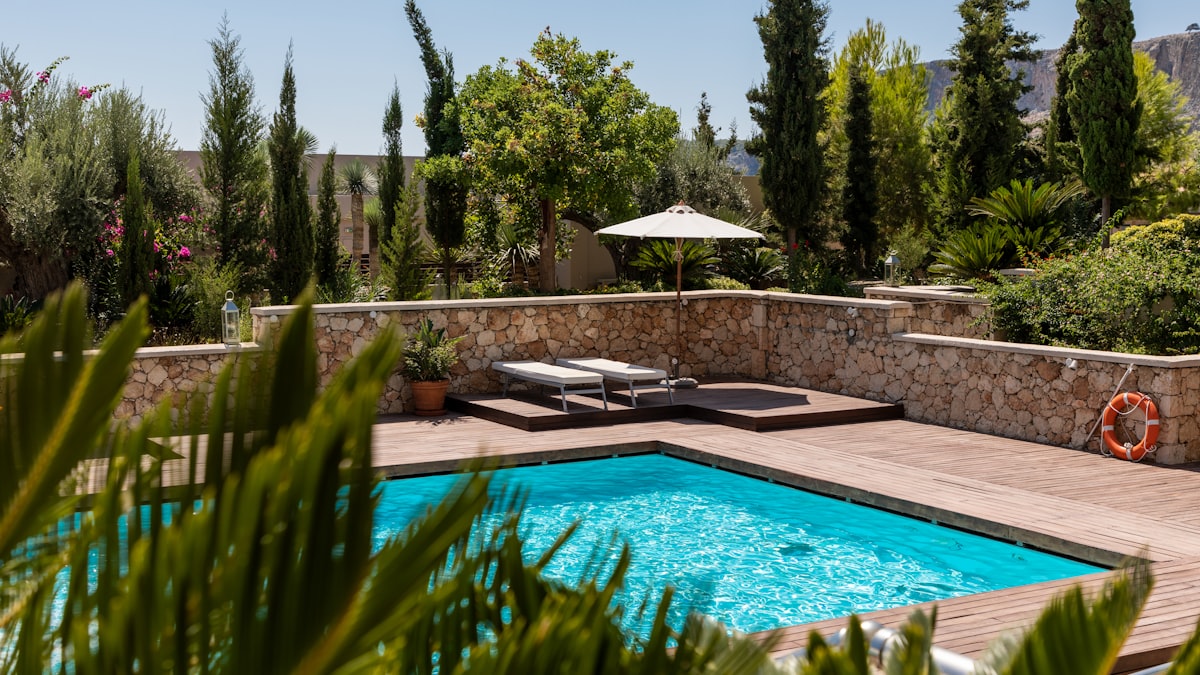
A backyard pool is about as Australian as it gets. More than two million households across the country have one, and for plenty of families, it is the single biggest investment they will make after the house itself. An inground pool typically runs between $60,000 and $80,000 once you add fencing, landscaping, and filtration. At those numbers, who builds it matters just as much as what gets built.
TradieVerify tracks 1,118+ licensed swimming pool builders across Australia, all verified against state licensing registers. You can browse them on the swimming pool builder trade directory. This guide covers how to hire a licensed pool builder in Australia, from checking credentials and understanding pool types to getting quotes, dealing with council, and knowing your rights under the building contract.
Why You Must Hire a Licensed Pool Builder
In Queensland, any building work valued above $3,300 must be carried out by a holder of a QBCC licence. In New South Wales, the threshold is $5,000 through NSW Fair Trading. Since even the most modest plunge pool installation exceeds those amounts, pool construction always requires a licensed builder.
It is the law. Each state and territory regulates building work through its own licensing authority. Pool builders who operate without the correct licence face fines that can exceed $50,000 in some jurisdictions. As a homeowner, you also risk losing your consumer protections if you knowingly engage an unlicensed operator.
Structural and safety risks are real. A poorly constructed pool shell can crack, shift, or leak within years. Shotcrete that is mixed or applied incorrectly will deteriorate. Waterproofing failures lead to ground erosion and structural damage to nearby retaining walls and even your home’s footings. Licensed pool builders hold formal qualifications in pool construction methodology and are accountable to their state regulator.
Pool barrier compliance saves lives. All pools in Australia must be fenced to Australian Standard AS 1926.1. A licensed pool builder understands barrier requirements and builds to code from day one. Non-compliant pool fencing is a leading cause of toddler drowning.
Insurance protects your money. Licensed builders carry public liability insurance. For residential work above certain thresholds, they must also hold home warranty insurance (also called builders warranty insurance), which protects you if the builder dies, disappears, or becomes insolvent before completing the work. The Australian Consumer Law also gives you statutory warranties on the finished pool.
Before signing anything, search for your pool builder on TradieVerify to confirm their licence is current.
1. Understand the Different Types of Pools
Not all pools are built the same way, and different construction methods require different skill sets. Knowing the basics helps you ask the right questions when you meet pool builders.
Fibreglass pools are the most popular choice in Australia. A prefabricated fibreglass shell is manufactured off-site, delivered by truck, and craned into a pre-dug hole. Installation is faster than concrete, typically four to six weeks from excavation to swim. Fibreglass pools suit standard shapes and sizes. They cost between $25,000 and $50,000 installed, depending on size.
Concrete (shotcrete or gunite) pools are fully custom. The pool is formed on-site using sprayed concrete over a steel reinforcement cage. This allows any shape, depth, or feature you can imagine, including infinity edges, swim-up bars, and beach entries. Concrete pools take longer to build (three to six months) and cost more, typically $50,000 to $100,000+. They also require resurfacing every 10 to 15 years.
Vinyl liner pools use a flexible vinyl sheet fitted over a steel, timber, or polymer wall frame. They are less common in Australia than fibreglass or concrete but can be the most affordable option for larger pools. Expect to pay $20,000 to $35,000, with the liner needing replacement every 7 to 12 years.
Plunge pools are compact pools (usually under 20 square metres) designed for cooling off rather than lap swimming. They can be fibreglass or concrete and range from $8,000 for a basic above-ground fibreglass plunge pool to $50,000 for a fully landscaped inground design. Plunge pools suit small backyards and are growing fast in popularity across urban Australia.
Above-ground pools are the budget option and usually do not require a licensed pool builder for installation. However, they still need compliant pool fencing and may need council approval depending on your local rules.
2. Check Their Pool Builder Licence
Verifying a pool builder’s licence before you sign a contract is the single most effective way to protect yourself. It takes two minutes.
Ask for the licence number. Any legitimate licensed pool builder will provide this without hesitation. If they dodge the question, move on.
Search on TradieVerify. Head to TradieVerify’s licence search and enter the builder’s name or licence number. You can also browse licensed pool builders by state on the swimming pool builder directory.
Check the state register directly. In Queensland, verify through the QBCC online licence search at my.qbcc.qld.gov.au. In NSW, use the Fair Trading licence check at verify.licence.nsw.gov.au.
What to look for on their licence:
- Licence class — In QLD, pool builders need the specific “Swimming Pool Construction, Installation and Maintenance” scope on their QBCC licence. In NSW, they need a swimming pool building endorsement on their Fair Trading contractor licence.
- Current status — Confirm the licence has not expired, been suspended, or been cancelled.
- Insurance status — Check that their home warranty insurance is active.
- Conditions or restrictions — Some licences carry limits on the value or type of work allowed.
Both QLD and NSW require the CPC40808 Certificate IV in Swimming Pool and Spa Building (or its replacement qualification) as the minimum trade qualification for pool builder licensing.
3. Verify Insurance and Warranties
Pool construction is high-value work, and the right insurance protects both you and the builder when things go sideways.
Public liability insurance covers damage to your property or injuries to third parties during construction. Most licensed pool builders carry $10 million to $20 million in public liability cover. Ask for a copy of the certificate of currency before work begins.
Home warranty insurance (or builders warranty insurance) is mandatory in most states for residential building work above certain values. In Queensland, it is required for work above $3,300. In New South Wales, it is required above $20,000. This insurance covers you for up to six years if the builder cannot complete the work or fix defects due to death, disappearance, or insolvency.
Structural warranty is typically provided by the builder as part of the contract. For concrete pools, expect a structural warranty of at least 10 years on the shell. For fibreglass pools, the manufacturer usually provides a 25-year structural warranty on the shell, plus the builder should warrant their installation work separately.
Product warranties cover equipment like pumps, filters, chlorinators, and heating systems. These are usually manufacturer warranties of one to three years and should be listed in your contract.
Get all warranty details in writing before you sign. Verbal promises mean nothing when a crack appears three years later.
4. Get Multiple Detailed Quotes
Get at least three written quotes from licensed pool builders before making a decision. Pool construction involves multiple trades and components, and the cheapest quote is often cheap because something has been left out.
A proper pool quote should itemise:
- Excavation and soil removal
- Pool shell or structure (including size, shape, and material)
- Plumbing and hydraulic work (filtration, pipework, water features)
- Electrical work (pump, lighting, chlorinator, heating)
- Filtration and sanitisation equipment
- Pool fencing (type and linear metres)
- Coping and surround paving
- Landscaping and reinstatement
- Council application fees and inspection costs
- Engineering and soil testing
- Crane hire (for fibreglass shell delivery)
Watch for “excluded” items. Some builders quote the pool shell only and exclude fencing, electrical, landscaping, council fees, and rock removal. A $35,000 quote can easily blow out to $60,000 once you add the exclusions. Always compare quotes on a like-for-like basis.
Ask about rock and groundwater. If the excavation hits rock or a high water table, the cost can jump significantly. Good builders will discuss this upfront and include a provisional allowance or explain the variation process.
5. Check Council and Compliance Requirements
Almost every inground pool in Australia requires some form of council approval before construction begins. Your pool builder should handle this process, but you need to understand what is involved.
Development approval or building permit. Most councils require a development application (DA) or complying development certificate (CDC) for a new pool. In some areas, smaller pools that meet certain setback and size requirements can be approved as exempt development, but this varies by council. Check with your local council early.
Pool safety barriers. Every pool in Australia must be surrounded by a compliant barrier that meets Australian Standard AS 1926.1. The barrier must be at least 1.2 metres high, have a self-closing and self-latching gate, maintain a non-climbable zone of 900mm on the outside, and have no gaps that allow a child to crawl through. Your pool builder should install compliant fencing as part of the project. For fencing costs, see our guide on how much does a fence cost in Australia.
Pool registration. Most states require you to register your swimming pool with the local council or a state register after construction. In NSW, all pools must be registered on the NSW Swimming Pools Register. In QLD, pools must be registered with the local council.
Inspections. Expect multiple inspections during construction (excavation, steel reinforcement, plumbing, barrier) and a final inspection before the pool can be filled and used. Your builder should coordinate these.
CPR signage. A CPR resuscitation chart must be displayed in the pool area. This is a legal requirement in every state.
6. Review the Building Contract Carefully
A swimming pool is a major building project, and the contract should reflect that. In most states, a written contract is legally required for building work above $3,300 to $5,000 depending on the state.
Progress payment schedule. The contract should break the total price into progress payments tied to specific stages of construction. A typical schedule for a pool might be: deposit (5-10%), excavation complete (15-20%), shell installed or shotcrete applied (25-30%), plumbing and equipment (15-20%), fencing and surrounds (15-20%), and final completion (5-10%). Be wary of builders who want large upfront payments before any work is done.
Variations clause. The contract should explain how variations (changes to scope or unexpected costs like hitting rock) are handled. Any variation should require your written approval and a clear breakdown of the additional cost before the extra work proceeds.
Start and completion dates. The contract must include a start date and an expected completion date or a reasonable timeframe. Delays happen, but there should be a process for extensions and communication.
Defects liability period. This is the period after completion during which the builder must return to fix any defects at no extra cost. For pools, this is typically 6 to 12 months.
Cooling-off period. In most states, residential building contracts have a cooling-off period (usually 5 business days) during which you can withdraw without penalty.
Dispute resolution. The contract should outline how disputes are resolved, whether through negotiation, mediation, or the relevant state building tribunal.
How Much Does a Swimming Pool Cost in Australia?
Pool costs vary widely depending on the type, size, site conditions, and your location. Here is a breakdown of typical installed costs across Australia. For a deeper look at pricing, check our guide on how much does a swimming pool cost in Australia.
Pool Cost by Type
| Pool Type | Size Range | Cost Range (Installed) |
|---|---|---|
| Fibreglass | 6m x 3m to 11m x 5m | $25,000-$50,000 |
| Concrete (shotcrete) | Custom | $50,000-$100,000+ |
| Vinyl liner | 6m x 3m to 12m x 6m | $20,000-$35,000 |
| Plunge pool (fibreglass) | 2m x 2m to 4m x 2.5m | $8,000-$25,000 |
| Plunge pool (concrete) | Custom | $20,000-$50,000 |
Additional Costs to Budget For
| Item | Typical Cost |
|---|---|
| Pool fencing (timber) | ~$200 per linear metre |
| Pool fencing (frameless glass) | ~$600 per linear metre |
| Pool heating (solar) | $3,000-$6,000 |
| Pool heating (heat pump) | $4,000-$8,000 |
| Salt chlorinator | $1,000-$2,500 |
| Robotic pool cleaner | $800-$2,000 |
| Landscaping around pool | $5,000-$20,000 |
| Council fees and engineering | $1,500-$5,000 |
| Annual maintenance | $600-$2,000 |
The average Australian inground pool, with all the extras included, lands between $60,000 and $80,000. Budget an additional 10-15% contingency for unexpected costs like rock removal or drainage issues.
State-by-State Pool Builder Licensing Guide
Pool builder licensing requirements differ across Australia. Some states have a specific pool builder licence category, while others cover pool construction under a general building licence. Here is how each state handles it.
| State | Regulator | Specific Pool Builder Licence? | Threshold | Active on TradieVerify |
|---|---|---|---|---|
| QLD | QBCC | Yes — “Swimming Pool Construction, Installation and Maintenance” | $3,300 | 822 |
| NSW | Fair Trading | Yes — Swimming pool building endorsement | $5,000 | 296 |
| VIC | VBA | No — covered under domestic builder (limited) | $16,000 | Coming soon |
| WA | Building Commission WA | No — covered under building contractor licence | $20,000 | Coming soon |
| SA | CBS | No — covered under building work contractors licence | $5,000 | Coming soon |
| TAS | CBOS | No — covered under building practitioner | $20,000 | Coming soon |
| ACT | Access Canberra | No — covered under builder licence | $12,000 | Coming soon |
| NT | NT Building Advisory Services | No — covered under building contractor | $12,000 | Coming soon |
Queensland and NSW are the only states with a dedicated pool builder licence category. In other states, pool construction falls under a general builder’s licence, but the work still requires a licensed builder once it exceeds the state threshold.
TradieVerify currently lists 822 licensed pool builders in Queensland and 296 in New South Wales. You can search all of them by name or licence number on our search page.
7. Questions to Ask Your Pool Builder Before Signing
Before you commit to a pool builder, sit down with them and ask these questions. Their answers will tell you a lot about how the project will run.
- What is your licence number, and can I verify it? If they hesitate, that is a red flag.
- What is the realistic timeline from excavation to swim-ready? Fibreglass pools should be four to six weeks. Concrete pools take three to six months.
- What is included in the quoted price, and what is excluded? Get a written list of inclusions and exclusions.
- How do you handle rock or unexpected ground conditions? Ask about provisional allowances and the variation approval process.
- Who handles the council application and inspections? Most pool builders manage this, but confirm it is in the contract.
- Who does the electrical and fencing work? Some builders subcontract these. Ask for the subcontractors’ licence details.
- What is the drainage plan for the pool area? Poor drainage causes long-term problems with pool surrounds and nearby structures.
- What structural and product warranties do you provide? Get specifics on shell warranty, equipment warranty, and workmanship warranty.
- What is your after-sales process? Ask about the defects period, how you log issues, and what maintenance handover they provide.
- Can you provide references from recent pool builds? A confident builder will have two or three clients happy to share their experience.
Pool Safety and Compliance Checklist
Once your pool is built, ongoing safety and compliance is your responsibility as the pool owner. Here is what you need to stay on the right side of the law and keep your family safe.
- Pool barrier compliance (AS 1926.1): Fence at least 1.2m high, self-closing and self-latching gate, 900mm non-climbable zone, no gaps wider than 100mm
- CPR resuscitation sign: Must be displayed prominently in the pool area at all times
- Pool registration: Register your pool with your local council or state register (mandatory in most states)
- Regular barrier inspections: Some states require periodic compliance inspections (e.g., every 3 years in NSW)
- No climbable objects within 900mm of the fence: Move furniture, pot plants, and equipment away from the barrier
- Gate operation: Check that gates self-close and self-latch from every position at least monthly
- Water quality: Maintain proper chemical balance and filtration to prevent illness
- Drain covers: Ensure all pool drain covers comply with current standards to prevent entrapment
Non-compliance with pool fencing laws can result in fines exceeding $5,000 in most states and presents a serious drowning risk for young children.
Frequently Asked Questions
Do I need a licensed builder to build a pool?
Yes. In every Australian state and territory, swimming pool construction above the relevant monetary threshold requires a licensed builder. In QLD, any pool work above $3,300 needs a QBCC licensed pool builder. In NSW, the threshold is $5,000 through Fair Trading. In other states, pool construction falls under general building licences. Even a small plunge pool typically exceeds these thresholds once excavation, plumbing, and fencing are factored in.
How long does it take to build a swimming pool?
A fibreglass pool typically takes four to six weeks from excavation to completion, assuming no weather delays or complications. Concrete pools take significantly longer, usually three to six months, because the shell needs time to cure and the finish coat requires specific conditions. Council approval can add another two to eight weeks to the front end depending on your local authority.
Do I need council approval for a pool?
Almost always, yes. Most councils require a development application (DA) or complying development certificate for an inground swimming pool. The requirements vary by council, so check before you sign a building contract. Some very small above-ground pools or plunge pools may be exempt in certain areas, but pool fencing approval is still required.
What is the cheapest type of pool to build?
Vinyl liner pools are generally the cheapest to install, starting from around $20,000. However, fibreglass plunge pools can start as low as $8,000 for basic above-ground models. Keep in mind that vinyl liners need replacing every 7 to 12 years at a cost of $3,000 to $6,000, so the long-term ownership cost can be higher. A mid-range fibreglass pool at $30,000 to $40,000 is often the best value over a 20-year period.
How do I check if a pool builder is licensed?
The fastest way is to search on TradieVerify, where we pull licence data directly from state registers. You can also check directly through the QBCC licence search (QLD), the NSW Fair Trading Verify Licence portal, or your relevant state regulator. Always ask for the licence number upfront and verify it matches the person or company you are dealing with.
What happens if my pool builder goes bust mid-project?
This is where home warranty insurance protects you. In most states, licensed builders must hold home warranty insurance for residential work above certain values. This insurance covers you for up to six years if the builder dies, disappears, or becomes insolvent. You can claim to have the pool completed by another licensed builder. Without this insurance, your options are limited to pursuing the builder through the courts or their liquidator, which is a slow and uncertain process.
Summary
Hiring a licensed swimming pool builder in Australia is the single best decision you can make to protect your investment, your family, and your legal rights. Here is what to remember:
- Always verify the pool builder’s licence on TradieVerify or the relevant state register before signing a contract
- Understand the pool type that suits your budget, backyard, and lifestyle
- Get at least three itemised quotes and compare them on a like-for-like basis, including all exclusions
- Confirm insurance and warranties are in place, including public liability and home warranty insurance
- Check council requirements for development approval, pool fencing, and pool registration
- Review the contract for progress payments, variation clauses, completion dates, and dispute resolution
- Ask the right questions about timeline, inclusions, drainage, subcontractors, and aftercare
Browse 1,118+ verified pool builders on TradieVerify’s swimming pool builder directory and start comparing licensed professionals near you.
Sources
- Queensland Building and Construction Commission (QBCC) — Licence Search
- NSW Fair Trading — Home Building Licensing
- Australian Standard AS 1926.1 — Swimming Pool Safety — Safety Barriers for Swimming Pools
- Swimming Pool & Spa Association of Australia (SPASA)
- NSW Swimming Pools Register
- Australian Consumer Law — Statutory Warranties on Building Work
- QBCC Home Warranty Insurance Scheme