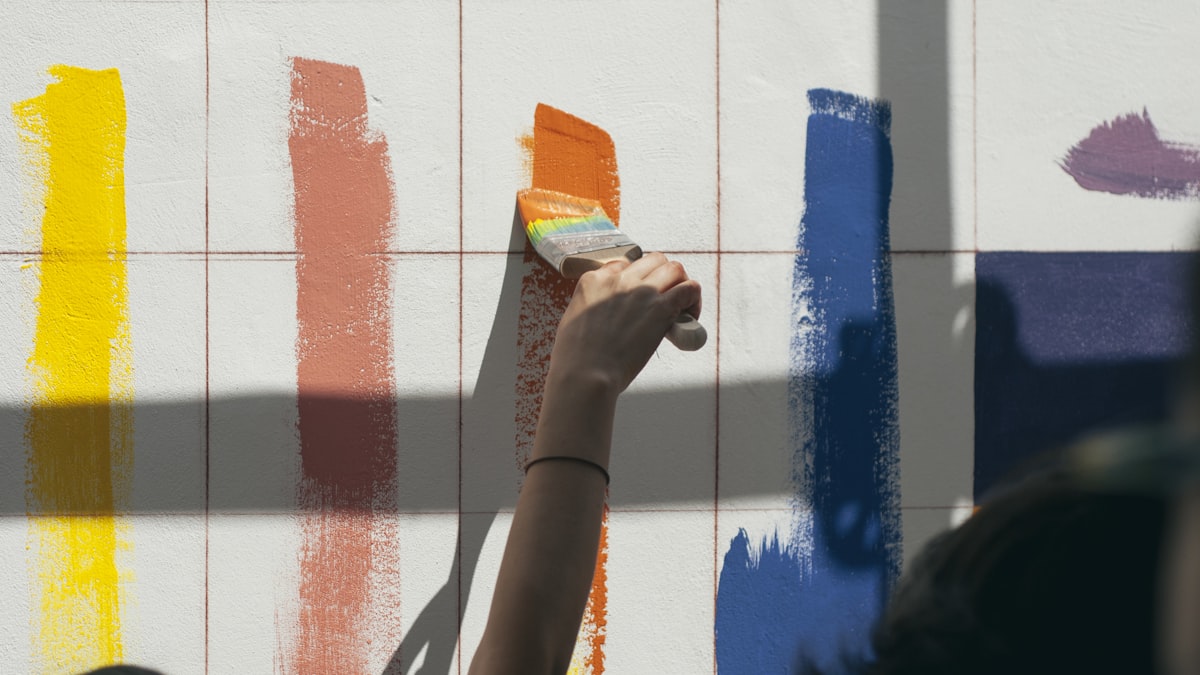
Painting is one of the most common home improvement jobs in New South Wales, and it’s one of the easiest to get wrong. Hire the wrong person and you’re looking at peeling paint within months, colour mismatches, or worse — no insurance cover if something goes wrong on your property. With over 2,780 licensed painters currently active in NSW, there’s no shortage of qualified professionals. The trick is knowing how to find them, check their credentials, and protect yourself before any brushes hit your walls. This guide walks you through everything you need to know about hiring a licensed painter in NSW.
Why You Must Hire a Licensed Painter in NSW
NSW law is clear: any painting or decorating work on a residential property worth more than $5,000 (labour and materials combined, including GST) must be carried out by a licensed contractor. This is enforced under the Home Building Act 1989.
The penalties for doing unlicensed work are steep. An individual caught doing unlicensed painting work faces fines of up to $22,000. For companies, the penalty jumps to $110,000. These aren’t theoretical — Building Commission NSW actively investigates complaints about unlicensed operators.
Beyond the legal risk, hiring a licensed painter means you get access to statutory warranties under the Home Building Act. Licensed painters must hold insurance, and their work is covered by warranty periods that protect you if defects appear after the job is done. If you hire someone without a licence, you lose access to these protections entirely.
Search for licensed painters in NSW on TradieVerify to start your shortlist.
How NSW Painting Licences Work
NSW painting licences are issued by Building Commission NSW (formerly administered through NSW Fair Trading). There are a few things that make the NSW system different from other states.
The $5,000 Threshold
A licence is required when the total value of the painting work exceeds $5,000 including GST. This includes both labour and materials. For smaller jobs under that amount, a licence isn’t legally required, but hiring a licensed painter is still a good idea because it confirms they hold proper qualifications and insurance.
Two Licence Classes
NSW issues two main licence classes for painting work:
| Licence Class | Scope | Count in NSW |
|---|---|---|
| Decorator | Painting, wallpapering, decorative finishes, staining | 2,205 active |
| Painter | All painting work including specialist coatings | 580 active |
Both classes require completion of CPC30620 Certificate III in Painting and Decorating (or equivalent earlier versions). The Decorator class covers the broadest scope and is the most commonly held licence.
The Internal Painting Exemption
Here’s something most people don’t know: since 2015, stand-alone internal paintwork is exempt from the licensing requirement in NSW. This means if you’re only getting the inside of your home painted (and no other building work is being done at the same time), the painter technically doesn’t need a licence regardless of the job value.
However, this exemption does not apply when:
- The painting is part of a larger renovation or building project
- Exterior painting is involved
- The work involves lead paint disturbance
- Specialist coatings or finishes are being applied
Even when the exemption applies, we still recommend hiring a licensed painter. A licence confirms training, insurance, and accountability.
Licence Types
Painters in NSW can hold different types of licences:
- Individual Contractor — a sole trader who does the work themselves
- Company/Partnership Contractor — a business entity (must have a qualified supervisor)
- Qualified Supervisor Certificate — allows the holder to supervise painting work for a licensed company
Licences are available for 1, 3, or 5 year terms.
How to Check a Painter’s NSW Licence
Never take a painter’s word for it. Verifying their licence takes about two minutes.
Option 1: Use TradieVerify Search for the painter’s name or licence number on TradieVerify’s search page. You’ll see their licence status, class, and conditions in one place.
Option 2: NSW Government Licence Check Visit verify.licence.nsw.gov.au and enter the painter’s name or licence number. The system will show you:
- Whether the licence is current
- The licence class (Decorator or Painter)
- Any conditions or restrictions
- The expiry date
Option 3: Phone Call Building Commission NSW on 13 27 00 to verify a licence over the phone.
When checking, confirm that the licence class matches the work you need done. A Decorator licence covers standard painting and wallpapering. If your project involves specialist industrial coatings, you may need someone with a Painter class licence.
You can also browse all licensed painters in NSW on TradieVerify to compare options in your area.
Get Three Written Quotes
Getting at least three quotes is standard practice in Australia, and it’s especially useful for painting because prices can vary significantly depending on the painter’s approach to preparation work.
What a good painting quote should include:
- Full breakdown of labour and materials (listed separately)
- Paint brand, product name, and number of coats
- Surface preparation details (washing, sanding, patching, priming)
- Areas included and excluded (e.g. trims, ceilings, doors)
- Start and estimated completion dates
- Payment terms and schedule
- Licence number and insurance details
Contract requirements in NSW:
Under the Home Building Act 1989, a written contract is mandatory for any residential painting work over $5,000. For jobs over $20,000, additional protections kick in:
- A 5 business day cooling-off period after signing
- The painter cannot request a deposit greater than 10% of the contract price
These rules exist to protect homeowners. If a painter asks for 50% upfront before starting, that’s a red flag.
For more detail on comparing quotes, see our guide to getting quotes from tradies.
How Much Does a Painter Cost in NSW?
Painting costs in NSW tend to sit at the higher end of the national average, particularly in the Sydney metro area. Here’s what you can expect to pay in 2026.
Typical Painting Costs in NSW
| Service | Cost Range (AUD) |
|---|---|
| Labour rate (per hour) | $50–$75 |
| Interior painting (per sqm) | $20–$40 |
| Exterior painting (per sqm) | $25–$50 |
| Single room (walls + ceiling) | $450–$1,000 |
| 3-bedroom interior | $3,500–$7,500 |
| Exterior single-storey | $4,500–$10,000 |
| Exterior two-storey | $7,000–$16,000 |
| Feature wall / accent wall | $150–$400 |
| Deck / pergola staining | $1,000–$3,000 |
| Fence painting (per panel) | $30–$60 |
What Affects the Price
Several factors push painting costs up or down in NSW:
- Location. Inner Sydney and northern beaches painters typically charge 15–25% more than western Sydney or regional NSW
- Surface condition. Old weatherboard homes or surfaces with peeling paint need more prep, which adds cost
- Paint quality. Premium brands like Dulux Weathershield or Taubmans Endure cost more but last longer, especially on exterior surfaces
- Access. Two-storey homes, high ceilings, or difficult access areas require scaffolding (add $500–$2,000)
- Lead paint. If your home was built before 1970, lead testing and safe removal add $1,000–$5,000 depending on the scope
For a detailed national cost breakdown, see our house painting cost guide.
Check for Lead Paint on Older NSW Homes
If your home was built before 1970, there is a strong chance it contains lead-based paint. Houses built before 1950 are almost certain to have it. Lead paint was progressively restricted in Australia and fully banned in 2010.
This matters because disturbing lead paint — through sanding, scraping, or heat stripping — creates toxic dust that is dangerous to your family’s health, particularly for children and pregnant women.
NSW Lead Paint Regulations
NSW has specific rules about lead paint disturbance:
- Dry sanding and abrasive blasting of lead paint is prohibited
- HEPA-filtered vacuums must be used for cleanup (no brooms, no regular vacuums)
- Work must comply with AS/NZS 4361.2:2017 (Guide to Lead Paint Management)
- Local councils can issue fines for improper lead paint removal
- The NSW EPA provides specific guidance on safe practices
What to Do
Before any painting work on a pre-1970 home:
- Get a lead paint test. DIY kits are available from hardware stores ($20–$40), or hire a professional assessor ($200–$500)
- Tell your painter. A licensed painter should ask about the home’s age, but make sure they know
- Confirm their approach. Ask specifically how they’ll manage lead paint — wet sanding, chemical strippers, and encapsulation are the safe methods
- Check containment. The work area should be sealed with plastic sheeting to prevent dust spread
A painter who suggests dry sanding an old home without mentioning lead testing is a painter you should not hire.
Painting in Sydney’s Climate
NSW’s climate varies dramatically from the coast to the western suburbs, and this affects both the painting process and the products your painter should use.
Coastal areas (Eastern Suburbs, Northern Beaches, Wollongong): Salt air accelerates paint degradation. Exterior surfaces need marine-grade or salt-resistant paints. Expect to repaint exteriors every 5–7 years rather than the standard 7–10.
Western Sydney (Parramatta, Penrith, Campbelltown): Summer temperatures regularly exceed 40°C. Paint should not be applied in extreme heat as it dries too fast and won’t bond properly. Quality painters schedule exterior work for autumn and spring. Use heat-reflective exterior paints where possible.
Humidity and rain: Sydney’s humid summers mean painters need to watch dew points and moisture levels. Paint applied to damp surfaces will blister and peel. A good painter will check weather forecasts and moisture readings before starting exterior work.
Best time to paint in NSW: Autumn (March–May) and spring (September–November) offer the most consistent conditions. Avoid booking exterior painting during December–February when heat and summer storms make scheduling unpredictable.
Understanding Paint Warranties and Your Consumer Rights
Statutory Warranties
Under the Home Building Act 1989, licensed painters in NSW must provide statutory warranties on their work:
- 6 years for major defects (significant defects that make the work unfit for purpose)
- 2 years for minor defects (cosmetic issues, minor imperfections)
These warranties apply automatically — the painter doesn’t need to offer them separately. They apply to any licensed work over $5,000.
Home Building Compensation Fund (HBCF)
For residential building projects worth more than $20,000 (including GST), the contractor must obtain HBCF insurance (administered by icare NSW). This covers homeowners if the builder or contractor dies, disappears, or becomes insolvent.
For most stand-alone painting jobs, HBCF won’t apply unless the painting is part of a larger renovation exceeding $20,000. But if your painting work is bundled into a bigger project, make sure the head contractor has HBCF cover.
Australian Consumer Law
On top of statutory warranties, the Australian Consumer Law guarantees that services must be:
- Provided with due care and skill
- Fit for purpose (the paint should last a reasonable time)
- Completed within a reasonable time if no date is specified
If the work doesn’t meet these standards, you have the right to a remedy — repair, partial refund, or compensation.
What You Can and Cannot Paint Yourself
Not every painting job in NSW requires a licensed painter. Here’s the breakdown:
You can legally do yourself:
- Interior painting of your own home (the 2015 exemption makes this possible regardless of value)
- Minor touch-ups and maintenance
- Painting fences, garden furniture, and non-structural items
- Any painting work under $5,000 on your own property
You need a licensed painter for:
- Exterior painting work over $5,000
- Any painting that’s part of a larger building project over $5,000
- Work involving lead paint disturbance (requires specific training)
- Rental properties where the work exceeds $5,000
- Commercial properties
Even for jobs you can legally do yourself, consider hiring a professional if the job involves heights, large areas, or surfaces in poor condition. The finish quality from a trained painter with commercial equipment is noticeably better than DIY.
Red Flags When Hiring a Painter in NSW
Watch out for these warning signs:
- No licence number on their quote. If they can’t provide it, they probably don’t have one
- Asking for a large deposit. NSW law caps deposits at 10% for jobs over $20,000. Any painter asking for 50% upfront is a risk
- No written quote. A verbal estimate isn’t a quote. Insist on everything in writing
- Won’t specify paint brands. Vague descriptions like “premium paint” without naming the product suggest they’ll use cheap alternatives
- Skipping preparation. If the quote doesn’t mention washing, sanding, filling, or priming, the painter is cutting corners. Prep accounts for 60–70% of a quality paint job
- Unrealistically low price. If one quote is half the price of the others, ask why. Cheap painters often thin paint, skip coats, or rush prep work
- No insurance certificate. Ask for a copy of their public liability insurance (minimum $5 million recommended) and check it’s current
- Pressure to sign immediately. A reputable painter will give you time to compare quotes and check references
Questions to Ask Before Hiring a Painter in NSW
Use this checklist when interviewing painters:
- What is your NSW licence number and class?
- Can I see your current public liability insurance certificate?
- Do you have workers compensation insurance? (Required if they have employees)
- What paint brand and product will you use? How many coats?
- What preparation work is included?
- Was this home built before 1970? How will you handle potential lead paint?
- What is your warranty on workmanship?
- Can you provide references from recent NSW jobs?
- What is the payment schedule?
- How do you handle variations or unexpected issues during the job?
A good painter will answer all of these without hesitation. Anyone who gets defensive or evasive about licensing and insurance is someone to avoid.
How to Lodge a Complaint About a Painter in NSW
If things go wrong, NSW has a clear dispute resolution pathway:
Step 1: Raise it with the painter directly. Put your complaint in writing. Describe the defect, attach photos, and give them a reasonable deadline to fix it (14 days is standard).
Step 2: Contact NSW Fair Trading. If the painter doesn’t respond or refuses to fix the issue, lodge a complaint with NSW Fair Trading on 13 32 20. They offer free mediation services.
Step 3: Contact Building Commission NSW. For licensing breaches or serious defective work, contact Building Commission NSW on 13 27 00. They can investigate and take disciplinary action against the painter’s licence.
Step 4: Apply to NCAT. If mediation fails, you can take the matter to the NSW Civil and Administrative Tribunal (NCAT). NCAT handles building disputes up to $500,000. Filing fees start from around $50 for claims under $10,000.
Keep all documentation — the contract, quotes, payment receipts, photos of defects, and any written communication. This evidence is critical if the matter goes to NCAT.
Frequently Asked Questions
Do painters need a licence in NSW?
Yes, for any residential painting work exceeding $5,000 in total value (labour and materials including GST). Since 2015, stand-alone internal paintwork is exempt from this requirement, but exterior painting and painting that’s part of a larger building project still requires a licence above the threshold.
How do I check if a painter is licensed in NSW?
You can verify a painter’s licence on TradieVerify, through the NSW Government’s licence verification portal, or by calling Building Commission NSW on 13 27 00. Always check before signing a contract.
How much does it cost to paint a house in NSW?
Interior painting for a 3-bedroom home typically costs $3,500–$7,500 in NSW. Exterior painting for a single-storey home ranges from $4,500–$10,000. Sydney metro prices tend to be 15–25% higher than regional NSW. The biggest cost variables are surface condition, paint quality, and access difficulty.
What happens if I hire an unlicensed painter in NSW?
You lose access to statutory warranties under the Home Building Act 1989. If defects appear, you have limited legal recourse. The unlicensed painter faces fines of up to $22,000 (individuals) or $110,000 (companies). You may also void your home insurance if unlicensed work causes damage.
Can I paint my own house in NSW?
Yes. Owner-occupiers can paint their own home without a licence. The licensing requirement applies to contractors doing work for others. However, if you’re doing extensive work on a property you plan to sell, be aware that defective paintwork could create liability issues under consumer protection law.
How long should a professional paint job last in NSW?
Interior paint should last 7–10 years with normal wear. Exterior paint in coastal areas lasts 5–7 years due to salt and UV exposure, while sheltered exterior surfaces can last 7–10 years. These timeframes assume quality paint products and proper surface preparation. Cheap paint or poor prep will reduce longevity significantly.
Key Takeaways
- Check the licence. Any painting work over $5,000 in NSW requires a licensed Decorator or Painter. Verify on TradieVerify or verify.licence.nsw.gov.au
- Get three written quotes. Compare preparation methods, paint products, and payment terms — not just price
- Know the rules. Deposits capped at 10% for jobs over $20,000. Written contracts mandatory over $5,000. Cooling-off period of 5 business days for contracts over $20,000
- Check for lead paint. Homes built before 1970 likely contain lead paint. Confirm your painter’s approach to safe management
- Understand your warranties. Licensed painting work carries 6-year warranties for major defects and 2-year warranties for minor defects under the Home Building Act
- Document everything. Keep contracts, receipts, and photos. If something goes wrong, this evidence protects you through Fair Trading and NCAT
Search for licensed painters near you in NSW on TradieVerify to start comparing qualified professionals in your area.
Related Guides
- How to Hire a Licensed Painter in Australia — national overview with state-by-state comparison
- How Much Does House Painting Cost in Australia? — detailed cost breakdown by project type
- Getting Quotes from Tradies: The Complete Australian Guide
Sources
- NSW Government — Painting work licensing requirements
- NSW Legislation — Home Building Act 1989
- NSW EPA — Lead safety for home renovation
- icare NSW — Home Building Compensation Fund
- NCAT — Building and construction disputes
- ACCC — Australian Consumer Law guarantees
- Standards Australia — AS/NZS 4361.2:2017 Guide to Lead Paint Management
- TradieVerify — Licensed Painters in NSW (2,785 active licences as of April 2026)