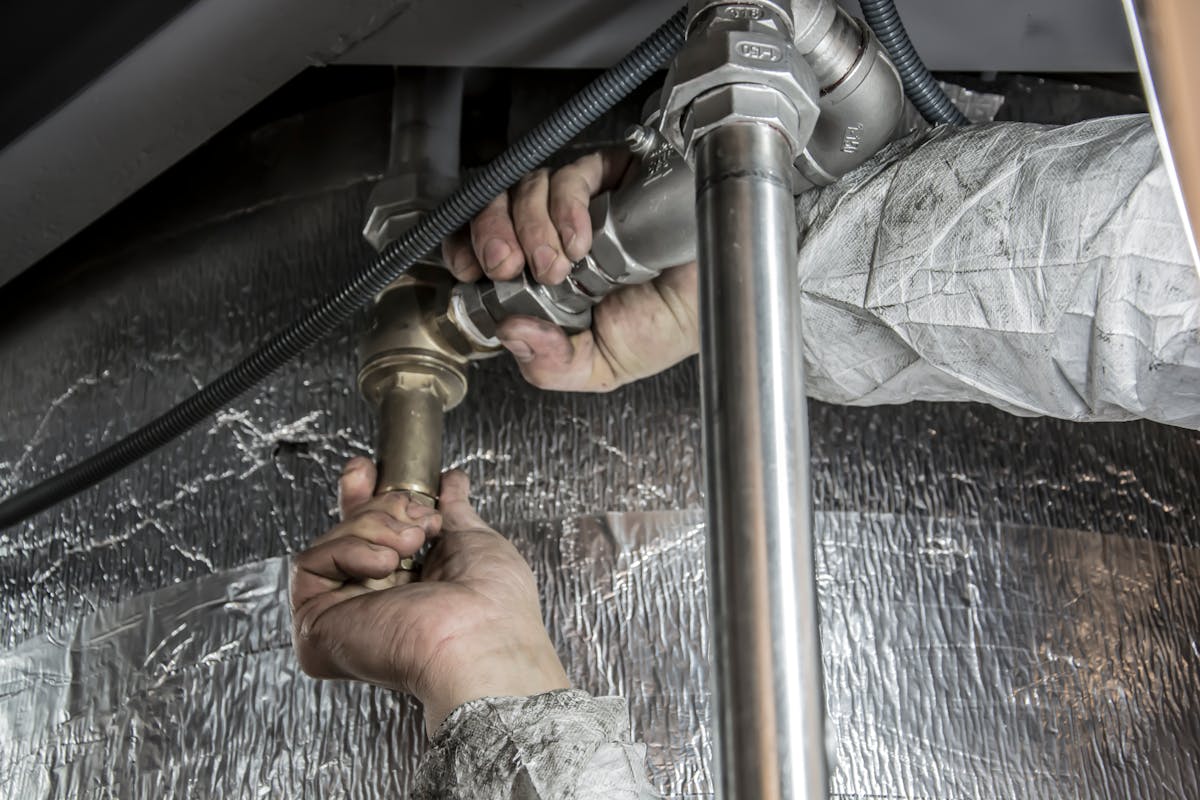
A gas leak behind the wall. A hot water system that will not light. Carbon monoxide silently spilling from a poorly installed heater while you sleep. Gas work is the one trade where a single mistake can be immediately fatal, and Queensland has some of the strictest licensing requirements in the country to make sure it does not happen.
Queensland has 5,293 licensed gasfitters listed on TradieVerify, all registered with the Queensland Building and Construction Commission (QBCC) and Resources Safety and Health Queensland (RSHQ). But hiring the right gasfitter in QLD is not as simple as picking the first name on a list. Queensland has a unique dual licensing system that catches many homeowners off guard. This guide walks you through how to hire a licensed gasfitter in Queensland, from checking both QBCC and RSHQ credentials to understanding gas compliance certificates and your rights when things go wrong.
Why You Must Hire a Licensed Gasfitter in Queensland
In Queensland, all gas work must be carried out by a person who holds both a QBCC gasfitting licence and an RSHQ gas work licence. There are no exceptions. Even connecting a single gas bayonet point requires a licensed gasfitter.
It is the law. The Petroleum and Gas (Production and Safety) Act 2004 and the Queensland Building and Construction Commission Act 1991 both govern gas work in Queensland. Penalties for unlicensed gas work are severe. In one case, the Maroochydore Magistrates Court handed out a $7,000 fine for unlicensed gas work that caused a gas leak and explosion, leaving a person seriously burned and injured.
Gas is uniquely dangerous. Carbon monoxide is colourless and odourless. A poorly installed gas appliance can fill a room with CO while you sleep. A gas leak from an uncapped pipe can cause an explosion. Every connection, every joint, every flue must be installed to AS/NZS 5601.1 by someone who knows what they are doing.
Your insurance depends on it. If unlicensed gas work causes a fire, explosion, or CO poisoning, your home insurer can refuse the claim. Licensed gasfitters carry public liability insurance that protects you if something goes wrong during the job.
Gas compliance certificates create a paper trail. Your gasfitter must issue a Gas System Compliance Certificate after completing gas work. Without it, your gas supplier can refuse to connect supply and uncertified work can block a property sale.
Accountability matters. A licensed gasfitter is registered with both the QBCC and RSHQ. If their work is defective, you have formal complaints pathways through both bodies. With an unlicensed operator, your only option is the courts.
Verify any Queensland gasfitter’s licence instantly on TradieVerify’s search page.
Queensland’s Dual Licensing System: QBCC + RSHQ
This is the most important thing to understand about hiring a gasfitter in Queensland: gasfitters need two separate licences from two different regulators. Most homeowners do not know this, and it is what makes QLD different from other states.
QBCC Licence (Business/Contractor)
The Queensland Building and Construction Commission issues gasfitting contractor licences. This licence authorises the gasfitter (or their business) to contract with you to perform gas work. It covers the business side: quoting, contracting, invoicing, and consumer protections.
QBCC gasfitting licence types:
| Licence Type | What It Covers |
|---|---|
| Contractor | Individuals or companies that contract directly with homeowners for gas work |
| Nominee Supervisor | Company representatives overseeing gasfitting operations within a business |
| Site Supervisor | On-site supervisors managing gasfitting work |
RSHQ Gas Work Licence (Occupational)
Resources Safety and Health Queensland, through the Chief Gas Examiner, issues gas work licences under the Petroleum and Gas (Production and Safety) Act 2004. This is the occupational licence that authorises the individual to physically perform gas work.
RSHQ gas work licence tiers:
| Tier | What It Allows |
|---|---|
| Interim gas work licence | Perform gas work within stated conditions but cannot sign off or certify work. Held by recently qualified gasfitters within 12 months of completing Certificate III. |
| Gas work licence (GWL) | Full gas work licence. Can perform all gas work within any stated conditions. |
| Gas work licence (servicing) | Service, repair and test Type A gas devices only. Cannot install, remove, alter or certify. |
| Gas work authorisation (GWA) | Authorises the holder to certify gas work and issue compliance certificates. Required in addition to GWL to sign off work. |
Why both licences matter: A gasfitter with a QBCC licence but no RSHQ gas work licence cannot legally touch a gas installation. A gasfitter with an RSHQ licence but no QBCC contractor licence cannot legally contract with you for the work. You need to check both.
How to Check Both Licences
Step 1: Ask for both licence numbers. A legitimate QLD gasfitter will provide their QBCC licence number and RSHQ gas work licence number without hesitation. If they only mention one, ask about the other.
Step 2: Check the QBCC licence. Search on TradieVerify or the QBCC online licence search at my.qbcc.qld.gov.au. Confirm the licence is current, covers gasfitting, and the business details match the quote.
Step 3: Check the RSHQ licence. Visit the RSHQ register of gas work licence holders. Confirm they hold a current gas work licence (not just an interim licence if you need certified work). From 3 February 2026, the new RSHQ Portal makes this easier.
Step 4: Check the QBCC excluded persons register. The QBCC publishes a list of people banned from holding a licence. If your gasfitter appears on this list, walk away.
Browse licensed gasfitters in Queensland on TradieVerify to see verified listings with QBCC data.
Gas Compliance Certificates in Queensland
Gas compliance certificates are one of the most searched topics for Queensland homeowners, and for good reason. They are a legal requirement, and the system changed significantly in 2025-2026.
What Is a Gas Compliance Certificate?
A Gas System Compliance Certificate is a legal document issued by your licensed gasfitter confirming that gas work has been completed safely and meets AS/NZS 5601.1 and Queensland regulations. It is issued under the Petroleum and Gas (Production and Safety) Act 2004.
When Do You Need One?
You need a gas compliance certificate for virtually all gas work in Queensland:
- Gas appliance installation (cooktops, ovens, heaters, hot water systems)
- Gas line extensions or new gas pipe runs
- Gas bayonet point installation
- Reconnecting gas supply after disconnection
- Gas BBQ connections
- Converting appliances from natural gas to LPG or vice versa
- Any alteration, repair, or modification to existing gas installations
The only exception is basic appliance servicing (cleaning, adjusting) that does not involve disconnecting or modifying the gas system.
What Does the Certificate Include?
- The gasfitter’s gas work licence or authorisation number
- Installation date
- Compliance reference number
- Gas device type codes for all connected equipment
- Confirmation the work meets AS/NZS 5601.1
Recent Changes: E-Certificates and the RSHQ Portal
Queensland’s gas compliance system underwent major changes in 2025-2026:
- 1 July 2025: Electronic gas certificates (e-certificates) were introduced. Physical compliance plates are no longer required for most installations (caravans are the exception).
- 1 January 2026: Hard copy certificate books can no longer be used. All certificates must be issued electronically.
- 3 February 2026: The new RSHQ Portal went live. All gas system compliance certificates, defect notices, and inspection certificates must now be issued through this portal.
What this means for homeowners: Your gasfitter should issue your compliance certificate through the RSHQ Portal. The system automatically maintains records in the gasfitter’s account, making it easier to trace and verify. Ask your gasfitter for a copy of the e-certificate after the work is complete.
Cost of a Gas Compliance Certificate
A gas compliance certificate typically costs $150 to $400 depending on the complexity of the work. Some gasfitters include the certificate cost in their overall quote; others charge it separately. Always ask whether the compliance certificate is included in the quoted price before you agree to the work.
What Happens Without a Compliance Certificate?
- Your gas supplier can refuse to connect or reconnect gas supply
- Your home insurance may not cover gas-related incidents
- Uncertified gas work can block a property sale during inspection
- You lose the official record that compliant work was done on your property
- The gasfitter can face penalties from RSHQ for failing to issue a certificate
Bottom line: Never accept gas work without a compliance certificate. If a gasfitter says certificates are “not needed” or “optional,” find another gasfitter.
Scope of Work: What Can a Licensed Gasfitter Do?
A QBCC-licensed gasfitter can install, commission, maintain, test, alter, repair and service a gas system in any building. This includes:
Natural gas (mains):
- Connecting appliances to the gas network
- Installing or extending gas pipelines within the property
- Gas meter and regulator connections (in coordination with the network distributor)
LPG (bottled gas):
- Installing LPG cylinder connections and regulators
- Running LPG gas lines for outdoor kitchens, BBQs, and pool heaters
- Converting appliances between natural gas and LPG
Residential gas appliances:
- Gas cooktop and oven installation
- Gas hot water system installation and replacement
- Gas space heater and ducted gas heating installation
- Gas fireplace installation
- Gas BBQ bayonet point installation
Safety and testing:
- Gas leak detection and repair
- Carbon monoxide spillage testing
- Gas pressure testing
- Flue integrity checks
Incidental work: A gasfitter can also do fire collar installation incidental to gas work, and incidental work of another trade class valued under $3,300.
What a Gasfitter Cannot Do
A gasfitter licence alone does not cover:
- Water supply plumbing (requires a plumber licence)
- Drainage work (requires a drainer licence)
- Electrical work for gas appliances (requires an electrician licence)
If your job involves both gas and plumbing work, you need either a gasfitter with a plumbing endorsement or two separate tradespeople. See our QLD plumber hiring guide for more detail.
How Much Does a Gasfitter Cost in Queensland?
Gas fitting costs in Queensland are generally lower than Sydney and Melbourne but vary by location, complexity, and accessibility.
Common Gas Fitting Job Costs
| Service | Typical Cost (QLD) |
|---|---|
| Call-out fee | $80 – $150 |
| Hourly rate (standard) | $100 – $200/hr |
| Gas cooktop installation (labour only) | $150 – $400 |
| Gas oven installation (labour only) | $150 – $300 |
| Gas hot water system (supply + install) | $1,200 – $3,500 |
| Gas space heater installation | $250 – $600 |
| Gas bayonet point installation | $150 – $800 |
| Gas BBQ connection | $180 – $400 |
| Gas line extension (per metre) | $100 – $300 |
| Gas leak detection | $150 – $500 |
| Gas compliance certificate | $150 – $400 |
| Ducted gas heating installation | $1,200 – $5,000 |
What Affects the Price
- Distance from the gas meter. The biggest variable. Running new gas pipe from the meter to a far corner of the house costs significantly more than connecting an appliance near the meter.
- Access difficulty. Work through wall cavities, roof spaces, or under floors takes longer.
- Gas type. LPG installations can be more complex than natural gas due to cylinder placement and ventilation requirements.
- Time of day. After-hours and emergency call-outs cost 25-50% more than standard rates.
- Location. Brisbane rates sit at the higher end. Regional QLD can be cheaper for labour but may include travel charges. Far North Queensland (Cairns, Townsville, Mackay, Rockhampton) rates are comparable to Brisbane due to smaller contractor pools.
Getting Quotes
Get at least three written quotes before committing to any gas work. A proper quote should include:
- Full scope of work
- Itemised labour and material costs
- Whether the gas compliance certificate is included
- Timeline for completion
- GST inclusion (mandatory for businesses over $75,000 turnover)
- QBCC licence number and RSHQ gas work licence number
For work over $3,300 (including GST), a written contract is required under Queensland law.
The Gasfitter vs Plumber Distinction in Queensland
In Queensland, gasfitting and plumbing are related but legally separate licence categories. This distinction is critical because getting it wrong means illegal work on your property.
| Licence Held | Can Do Gas Work? | What They Can Do |
|---|---|---|
| Licensed gasfitter (QBCC + RSHQ) | Yes | All gas installation, maintenance, testing, and certification |
| Licensed plumber WITH gas fitting endorsement | Yes | Both plumbing and gas work |
| Licensed plumber WITHOUT gas fitting endorsement | No | Water supply, drainage, sanitary plumbing only |
Key point: Many Queensland plumbers also hold a gas fitting endorsement on their QBCC licence, meaning they can legally do both plumbing and gas work. But a plumber without the endorsement cannot connect a single gas appliance, regardless of how experienced they are.
If you are hiring a plumber for a job that involves gas (such as a gas hot water system), check that their QBCC licence specifically lists gas fitting. You can verify this on TradieVerify or the QBCC website.
For more on QLD plumbing licensing, see our QLD plumber hiring guide.
Carbon Monoxide Safety in Queensland
Carbon monoxide is the invisible danger of gas work and a critical reason to hire a licensed gasfitter for any appliance servicing.
What causes CO poisoning: Incomplete combustion from poorly installed or maintained gas appliances, blocked flues, and inadequate ventilation. Older unflued gas heaters are the highest-risk appliances in Australian homes.
Warning signs: Headaches, dizziness, nausea, confusion. Because CO is colourless and odourless, symptoms are often mistaken for illness. Severe exposure causes loss of consciousness or death.
What your gasfitter should do:
- Test for CO spillage using a calibrated gas analyser
- Check flue integrity and ventilation clearances
- Confirm the appliance burns cleanly with the correct gas-to-air ratio
- Isolate any appliance showing CO spillage until repaired
Install a CO detector. While not legally mandatory in most Queensland homes, regulators recommend a carbon monoxide detector near gas appliances and in sleeping areas. They cost $40 to $100 and could save your life.
If you smell gas or suspect CO: Open windows, do not touch electrical switches, evacuate the building, and call the gas emergency number or 000 from outside.
What You Cannot Do Yourself
Gas work has the strictest DIY restrictions of any trade in Queensland. Under the Petroleum and Gas (Production and Safety) Act 2004, it is illegal for an unlicensed person to:
- Install, alter, repair, or extend any gas installation
- Connect any gas appliance to a gas supply
- Install or modify gas pipework
- Install LPG cylinder regulators or piping
- Convert an appliance from one gas type to another
What homeowners CAN do: Swap an LPG cylinder for a new one (explicitly exempted), turn off a gas appliance at its control valve, and use gas appliances normally.
Consequences of DIY gas work in QLD:
- Criminal prosecution under the Petroleum and Gas Act
- Fines from RSHQ via Penalty Infringement Notices
- Home and contents insurance voided
- Gas supplier can disconnect your supply
- Property sale complications from uncertified work
- Criminal liability if someone is injured
The cost of hiring a licensed gasfitter is always less than the consequences of getting it wrong.
Red Flags When Hiring a Gasfitter in Queensland
Watch out for these warning signs:
- Cannot provide both licence numbers. A legitimate QLD gasfitter has a QBCC licence number AND an RSHQ gas work licence number. If they can only produce one, or neither, walk away.
- Says compliance certificates are optional. They are legally required for every piece of gas work. No exceptions.
- Demands cash only. This usually means no ABN, no GST registration, and no paper trail if something goes wrong.
- Large upfront payment. A deposit of 10% is standard. Demanding 50% or more before starting is a warning sign.
- Pressure to sign immediately. Legitimate gasfitters do not use high-pressure sales tactics.
- Claims to be “just a plumber” who also does gas. Always confirm the gas fitting endorsement or separate gasfitter licence. A plumber without it cannot legally do gas work.
- No insurance certificates. Ask for current public liability and workers compensation certificates. If they cannot produce them, find someone else.
- Skips the gas compliance certificate. If they finish the job and leave without issuing or mentioning a compliance certificate, that is a compliance failure.
If you suspect someone is performing unlicensed gas work, report them to RSHQ on 13 QGOV (13 74 68) or to the QBCC directly.
Your Rights and How to Make a Complaint
When you hire a licensed gasfitter in Queensland, you are protected by both state and federal consumer law.
Australian Consumer Law guarantees apply to all gas fitting services. The work must be carried out with due care and skill, be fit for the purpose you specified, and be completed within a reasonable time. These guarantees cannot be excluded by contract.
For gas safety concerns, contact RSHQ. The Petroleum and Gas Inspectorate investigates complaints about unsafe gas work, unlicensed gas work, and breaches of the Petroleum and Gas Act. Phone 13 QGOV (13 74 68) or lodge a complaint through RSHQ.
For contract and workmanship disputes, contact the QBCC. If the gasfitter holds a QBCC licence, you can lodge a complaint about defective work, incomplete work, or contract disputes. The QBCC can investigate, issue rectification orders, and suspend licences. Phone 139 333 or use the QBCC online complaint form.
Queensland Civil and Administrative Tribunal (QCAT). For financial disputes, you can apply to QCAT. Claims under $25,000 go through the minor civil disputes process.
Keep records of everything. Quotes, invoices, text messages, photos of the work, compliance certificates, and receipts. If you end up in a dispute, documentation is your strongest tool.
Finding Licensed Gasfitters Near You in Queensland
The easiest way to find a licensed gasfitter in Queensland is to search on TradieVerify. You can browse by location and verify QBCC licence status in one place.
Regional QLD areas with high demand for gasfitters include Rockhampton, Townsville, Mackay, Cairns, and Bundaberg. If you are in these areas and searching for a gas fitter or need a gas compliance certificate, start with the TradieVerify gasfitter directory.
You can also:
- Ask the QBCC — use the QBCC’s Find a Licensed Contractor tool on their website
- Check the RSHQ register — the register of gas work licence holders confirms occupational licensing
- Ask for referrals — neighbours, friends, and family are still the best source of gasfitter recommendations
- Check reviews — Google reviews and local Facebook groups can give you a sense of reputation, but always verify the licence separately. Good reviews do not replace a licence check.
For a broader look at gasfitter licensing across all states, read our national gasfitter hiring guide.
Frequently Asked Questions
How do I check if a gasfitter is licensed in Queensland?
Check both licences. Search the QBCC licence on TradieVerify or the QBCC website at my.qbcc.qld.gov.au. Then check the RSHQ gas work licence on the RSHQ register. Queensland gasfitters need both a QBCC gasfitting licence (business) and an RSHQ gas work licence (occupational) to legally perform gas work. Both must be current.
What is a gas compliance certificate and do I need one in QLD?
A Gas System Compliance Certificate is a legal document confirming gas work meets AS/NZS 5601.1 and Queensland regulations. You need one for every gas installation, alteration, or repair in Queensland. From 2026, all certificates must be issued electronically through the RSHQ Portal. Without one, your gas supplier can refuse supply and your insurance may not cover gas-related incidents. It typically costs $150 to $400.
Why does a Queensland gasfitter need two licences?
Queensland has a dual system. The QBCC licence covers the business and contracting side (consumer protections, complaints, insurance). The RSHQ gas work licence covers the occupational side (technical competency, certification authority). Both are governed by separate legislation. This dual requirement is unique to Queensland and ensures gasfitters meet both construction industry and gas safety standards.
How much does a gasfitter cost in Queensland?
Most Queensland gasfitters charge $100 to $200 per hour plus a call-out fee of $80 to $150. Common jobs range from $150 to $400 for a gas cooktop installation up to $3,500 or more for a gas hot water system supply and install. After-hours and emergency rates are 25-50% higher. Always confirm whether the gas compliance certificate is included in the quoted price.
Can a plumber do gas work in Queensland?
Only if their QBCC licence specifically includes a gas fitting endorsement and they hold a separate RSHQ gas work licence. A plumber without both credentials cannot legally connect a gas appliance or extend a gas line, regardless of their plumbing experience. Always check the endorsed categories on their licence before agreeing to gas work.
Is it legal to connect a gas BBQ myself in Queensland?
No. Connecting a gas BBQ to a bayonet point or gas line requires a licensed gasfitter in Queensland. The only gas-related task homeowners can legally perform is swapping an LPG cylinder. Everything else requires a licensed gasfitter and a gas compliance certificate.
Key Takeaways
- All gas work in Queensland requires a gasfitter with both a QBCC gasfitting licence and an RSHQ gas work licence
- Always check both licences on TradieVerify, the QBCC website, and the RSHQ register before hiring
- Your gasfitter must issue a Gas System Compliance Certificate for every piece of gas work. From 2026, this must be done electronically via the RSHQ Portal
- Get three written quotes. Confirm whether the gas compliance certificate cost is included
- Expect to pay $100 to $200 per hour in Queensland, with call-out fees of $80 to $150
- Never let a plumber without a gas fitting endorsement touch your gas installations
- DIY gas work is illegal in Queensland and carries criminal penalties
- If something goes wrong, contact RSHQ for safety issues or the QBCC for contract disputes
- Browse licensed gasfitters in Queensland on TradieVerify to find verified gasfitters in your area
Sources
- QBCC — Gasfitting Licence
- Business Queensland — Gas Work Licences and Authorisations
- Business Queensland — Gas Certificates, Plates and Notices
- RSHQ — Gas Work Licence Requirements
- RSHQ — E-Certificates Fact Sheet
- Petroleum and Gas (Production and Safety) Act 2004 (Qld)
- RSHQ — Register of Gas Work Licence Holders
- TradieVerify — How to Hire a Licensed Gasfitter in Australia