Fire protection is one of those trades most people never think about until something goes wrong. A faulty smoke alarm, an expired fire extinguisher or a missed compliance deadline can have serious consequences. Whether you own a home, manage a rental property or run a strata building, hiring the right fire protection technician matters more than you might expect.
Australia has over 3,700 actively licensed fire protection technicians across the country, and the licensing requirements vary significantly between states. This guide walks you through how to find a qualified professional, what to check before hiring, how much it costs and what your legal obligations are as a property owner.
What Does a Fire Protection Technician Do?
Fire protection technicians install, test and maintain the systems and equipment that keep buildings safe from fire. Their work covers a broad range of services that go well beyond just fitting a smoke alarm to your ceiling.
The main areas a licensed fire protection technician works across include:
- Smoke alarms and fire detection systems — installation, testing and replacement of smoke detectors, heat detectors and interconnected alarm systems
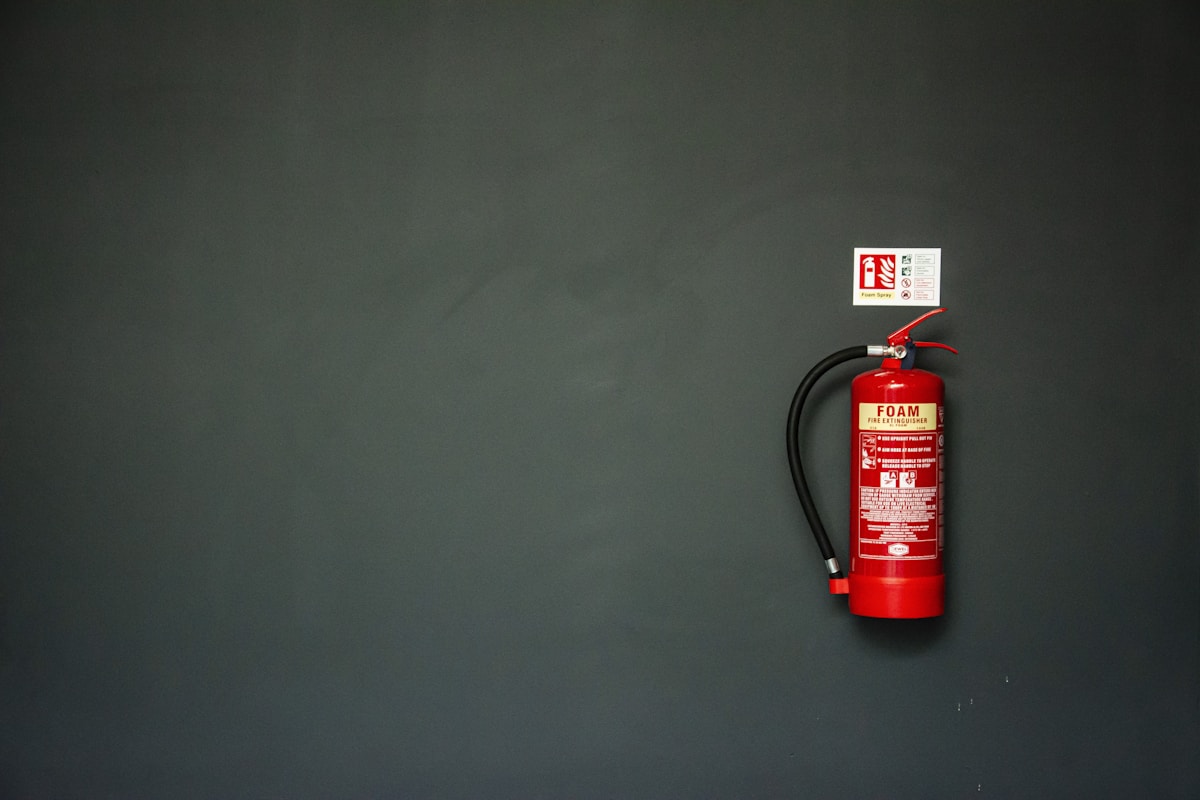
- Fire extinguishers and fire blankets — supply, installation and six-monthly servicing as required under Australian Standard AS1851
- Fire sprinkler systems — design, installation and maintenance of water-based suppression systems for residential and commercial buildings
- Passive fire protection — fire doors, fire-rated walls, penetration sealing and fire collars that contain the spread of fire and smoke
- Emergency and exit lighting — installation and testing of illuminated exit signs and emergency lighting systems
- Special hazard systems — gaseous suppression systems for server rooms, kitchens and other specialist environments
- Fire safety assessments — inspections and compliance reporting for building owners
A qualified fire protection technician holds specific licensing for the type of work they perform. In Queensland alone, the QBCC recognises six distinct licence streams covering passive, electrical, water-based, portable, special hazard and fire safety professional categories.
You can search for licensed fire protection technicians on TradieVerify to find verified professionals in your area.
Why You Need a Licensed Fire Protection Technician
Fire protection work is not something you can legally hand to any handy person with a toolbox. Australian law requires that fire safety equipment be installed and maintained by licensed or accredited professionals. Here is why that matters for you as a property owner.
It is a legal requirement. Every state and territory in Australia has legislation requiring working smoke alarms in residential properties. Many types of fire protection work, particularly anything involving electrical wiring, sprinkler plumbing or fire system certification, require specific trade licences. Using an unlicensed operator can void your insurance and leave you personally liable.
Australian Standards demand it. Fire protection equipment must be maintained to Australian Standard AS1851-2012 (Routine Service of Fire Protection Systems and Equipment). This standard sets out the inspection intervals, testing procedures and record-keeping requirements. Only a qualified technician can certify that your equipment meets these standards.
Insurance depends on it. If a fire occurs and your fire safety equipment was not maintained by a licensed professional, your insurer may reject your claim. This applies to both residential and commercial properties. Proper maintenance records from a licensed technician protect you if the worst happens.
Lives depend on it. According to Fire and Rescue NSW, working smoke alarms cut your risk of dying in a house fire by around 50%. Poorly installed or maintained fire equipment gives you a false sense of security. A licensed fire protection technician ensures your systems actually work when you need them.
Check Their Licence and Accreditation
Before hiring any fire protection technician, verify their credentials. Licensing requirements differ between states, and some technicians hold national accreditations on top of their state licence.
State licensing bodies to check:
- QLD — Search the QBCC licence register for fire protection licence classes. Queensland has the most detailed framework with six licence streams covering passive fire, water-based systems, portables, electrical fire systems, special hazard systems and fire safety professionals.
- NSW — Fire protection contractors need an NSW Fair Trading contractor licence for relevant electrical or plumbing work. Fire Safety Assessors need FSA accreditation from the NSW Government.
- VIC — The Victorian Building Authority (VBA) regulates fire protection work that falls under plumbing and electrical licensing.
- SA — Consumer and Business Services (CBS) oversees electrical and plumbing contractor licences that cover fire system work.
- WA — The Department of Energy, Mines, Industry Regulation and Safety (DEMIRS) handles electrical contractor licensing for fire alarm systems.
- ACT — Access Canberra issues construction occupational licences covering fire sprinkler work and related electrical and plumbing tasks.
- TAS — Consumer, Building and Occupational Services (CBOS) issues fire service permits and electrical contractor licences.
- NT — NT Building Advisory Services regulates building-related fire protection work.
National accreditations to look for:
- FPA Australia membership — The Fire Protection Association Australia is the peak industry body. Members must meet ongoing professional development requirements.
- Extinguishing Agent Handling Licence — Required for anyone working with scheduled extinguishing agents (like halon alternatives). Issued by FPA Australia.
- Relevant trade qualifications — A minimum Certificate III in Fire Protection, or equivalent experience of at least three years.
You can verify a tradesperson’s licence on TradieVerify by searching their name or licence number.
Smoke Alarm Legislation: What Homeowners Must Know
Smoke alarm laws in Australia have been tightening in recent years, and several states now require upgrades that a licensed fire protection technician can help with. Here is what applies in each state.
Queensland has the strictest residential requirements. Since 1 January 2022, all homes sold or leased must have interconnected photoelectric smoke alarms in every bedroom, in hallways connecting bedrooms, and on every level. All remaining homes must comply by 1 January 2027. Smoke alarms must meet Australian Standard AS3786-2014.
New South Wales requires smoke alarms on every level of every home, including owner-occupied houses, rental properties, relocatable homes and caravans. Alarms must comply with AS3786 and be replaced if they are more than 10 years old or fail when tested.
Victoria has required smoke alarms in all residential homes since 1997. Alarms must comply with AS3786. Rental properties need working smoke alarms and landlords must ensure they are checked before each new tenancy.
South Australia requires at least one working smoke alarm on every storey of a home. Fines of up to $750 apply for non-compliance. The SA Metropolitan Fire Service recommends monthly testing and six-monthly cleaning.
Western Australia requires mains-powered smoke alarms in homes built or renovated after 2009. Older homes can use battery-powered alarms. At least one alarm is required between the bedrooms and the rest of the home.
Tasmania, ACT and NT all require working smoke alarms in residential properties, with specific rules for rental properties and new builds.
A licensed fire protection technician can assess your home, recommend the right alarm type and configuration, and install compliant systems. This is particularly relevant in Queensland where the 2027 deadline for full interconnected compliance is approaching.
Types of Fire Protection Services for Homeowners
Fire protection is not just a commercial concern. As a homeowner, landlord or property manager, several services are directly relevant to you.
Smoke alarm installation and upgrades. The most common residential fire protection job. A technician supplies and installs compliant smoke alarms, connects interconnected systems (hardwired or wireless), and provides the compliance documentation you need for insurance or property sales.
Fire extinguisher supply and servicing. While not legally required in most private homes, fire extinguishers are mandatory in rental properties in some states, and recommended by every fire service in the country. Under AS1851, extinguishers need six-monthly inspections and five-yearly pressure testing or replacement.
Rental property compliance. Landlords have specific obligations for smoke alarms and, in some jurisdictions, additional fire safety equipment. A fire protection technician can run an annual compliance check covering alarms, extinguishers and any other required equipment, giving you a service record for your files.
Bushfire protection systems. In bushfire-prone areas, some homeowners install dedicated bushfire sprinkler systems. These require professional design and installation by a licensed fire protection technician with water-based system qualifications. See our bushfire season preparation guide for more detail.
Strata and body corporate buildings. If you live in a unit or apartment, the body corporate is responsible for maintaining fire safety systems in common areas. This includes fire hydrants, hose reels, sprinkler systems, fire doors, emergency lighting and the fire indicator panel. A licensed technician performs routine inspections under AS1851 and provides the Annual Fire Safety Statement (in NSW) or equivalent compliance documentation.
Home renovations. Any renovation that changes room layouts, adds bedrooms or modifies electrical systems may trigger updated smoke alarm requirements. A fire protection technician can advise on what is needed and install compliant systems as part of the build.
How Much Do Fire Protection Services Cost in Australia?
Fire protection costs vary based on the type of service, your location and the size of your property. Here are typical rates for common residential and small commercial jobs.
Smoke Alarm Services
| Service | Typical Cost |
|---|---|
| Battery-powered smoke alarm (supply and install) | $30 - $100 per unit |
| Hardwired smoke alarm (supply and install) | $100 - $250 per unit |
| Interconnected system (3-bedroom home) | $500 - $1,500 total |
| Annual compliance inspection | $100 - $250 per visit |
| Smoke alarm replacement (10-year expiry) | $50 - $150 per unit |
Fire Extinguisher Services
| Service | Typical Cost |
|---|---|
| New fire extinguisher (supply and install) | $80 - $200 per unit |
| Six-monthly tag and test | ~$20 per unit |
| Five-yearly pressure test or replacement | $50 - $120 per unit |
| Fire blanket (supply and install) | $40 - $80 |
Other Services
| Service | Typical Cost |
|---|---|
| Fire safety compliance inspection (residential) | $150 - $350 |
| Annual Fire Safety Statement (commercial/strata) | $165 - $500+ |
| Fire alarm system (commercial) | $1,000 - $5,000+ |
| Bushfire sprinkler system | $3,000 - $10,000+ |
| Labour rate (fire protection technician) | $50 - $150 per hour |
All prices are in AUD and include GST. Actual costs vary by location, with metropolitan areas generally cheaper than regional or remote areas due to travel time.
Get quotes from multiple licensed fire protection technicians to compare pricing. Our guide on getting quotes from tradies covers this process in detail.
State-by-State Licensing and Compliance Guide
Fire protection licensing works differently in each state. Here is a summary of the regulators, licence requirements and TradieVerify data for each jurisdiction.
| State | Regulator | Licence Required? | Key Legislation |
|---|---|---|---|
| QLD | QBCC | Yes — 6 licence streams | QBCC Act 1991 |
| NSW | NSW Fair Trading | Yes — contractor licence (electrical/plumbing) + FSA accreditation | Environmental Planning and Assessment Act 1979 |
| VIC | VBA | Yes — via plumbing/electrical licensing | Building Act 1993 |
| SA | CBS | Yes — electrical/plumbing contractor | Development Act 1993 |
| WA | DEMIRS | Yes — electrical contractor | Electricity Act 1945 |
| ACT | Access Canberra | Yes — construction occupational licence | Building Act 2004 |
| TAS | CBOS | Yes — fire service permit + electrical contractor | Building Act 2016 |
| NT | NT BAS | Yes — via building/electrical licensing | Building Act 1993 (NT) |
Queensland stands out with the most detailed fire protection licensing framework. The QBCC’s six streams cover passive fire protection, water-based fire systems, portable equipment, electrical fire systems (alarms and emergency lighting), special hazard systems and fire safety professionals. TradieVerify currently holds records for 3,775 actively licensed fire protection technicians in Queensland alone.
In other states, fire protection work generally falls under broader electrical contractor or plumbing contractor licences, with additional accreditations required for specific fire safety tasks like Fire Safety Assessment in NSW.
You can search for licensed fire protection technicians by state on TradieVerify to find verified professionals near you.
Questions to Ask Before Hiring a Fire Protection Technician
Before you engage a fire protection technician, ask these questions to make sure they are the right fit.
-
What licence do you hold, and in which state? Ask for the licence number and verify it with the relevant state regulator or on TradieVerify. Make sure their licence covers the specific type of work you need (for example, a portable fire equipment licence does not cover fire alarm installation).
-
Do you carry public liability insurance? A minimum of $5 million in public liability insurance is standard for fire protection contractors. Ask to see a current certificate of currency. Our guide on verifying a tradesperson’s insurance explains what to check.
-
Are you a member of FPA Australia? Membership in the Fire Protection Association Australia indicates ongoing professional development and adherence to industry standards. It is not mandatory but it is a positive sign.
-
Will you provide a compliance certificate after the work? Any fire protection work should come with documentation certifying that the equipment has been installed or serviced to Australian Standards. This paperwork is your proof of compliance for insurance and legal purposes.
-
What maintenance schedule do you recommend? A good technician will outline the AS1851 maintenance intervals for your specific equipment, including six-monthly, annual and five-yearly requirements.
-
Can you assess my whole property for fire safety compliance? Rather than just fixing one issue, a thorough technician can review your entire property and flag anything that needs attention. This is especially valuable for landlords and body corporate managers.
-
Do you handle the disposal of expired equipment? Old fire extinguishers and smoke alarms need proper disposal. A licensed technician should manage this as part of the service.
Red Flags to Watch For
Not every fire protection operator is legitimate. Watch out for these warning signs.
No licence number provided. A licensed technician will readily share their licence number. If they dodge the question or claim they do not need one, walk away. Fire protection work involving electrical or plumbing connections always requires a licence.
No written quote or scope of work. A professional fire protection technician provides a detailed written quote listing every item to be supplied, installed or serviced. Verbal quotes leave you with no recourse if the work is incomplete.
Pressure to sign up for unnecessary services. Some operators push expensive monitoring contracts or premium equipment when basic compliant gear is all you need. Get a second opinion if the quote feels inflated.
No compliance documentation. If a technician cannot provide a service tag, compliance certificate or test report after completing the work, the job is not properly done. This paperwork is not optional.
Expired or uncertified equipment supplied. Fire extinguishers and smoke alarms have manufacturing dates and expiry periods. A dodgy operator might install near-expired stock at full price. Check the manufacturing date on any equipment supplied.
No insurance. Fire protection work can involve electrical wiring, plumbing connections and working at heights. If something goes wrong and the technician has no insurance, you are left covering the damage. Always ask for proof of public liability insurance before work starts.
If you encounter an unlicensed operator, you can report them to your state regulator. Our guide on what happens if you hire an unlicensed tradie explains the risks and your options.
Frequently Asked Questions
Do I legally need a fire protection technician for my home?
Every Australian state requires working smoke alarms in residential properties, and most require them to be installed correctly according to Australian Standards. While you can replace a battery-powered alarm yourself, hardwired or interconnected systems should be installed by a licensed electrician or fire protection technician. If you are a landlord, your compliance obligations are stricter and professional installation is strongly recommended.
How often should fire protection equipment be serviced?
Australian Standard AS1851-2012 sets out the maintenance schedule. Smoke alarms should be tested monthly and replaced every 10 years. Fire extinguishers require six-monthly inspections and five-yearly pressure testing. Fire sprinkler systems, hydrants and emergency lighting have their own specific intervals. A licensed technician can set up a maintenance schedule tailored to your property.
What is the difference between a fire protection technician and an electrician?
An electrician can install hardwired smoke alarms and basic fire alarm systems under their electrical licence. A fire protection technician holds specific qualifications and licensing for the full range of fire safety systems, including sprinklers, passive fire protection, special hazard systems and fire safety compliance assessments. For anything beyond basic smoke alarm installation, you need a fire protection specialist.
Can I install my own smoke alarms?
You can legally install battery-powered smoke alarms yourself in most states. However, hardwired smoke alarms, interconnected systems and any work involving electrical wiring must be done by a licensed professional. In Queensland, where interconnected photoelectric alarms are required in all homes by 2027, most homeowners will need a licensed technician to upgrade their systems.
How do I find a licensed fire protection technician near me?
Start by searching on TradieVerify where you can look up licensed fire protection technicians by location. You can also check the QBCC licence register for Queensland, contact FPA Australia for member referrals, or search your state’s licensing body database. Always verify the licence number before hiring.
Summary and Key Takeaways
- Fire protection technicians install, test and maintain smoke alarms, fire extinguishers, sprinkler systems, passive fire protection and emergency lighting.
- Every Australian state requires working smoke alarms in homes. Queensland’s 2027 deadline for interconnected alarms means many homeowners will need professional upgrades soon.
- Always verify your technician’s licence with the relevant state regulator. In Queensland, check the QBCC register. In other states, check the relevant electrical or plumbing licensing body.
- Ask for public liability insurance, a written quote and a compliance certificate after the work is done.
- Typical costs range from $100 to $250 per smoke alarm installed, with full interconnected systems for a standard home running $500 to $1,500.
- Fire extinguishers need six-monthly servicing under AS1851. Smoke alarms must be replaced every 10 years.
- TradieVerify holds records for over 3,700 licensed fire protection technicians across Australia.
Ready to find a licensed fire protection technician? Search for verified fire protection professionals on TradieVerify and check their credentials before you hire.
Sources
- QBCC — Fire Protection Licences
- Fire and Rescue NSW — Smoke Alarm Legislation
- Queensland Fire Department — Smoke Alarms
- SA Metropolitan Fire Service — Smoke Alarm Legislation
- Fire Rescue Victoria — Smoke Alarms
- Fire Protection Association Australia
- Jobs and Skills Australia — Fire Protection Equipment Technicians
- Chubb Fire & Security — Fire Licences, Standards and Legislation