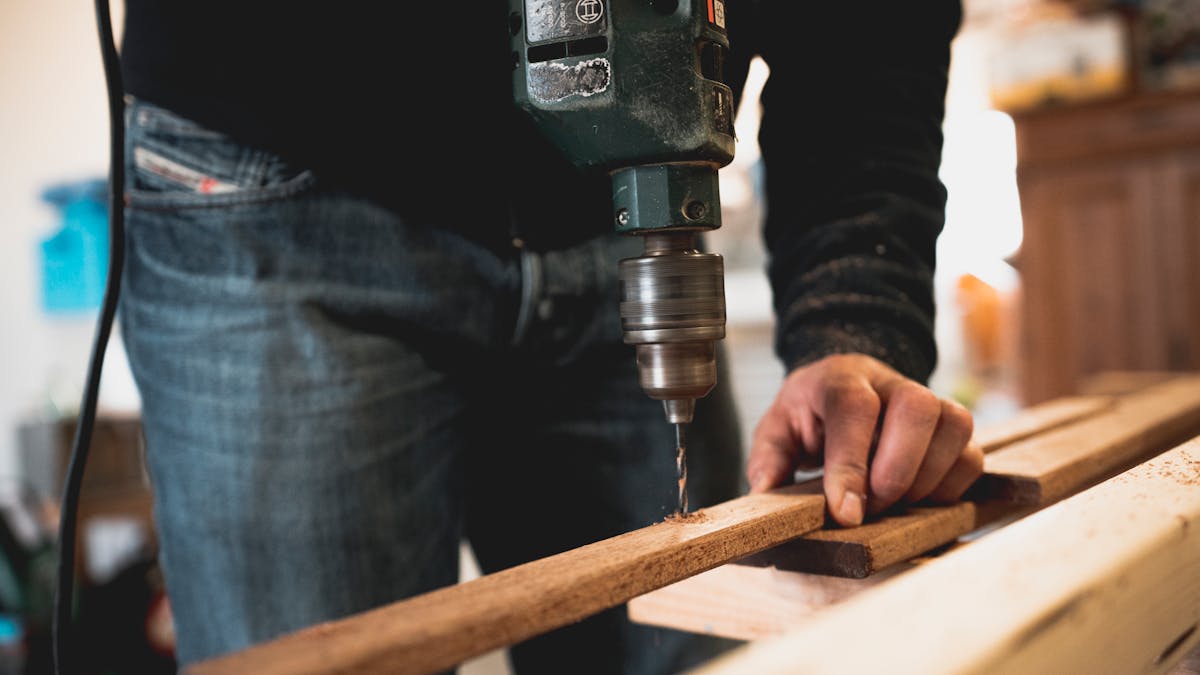
You have spent months choosing the benchtop material, the drawer handles, and the exact shade of two-pack polyurethane for your new kitchen. Then the cabinet maker shows up, takes measurements by eye instead of with a laser, and installs doors that do not sit flush. Custom cabinetry is one of the biggest single line items in a kitchen or bathroom renovation, and the gap between a skilled cabinet maker and an average one shows up every time you open a drawer for the next twenty years.
With over 8,500 licensed cabinet makers across Queensland and New South Wales on the TradieVerify database, there is no shortage of options. The challenge is picking the right one and knowing what credentials actually matter. This guide covers licensing requirements by state, typical costs for kitchen and bathroom cabinetry in AUD, contract thresholds, insurance, what qualifications to look for, and the questions that separate a professional from someone with a router and an ABN. You can check any cabinet maker’s licence on TradieVerify’s search page.
Why Hiring a Licensed Cabinet Maker Matters
Cabinet making sits at the intersection of manufacturing and building work. Your cabinet maker fabricates the components in a workshop, then installs them in your home. That installation phase is what triggers licensing requirements in most states, because it constitutes building work under the relevant legislation.
Quality and precision. A qualified cabinet maker has completed a Certificate III in Cabinet Making and Timber Technology (MSF30322), which involves 42 to 48 months of apprenticeship training. That training covers joinery, materials science, CNC programming, surface finishing, and installation techniques. The difference shows up in details you will live with daily: drawer runners that glide without wobble, doors that align to within a millimetre, mitred edges that meet cleanly, and moisture-resistant materials in wet areas.
Consumer protection. Under Australian Consumer Law, cabinetry services must be provided with due care and skill, be fit for the stated purpose, and last a reasonable time relative to the price paid. A $15,000 custom kitchen is expected to perform for decades, not peel or warp within a year. If your cabinet maker holds a licence, you can lodge complaints through the state regulator and access dispute resolution. Without a licence, your options narrow to the courts.
Warranty insurance. In states that require licensing, work above certain dollar thresholds triggers mandatory home warranty insurance. This covers you if the cabinet maker goes bankrupt or disappears before fixing defects. The thresholds vary by state (as low as $3,300 in Queensland), and only licensed tradespeople can obtain this insurance.
Accountability. A licensed cabinet maker is registered with a regulatory body, meets ongoing financial requirements, and can have their licence suspended or cancelled for substandard work. That accountability structure exists for your benefit.
Check Their Licence or Registration
Cabinet making licensing is one of the most inconsistent trades across Australia. Some states require a full contractor licence. Others require builder registration. Some have no requirement at all. Here is exactly what applies in each state.
States That Require a Licence
Queensland (QBCC) Queensland has the most structured licensing for cabinet makers. Any on-site cabinet making work over $3,300 (including GST) requires a QBCC licence under the “Cabinet Making” trade class. This covers installing, refurbishing, restoring, or repairing kitchen, bathroom, laundry, and other fitted cabinets and fitments. The licence requires trade qualifications, a managerial qualification (BSBESB402), and financial capacity evidence. Revenue tiers range from up to $200,000 through to over $12 million. There are 7,408 QBCC-licensed cabinet makers on TradieVerify.
New South Wales (NSW Building Commission) NSW offers two licence pathways for cabinet work. A Joinery licence covers manufacturing and installation of cabinetry. A Kitchen, Bathroom and Laundry Renovation (KBLR) licence covers broader renovation work including coordinating sub-trades like plumbers and electricians. The KBLR licence requires a Group A trade qualification (Carpentry, Joinery, Plumbing, or Wall and Floor Tiling) plus a Group B approved KBLR course, and at least one year of full-time experience. Residential building work over $5,000 (including GST) requires a licence. NSW has 1,118 licensed cabinet makers on TradieVerify.
Victoria (VBA) Victoria requires registration as a “Domestic Builder (Limited) — Cabinet Making, Joinery and Stair Construction” through the Victorian Building Authority. This covers the manufacture, assembly, and installation of joinery products including cabinets, cupboards, shelving, and fitments. The threshold is $16,000. Registered domestic builders must also hold Home Warranty Insurance. The application requires demonstrated experience and technical referees.
South Australia (CBS) South Australia requires a Building Work Contractor’s Licence plus a Building Work Supervisor registration for cabinet making installation work. Sole traders need both. A minimum net assets requirement of $10,000 applies. All building work must be supervised by a registered building work supervisor.
States With No Specific Cabinet Making Licence
Western Australia — Cabinet making and installation, including second-fix joinery, is exempt from the Registered Builder requirements under WA building regulations.
Australian Capital Territory — No licensing requirement exists for cabinet making, carpentry, or wet area work in the ACT.
Northern Territory — No licensing obligations apply to cabinet making manufacture or installation. Builder registration is only required when increasing residential floor area.
Tasmania — No specific cabinet making licence category exists through CBOS. General building provider licences may apply for larger projects, but standalone cabinet work is not separately licensed.
What this means for you: In states without licensing, you lose the regulatory safety net. There is no regulator to complain to and no mandatory warranty insurance. In these states, checking qualifications, insurance, references, and contracts becomes even more important because you are relying on private remedies rather than government oversight.
All states participate in Automatic Mutual Recognition (AMR), so a licence issued in one state is recognised in others. A QBCC-licensed cabinet maker can work in Victoria without applying for VBA registration separately.
Search for licensed cabinet makers in your state on TradieVerify.
Verify Insurance Coverage
Cabinet makers should carry several types of insurance depending on the scope and value of the project.
Public liability insurance. This covers damage to your property or injury to people during the work. A cabinet maker drilling into a water pipe behind a wall, or a heavy benchtop dropping on a floor, creates real liability. Look for a minimum of $5 million cover for residential work. Ask for a Certificate of Currency before the job starts.
Home warranty insurance. This is mandatory in several states above certain thresholds. It protects you if the cabinet maker dies, disappears, becomes insolvent, or has their licence suspended before completing the work or fixing defects.
| State | Home Warranty Insurance Threshold |
|---|---|
| QLD | $3,300 (incl GST) |
| NSW | $20,000 (incl GST) |
| VIC | $16,000 |
| SA | $12,000 |
| WA | $20,000 |
| ACT | $12,000 |
| NT | $12,000 |
| TAS | No state-mandated scheme |
Workers’ compensation insurance. Legally required for any business that employs workers. If the cabinet maker brings a team to install your kitchen, each worker must be covered.
Contract works insurance. Covers loss or damage to materials and work in progress. Relevant for larger projects where expensive materials are stored on-site before installation.
Get Multiple Quotes
The standard advice of getting three quotes applies, but cabinet making quotes need more detail than most trades because the range between flat-pack and full custom is enormous.
What a cabinet making quote should include:
- Detailed drawings or 3D renders of the proposed cabinetry
- Materials specification (carcass material, door material, benchtop, hardware brands)
- Number of cabinets, drawers, and speciality items (pull-out pantries, corner solutions, bin pulls)
- Installation timeline (from measure to completion)
- Whether demolition and removal of existing cabinetry is included
- Plumbing and electrical coordination (or whether you need to arrange sub-trades separately)
- Payment schedule with clear milestones
- Warranty terms for both materials and workmanship
Comparing quotes:
Not all quotes for “a new kitchen” are quoting the same thing. One cabinet maker might spec melamine carcasses with thermolaminate doors and basic soft-close hardware. Another might quote plywood carcasses with two-pack polyurethane doors and Blum Legrabox drawers. The second kitchen will cost more and last longer. Compare quotes on a like-for-like specification, not just the bottom line number.
Ask each quoting cabinet maker to break out the cost of materials, labour, and installation separately. This helps you understand where the money goes and where there is room for adjustment. Swapping from stone to laminate benchtops, for example, can save several thousand dollars without affecting the cabinet quality.
How Much Does Custom Cabinetry Cost in Australia?
Cabinet making costs vary significantly based on materials, complexity, and your location. Here are typical prices for 2026.
Kitchen Cabinets
| Type | Cost per Linear Metre | Full Kitchen (6-8 lm) |
|---|---|---|
| Flat-pack (supply and install) | $400 - $1,200 | $3,500 - $8,000 |
| Semi-custom | $900 - $1,700 | $7,000 - $15,000 |
| Custom melamine with soft-close | $1,200 - $2,200 | $11,000 - $18,000 |
| Custom two-pack polyurethane | $1,800 - $2,800 | $15,000 - $22,000 |
| Premium custom (timber veneer, stone) | $2,500 - $3,500+ | $20,000 - $35,000+ |
A full kitchen renovation including benchtops, splashback, plumbing, and electrical typically runs $25,000 to $70,000 depending on size and finish level.
Bathroom Vanities
| Type | Cost Range |
|---|---|
| Basic prefab replacement | $800 - $2,000 |
| Mid-range custom | $1,500 - $2,500 |
| Premium with stone benchtop | $3,500 - $5,000+ |
Built-In Wardrobes
| Type | Cost Range |
|---|---|
| Standard reach-in | $1,000 - $5,000 |
| Custom walk-in | $6,000 - $20,000+ |
| Per linear metre (installed) | $1,100 - $3,000 |
Laundry Cabinetry
Custom laundry cabinetry typically runs $4,000 to $12,000 depending on the configuration and materials.
Material Upgrade Costs (vs Melamine Baseline)
| Material | Premium Over Melamine |
|---|---|
| Thermolaminate shaker doors | +10% to 25% |
| Two-pack polyurethane | +20% to 40% |
| Timber veneer or solid timber | +30% to 60% |
Installation Labour
| Item | Cost |
|---|---|
| Small kitchen installation | $2,000 - $3,000 |
| Demolition and removal | $500 - $1,500 |
| Hourly rate (general) | $30 - $50/hr |
| Hourly rate (Sydney/Canberra) | $60 - $150/hr |
Factors that affect your final price:
- Materials. The carcass material (melamine, plywood, MDF) and door material (thermolaminate, two-pack, timber) are the biggest cost drivers. Plywood carcasses cost 30-50% more than melamine but are more durable in wet areas.
- Hardware. Soft-close drawers add $50 to $120 per drawer. Pull-out pantry systems run $500 to $1,500 each. Corner carousel solutions cost $400 to $1,200. Blum and Hettich are the premium brands.
- Complexity. L-shaped and U-shaped kitchens have corner cabinets that need specialty fittings. Islands, breakfast bars, and integrated appliance housings all add cost.
- Location. Sydney, Melbourne, and Canberra are the most expensive markets. Regional areas are generally cheaper but may have longer lead times due to fewer suppliers.
- Design time. A detailed design process with multiple revisions, 3D renders, and in-home consultations adds to the cost but reduces the chance of expensive mistakes.
Understand the Contract
Contract requirements vary by state and by the value of the work. For custom cabinetry, which can easily exceed $10,000, written contracts are required in most states.
Queensland
| Project Value | Contract Requirement | Max Deposit |
|---|---|---|
| Under $3,300 | Small Building Projects Contract optional | 20% |
| $3,301 - $19,999 | Level 1 Renovation, Extension and Repair Contract required | 10% |
| $20,000+ | Level 2 Contract + QBCC consumer building guide must be provided before signing | 5% |
There is a relevant exception for cabinet makers: a deposit of up to 20% is allowed when substantial customised or prefabricated work is done off-site and represents more than 50% of the total contract price. Since most cabinetry is manufactured off-site before installation, this exception often applies. Get it in writing.
New South Wales
| Project Value | Contract Requirement |
|---|---|
| Under $5,000 | No written contract required |
| $5,000 - $20,000 | Small job contract (basic information, signed, dated, licence number) |
| Over $20,000 | Full home building contract with 5 business day cooling-off period, 17-item checklist, progress payment schedule |
Maximum deposit in NSW: 10% of the contract price.
Victoria
Domestic Works Under $10,000 contract is suitable for most standalone cabinetry jobs. For larger projects, a Small Works Contract applies. Home Warranty Insurance is mandatory for all registered Domestic Builders.
Key contract items to check regardless of state:
- Full description of materials and finishes (not just “kitchen cabinets” but specific brands, colours, and hardware)
- Timeline with start date and completion date
- Payment schedule tied to milestones (not calendar dates)
- Defects liability period (typically 12 to 24 months)
- What happens if you want to make changes after the contract is signed (variation process)
- Cancellation terms and cooling-off period
Cabinet Maker vs Joiner: What is the Difference?
These two trades overlap but are not identical.
A cabinet maker creates furniture, cabinets, kitchen units, vanities, entertainment units, and built-in storage. The focus is on detailed, precise, aesthetic work. Most cabinet making happens in a factory or workshop. The components are then delivered and installed on-site. Cabinet makers work primarily with sheet materials (plywood, MDF, melamine board) and solid timber, finished with laminates, veneers, polyurethane, or paint.
A joiner constructs structural wooden components of buildings: doors, windows, staircases, architraves, and skirtings. Joinery is more about the building fabric than furniture. The two trades have different Certificate III qualifications (Cabinet Making vs Joinery), though some tradespeople hold both.
For a kitchen, bathroom, or laundry renovation, you want a cabinet maker. For custom doors, timber staircases, or window frames, you want a joiner. Some businesses offer both services under one roof.
Questions to Ask Before Hiring
These questions help you assess whether a cabinet maker is right for your project.
- Are you licensed in this state? Get their licence number and verify it. In QLD, check on the QBCC website. In NSW, check with the NSW Building Commission. In VIC, check VBA registration. Or use TradieVerify to search across states.
- What is your design process? A good cabinet maker offers an in-home consultation, takes laser measurements, produces detailed drawings or 3D renders, and allows at least one round of revisions before manufacturing begins.
- What materials do you use for carcasses? Melamine is standard. Plywood is premium. MDF is used for doors and panels. The answer tells you about the quality tier they work in.
- What hardware brands do you use? Blum, Hettich, and Grass are the premium drawer runner and hinge brands. They cost more but have 15+ year warranties and smooth operation. Budget hardware shows its age faster.
- What is the timeline from design approval to installation? Custom kitchens typically take 6 to 12 weeks from sign-off to installation. If someone promises 2 weeks, they are either running a flat-pack operation or overpromising.
- Who does the installation? Some cabinet makers install their own work. Others subcontract installation. The person who built it understands the tolerances and adjustments needed. In-house installation is generally preferable.
- Do you carry public liability and home warranty insurance? Get certificate of currency for both where applicable.
- Can you provide references from recent kitchen or bathroom projects? Ask for 2 to 3 references and actually call them. Ask about communication, timeline accuracy, and how the cabinet maker handled any issues.
- What warranty do you offer on workmanship? Separate from the hardware manufacturer warranty. A good cabinet maker stands behind their work for 5 to 10 years.
- What happens if I want to make a change after manufacturing has started? Variations in custom work are expensive. Understand the process and cost implications upfront.
Red Flags to Watch For
No portfolio. A cabinet maker who has been in business for any length of time should have photos of completed projects. No portfolio suggests either inexperience or work they are not proud of.
No written contract offered. For any project over $3,300, a written contract is legally required in QLD. Even where it is not legally required, refusing to put the scope, price, and timeline in writing is a red flag.
Cannot provide a licence number. In QLD and NSW, this is mandatory for the work to be legal. In other states, it indicates a lack of formal registration.
Unusually low quote. If one quote is 40% below the others for the same specification, either the materials are inferior, the scope is different, or they are cutting corners somewhere. Ask what accounts for the difference.
Demanding large upfront deposits. State laws cap deposits for good reason. In NSW, the maximum is 10% of the contract price. In QLD, it is 5% for contracts over $20,000 (with the 20% exception for off-site fabrication). Anyone demanding 50% upfront before starting is outside the legal limits in most states.
Poor communication during quoting. If they are slow to return calls, vague about timelines, or dismissive of your questions during the quoting phase, that behaviour will not improve once they have your money. Communication quality during the quote is a preview of the entire project.
Rushing you to sign. A custom cabinetry project should involve a proper design phase. If someone is pushing you to sign a contract after a single 30-minute visit without detailed drawings, they are prioritising speed over accuracy.
Frequently Asked Questions
Do I need a licensed cabinet maker in every state?
No. Licensing requirements differ by state. Queensland, New South Wales, Victoria, and South Australia require a licence or registration for cabinet making work above certain dollar thresholds. Western Australia, the ACT, the Northern Territory, and Tasmania do not have specific cabinet making licence requirements. In unlicensed states, check qualifications (Certificate III), insurance, and references more carefully since there is no regulator backing you up.
What qualifications should a cabinet maker have?
The standard trade qualification is a Certificate III in Cabinet Making and Timber Technology (MSF30322), completed through a 3.5 to 4 year apprenticeship. This replaced the older MSF31113 qualification. The cert covers joinery, CNC operation, timber selection, surface finishing, and installation. A Construction Induction White Card is also required for any on-site work.
How long does a custom kitchen take from start to finish?
Expect 8 to 16 weeks total. The design phase (consultation, measurements, drawings, revisions) typically takes 2 to 4 weeks. Manufacturing takes 4 to 8 weeks depending on complexity and the cabinet maker’s workload. Installation takes 2 to 5 days for a standard kitchen. Some cabinet makers have longer lead times, so ask early.
Should I choose flat-pack or custom cabinets?
Flat-pack cabinets (Kaboodle, Ikea, Bunnings) cost $3,500 to $8,000 for a full kitchen and work well for standard layouts in rental properties or budget renovations. Custom cabinets cost $11,000 to $35,000+ but offer exact-fit dimensions, better materials, premium hardware, and finishes that flat-pack cannot match. For a home you plan to live in long-term, custom cabinetry is a better investment. The per-year cost of a $20,000 kitchen that lasts 25 years is $800. A $5,000 flat-pack that needs replacing in 10 years costs $500 per year but with two disruptions.
What is the difference between melamine and two-pack polyurethane doors?
Melamine doors have a pre-finished decorative paper surface bonded to MDF or particleboard. They are affordable, durable, and available in hundreds of colours and patterns. Two-pack polyurethane doors are spray-painted with multiple coats of automotive-grade paint, sanded between coats, and finished to a glass-smooth surface. Two-pack costs 20-40% more than melamine but offers richer colour depth, no visible edge banding, and a premium feel. Two-pack can be repaired and repainted. Melamine cannot.
What consumer protections apply to custom cabinetry?
Under Australian Consumer Law, custom cabinetry must be of acceptable quality, fit for the purpose you specified, and match any description or sample provided. These guarantees apply regardless of whether the cabinet maker offers a separate warranty. For a major failure (work is substantially unfit for purpose), you can reject the work and request a refund. For minor defects, the cabinet maker must repair, replace, or refund within a reasonable time. These consumer guarantees continue after any manufacturer warranty period expires.
Key Takeaways
- Cabinet making licensing varies wildly across Australia. QLD, NSW, VIC, and SA require licences. WA, ACT, NT, and TAS do not.
- Over 8,500 licensed cabinet makers are listed on TradieVerify across Queensland and New South Wales.
- Always verify the licence in states where it is required. In unlicensed states, check the Certificate III qualification, insurance, and references instead.
- Budget $11,000 to $22,000 for a custom kitchen in melamine or two-pack, or $3,500 to $8,000 for flat-pack.
- Written contracts are legally required above $3,300 in QLD and $5,000 in NSW. Get everything in writing regardless of your state.
- Check public liability insurance ($5 million minimum) and home warranty insurance where applicable.
- Allow 8 to 16 weeks from design to completion for a custom kitchen.
Search for licensed cabinet makers in your area on TradieVerify and verify their credentials before signing a contract.
Sources
- QBCC — Cabinet Making licence requirements. qbcc.qld.gov.au
- NSW Government — Kitchen, Bathroom and Laundry Renovation work licensing. nsw.gov.au
- Victorian Building Authority — Domestic Builder registration for Cabinet Making. vba.vic.gov.au
- Australian Cabinet and Furniture Association — Industry licensing and consumer information. acfa.net.au
- ACCC — Consumer guarantees on services. accc.gov.au
- QBCC — Domestic building contracts and deposit limits. qbcc.qld.gov.au
- CHOICE — Home warranty insurance by state. choice.com.au
- training.gov.au — MSF30322 Certificate III in Cabinet Making and Timber Technology. training.gov.au