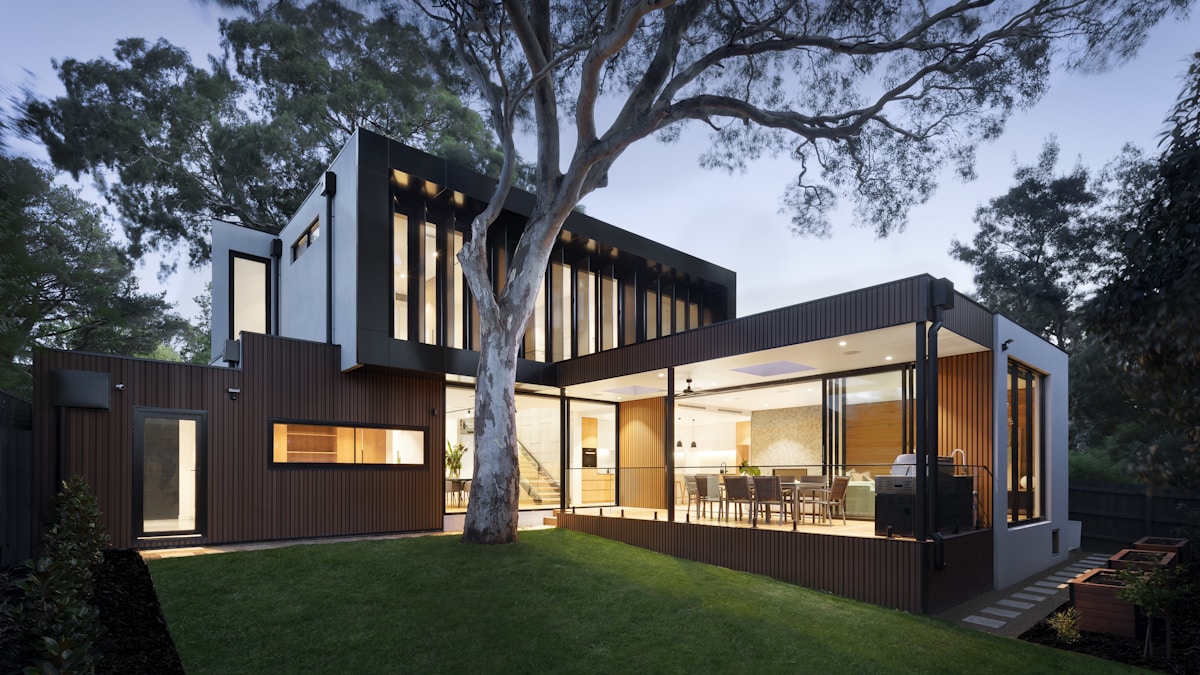
Planning a renovation in Fitzroy, a new build in the western suburbs, or a home extension in the Mornington Peninsula? Victoria has one of the most detailed regulatory frameworks for building work in Australia. The Victorian Building Authority (VBA) registered over 30,000 building practitioners, and the state’s consumer protections give homeowners strong rights when things go wrong. But those protections only work if you hire the right builder from the start. This guide covers everything you need to know to hire a registered builder in Victoria, from checking VBA registration to understanding your rights under the Domestic Building Contracts Act 1995. Start by browsing licensed builders in TradieVerify’s builder directory.
Why You Need a Registered Builder in Victoria
First, a quick terminology note: Victoria uses the term “registration” rather than “licence” for builders. A registered domestic builder in Victoria has met the requirements set by the Victorian Building Authority (VBA) and the Building and Plumbing Commission (BPC). The effect is the same. They are legally authorised to carry out building work.
Under the Building Act 1993, domestic building work valued at over $10,000 must be carried out by a registered builder. Some types of work require a registered builder regardless of cost, including re-stumping, re-blocking, demolishing, or removing a home.
Legal protection. A registered builder in Victoria has demonstrated relevant qualifications, provided technical references, and submitted an evidence portfolio to the VBA. Their work must comply with the National Construction Code and Victorian building regulations.
Domestic Building Insurance. When you hire a builder in Victoria for residential work valued at over $16,000, they must take out Domestic Building Insurance (DBI) before starting work or accepting any payment. DBI provides up to $300,000 in coverage per claim, one of the highest levels in Australia.
Statutory warranties. Under the Domestic Building Contracts Act 1995, builders provide implied warranties on all domestic building work. These warranties cover structural defects for 6 years and non-structural defects for 2 years.
Dispute resolution. Victoria has a dedicated body for building disputes: Domestic Building Dispute Resolution Victoria (DBDRV), now part of the Building and Plumbing Commission. Before you can take a building dispute to VCAT, you must first apply for conciliation through DBDRV. This structured process gives homeowners a free, accessible pathway to resolve problems.
You can check any Victorian builder’s registration on TradieVerify’s search page in seconds.
How to Check a Builder’s Registration in Victoria
Checking a builder’s registration in Victoria takes five minutes and should be the first thing you do before engaging anyone.
Step 1: Use TradieVerify search. Head to TradieVerify’s licence search and enter the builder’s name or registration number. TradieVerify cross-references VBA data so you can confirm their registration status, type, and details in one place. This is the fastest way to hire a builder in Victoria with confidence.
Step 2: Verify on the VBA register. For a second check, visit the VBA’s online practitioner register at vba.vic.gov.au. Search by registration number or name and confirm the details match what the builder gave you.
Step 3: Check disciplinary history. The VBA publishes details of disciplinary actions taken against registered builders. Check for any show cause notices, suspensions, or cancellations before proceeding.
What to check in the results:
- Registration number matches what the builder provided on their quote
- Registration type covers the work you need (see types below)
- Registration status is current, not expired or suspended
- Conditions or limitations that may restrict the builder’s scope
- Disciplinary history showing any past enforcement action
Check the company structure. If you are hiring a company, confirm that the company holds registration (not just an individual within the company). The business entity entering into the contract with you must be the registered practitioner.
You can also browse licensed builders in Victoria on TradieVerify to find verified builders in your area.
Understanding VIC Builder Registration Types
Victoria’s builder registration system differs from other states. Instead of numbered classes (A, B, C), Victoria uses descriptive categories. The two main types relevant to homeowners are Domestic Builder (Unlimited) and Domestic Builder (Limited).
Domestic Builder (Unlimited)
This is what you want for any major residential project. A Domestic Builder (Unlimited) registration allows the practitioner to carry out, manage, and arrange all components of domestic building work. This covers new home builds, major renovations, extensions, and any other residential construction.
Domestic Builder (Limited)
A limited registration restricts the builder to specific categories of work. There are over 30 classes of limited domestic building work, including:
| Limited Registration Class | Scope |
|---|---|
| Carpentry | Structural and non-structural carpentry |
| Bricklaying and blocklaying | Brick and block construction |
| Bathroom, kitchen and laundry renovation | Renovations within these rooms |
| Painting and decorating | Interior and exterior painting |
| Roof tiling | Roof tile installation and repair |
| Swimming pool and spa construction | Pool and spa builds |
| Glazing | Window and glass installation |
| Door and window replacement | Replacing doors and windows |
The key distinction: If your project involves a full home build, major extension, or renovation that spans multiple trades, you need a Domestic Builder (Unlimited). A limited registration only covers the specific trade category listed. If someone with a limited (carpentry) registration offers to manage your entire renovation, they are operating outside their registration.
For more on builder registration across Australia, visit the builder trade page.
Victorian Domestic Building Insurance (DBI)
Victoria’s Domestic Building Insurance is one of the strongest homeowner protections in Australia, with coverage of up to $300,000 per claim. Understanding how DBI works is essential when you hire a builder in Victoria.
When Is DBI Required?
DBI is mandatory for all domestic building work in Victoria valued at over $16,000. The builder must obtain the policy and provide you with the DBI certificate and a currency certificate before starting work or accepting any payment, including the deposit.
What Does DBI Cover?
DBI protects you if the builder:
- Dies before completing the work or fixing defects
- Becomes insolvent (goes bankrupt or into liquidation)
- Disappears and cannot be found
- Fails to comply with a VCAT or court order (for policies issued after 1 July 2015)
That last trigger is significant. In other states, warranty insurance only activates on death, insolvency, or disappearance. Victoria’s DBI can also kick in when a builder refuses to comply with a tribunal order to fix defective work.
Coverage Periods and Limits
| Coverage Type | Period | Maximum Amount |
|---|---|---|
| Structural defects | 6 years from completion | Up to $300,000 |
| Non-structural defects | 2 years from completion | Up to $300,000 |
The $300,000 maximum is the total available per claim, covering completion of unfinished work, defect rectification, and related expenses such as temporary accommodation.
DBI Exemptions
DBI is not required for:
- Buildings with more than 3 storeys above ground level containing 2 or more dwellings
- Commercial or industrial buildings
Who Administers DBI?
DBI has been administered by the Victorian Managed Insurance Authority (VMIA). From 1 July 2025, the Building and Plumbing Commission (BPC) takes over responsibility for providing DBI in Victoria.
How to Verify DBI Coverage
Ask your builder for the DBI certificate and currency certificate. You can verify coverage through the VMIA (or BPC from July 2025). Never accept a verbal assurance that insurance is in place. Demand the certificates.
You must notify the insurer separately. If you need to make a DBI claim, you must notify the insurer directly. A claim or complaint against the builder does not automatically trigger the insurance. Failure to formally notify the insurer could result in losing coverage.
For a broader look at warranty insurance, read the guide on home warranty insurance for Australian homeowners.
VIC Contract Requirements and Deposit Limits
Victoria has some of Australia’s most detailed contract and payment protections for homeowners under the Domestic Building Contracts Act 1995. These rules are designed to prevent the problems that have burned too many homeowners.
Written Contracts
A written contract is mandatory for all domestic building work over $10,000. The Domestic Building Contracts Act sets out what must be included:
- Builder’s VBA registration number
- Contract price (or how it will be calculated)
- Description of work to be carried out
- Plans and specifications
- Start date and completion date
- Insurance details (DBI certificate)
- Cooling-off period notice (required by law)
- Warranty details
Deposit Limits
Victoria has legislated deposit caps:
| Contract Value | Maximum Deposit |
|---|---|
| Under $20,000 | 10% of the contract price |
| $20,000 and above | 5% of the contract price |
Any builder who asks for more than these amounts is breaking the law. For a $500,000 build, the maximum deposit is $25,000 (5%). If someone asks for $50,000 or $100,000 upfront, walk away.
Insurance before deposit. The builder must provide you with the DBI certificate and currency certificate before accepting any payment, including the deposit. If they take your deposit without providing insurance documentation, they are in breach of the Domestic Building Contracts Act.
Progress Payments
Victoria legislates specific percentages for progress payments tied to building stages:
| Stage | Completion Criteria | Payment (All Stages) |
|---|---|---|
| Base | Foundation complete (slab poured or stumps in) | 10% |
| Frame | Frame completed and approved by building surveyor | 15% |
| Lock-up | Roof on, external cladding, flooring, doors, windows installed | 35% |
| Fixing | Internal fittings (cabinetry, plumbing, electrical fit-off) secured | 25% |
| Completion | Practical completion | Balance |
These percentages are set by law. A builder cannot demand 50% at lock-up stage when the law says 35%. If your builder’s payment schedule does not match these percentages, question it.
Cooling-Off Period
You have a 5 business day cooling-off period after receiving a signed copy of the contract. During this time, you can withdraw from the contract by giving written notice to the builder. The builder can retain a flat $100 plus any out-of-pocket expenses you pre-approved, but must refund everything else.
If the contract did not include the required cooling-off notices, you have 7 days from discovering the omission to withdraw.
Exception: You lose cooling-off rights if you previously signed a contract with the same builder for the same property on substantially similar terms, or if you had a lawyer review the contract before signing.
For tips on managing quotes and contracts, see the guide on getting quotes from tradies.
How to Get and Compare Quotes in Victoria
Once you have confirmed you are dealing with registered builders, the next step is gathering quotes. Here is how to do it properly when hiring a builder in Victoria.
Get at least 3 written quotes. Each quote should include the builder’s VBA registration number. This gives you a reasonable basis for comparison and helps you spot outliers.
What to compare:
- Scope of work described in each quote
- Inclusions and exclusions (what is covered, what is not)
- Prime cost items (estimated costs for materials not yet selected)
- Provisional sums (allowances for work where exact cost is unknown)
- Timeline for starting and completing the work
- Payment schedule and deposit amount (must comply with legislated limits)
Ask for references from recent Victorian projects similar to yours. A builder who has completed three renovations in your suburb is a stronger candidate than one whose references are all from two years ago in another state.
Check their insurance status. Before signing, confirm the builder can provide a current DBI certificate and currency certificate for your specific project. Do not leave this until work starts.
Verify their registration type. Make sure the builder holds a Domestic Builder (Unlimited) registration if your project involves managing multiple trades. A limited registration only covers specific trade categories.
For detailed advice on evaluating quotes, read the guide on getting quotes from tradies.
Red Flags When Hiring a Melbourne Builder
Certain warning signs come up again and again in building complaints across Victoria. Watch for these red flags when hiring a builder in Victoria.
-
No VBA registration number on their quote, website, or business card. Registered builders should display their credentials. If the registration number is nowhere to be seen, ask why.
-
Cannot provide a DBI certificate and currency certificate. For any project over $16,000, this is a legal requirement. No certificate means no protection. Do not accept a verbal promise that insurance will be arranged later.
-
Demands more than 5% deposit on a contract over $20,000. This is a legislated cap. A builder who asks for more is either ignorant of the law or deliberately breaking it. Either way, find someone else.
-
Pressures you to waive the cooling-off period. You have 5 business days to reconsider. A builder who pushes you to start work immediately before this period expires does not have your interests at heart.
-
Insists on cash-only payments. This is a tax avoidance strategy that leaves you with no paper trail. If something goes wrong, proving what you paid becomes your word against theirs.
-
No written contract for work over $10,000. The Domestic Building Contracts Act requires it. Refusing to provide one is illegal.
-
Quote significantly below all competitors. If one quote is 30% cheaper than the rest, the builder is likely cutting corners, underquoting to win the job (then loading up on variations), or leaving out major items.
-
Unable to provide references from recent Victorian projects. Every established builder should have satisfied clients willing to vouch for their work.
-
Progress payment schedule does not match the legislated stages. If the payment plan asks for 50% at frame stage when the law says 25% (base + frame combined), something is wrong.
-
Becomes hostile when you ask to verify their registration. A legitimate builder will encourage you to check. If your request is met with aggression or deflection, find someone else.
Owner-Builder Rules in Victoria
If you are thinking about managing the build yourself rather than hiring a builder in Victoria, you can apply for an owner-builder Certificate of Consent from the VBA.
When you need a Certificate of Consent: For domestic building work where you, the owner, manage or arrange the work (rather than hiring a registered builder), and the work value exceeds $16,000.
Key requirements:
- Complete an approved owner-builder course
- Apply to the VBA for a Certificate of Consent
- You can only get one Certificate of Consent every 3 years
Key things to know:
- No DBI. As an owner-builder, you cannot obtain Domestic Building Insurance. Future buyers have no DBI protection for your work.
- Disclosure requirement. If you sell the property within 6 years and 6 months of completing owner-builder work, you must give the buyer an owner-builder defects report from a registered building inspector. You must also disclose the owner-builder work in the vendor statement (Section 32).
- You are the builder. All the responsibilities of a registered builder fall on you, including coordinating trades, managing contracts, and ensuring compliance with the Building Act and building regulations.
- Subcontractors must be registered. Every trade you engage must hold current VBA registration for their category of work.
Owner-building can save on builder margins, but it comes with serious responsibilities. For a full breakdown, read the owner-builder permits guide.
What to Do If Things Go Wrong: DBDRV and VCAT
Victoria has Australia’s most structured building dispute resolution process. The state established Domestic Building Dispute Resolution Victoria (DBDRV) specifically to handle homeowner complaints about building work.
Step 1: Raise the Issue in Writing
Put your complaint to the builder in writing. Describe the problem clearly, include photos, reference your contract, and state what outcome you want. Give the builder 14 days to respond. Keep copies of everything.
Step 2: Apply to DBDRV for Conciliation
If the builder does not fix the problem, apply to DBDRV (now part of the Building and Plumbing Commission) for conciliation. This step is mandatory before you can take a domestic building dispute to VCAT.
DBDRV provides free conciliation services. An experienced conciliator will facilitate a discussion between you and the builder to try to resolve the dispute. Both parties must attend.
Possible outcomes from DBDRV:
- Agreement reached at conciliation, recorded formally
- Dispute resolution order issued by the Chief Dispute Resolution Officer if conciliation does not resolve the matter
- Consent orders if both parties agree to specific terms
- Certificate of conciliation issued if the dispute cannot be resolved, allowing you to proceed to VCAT
Step 3: Apply to VCAT
If DBDRV conciliation does not resolve the dispute, you can apply to the Victorian Civil and Administrative Tribunal (VCAT) with the certificate from DBDRV. VCAT handles building disputes and can order:
- Rectification of defective work
- Completion of unfinished work
- Compensation for financial losses
- Termination of the contract
Step 4: VBA Complaints
For matters related to registration breaches, unlicensed work, or building code violations, you can lodge a separate complaint directly with the VBA. The VBA has powers to investigate, issue show cause notices, and take disciplinary action including suspension or cancellation of registration.
Time Limits
- Non-structural defects: lodge within 2 years of completion
- Structural defects: lodge within 6 years of completion
- Building Act limitation: a 10-year limitation period applies to all building-related actions under the Building Act 1993
Do not wait. The longer you leave a problem, the harder it becomes to resolve. Act within the warranty period.
For the full dispute process, see the guide on how to handle a building dispute in Australia.
How Much Does a Builder Cost in Victoria?
Building costs in Victoria vary significantly depending on location, project type, and finish level. Melbourne is consistently one of Australia’s most expensive building markets, though regional Victoria offers more affordable options.
Common Project Costs in Victoria
| Project Type | Typical VIC Price Range |
|---|---|
| New home build (standard) | $1,800 - $2,800 per sqm |
| New home build (custom/premium) | $2,800 - $4,000+ per sqm |
| Full renovation | $1,200 - $2,800 per sqm |
| Kitchen renovation | $20,000 - $55,000 |
| Bathroom renovation | $12,000 - $35,000 |
| Granny flat | $100,000 - $200,000 |
| Deck or pergola | $8,000 - $25,000 |
| Home extension (single storey) | $100,000 - $300,000 |
Hourly Rates
General builder hourly rates in Victoria typically sit between $55 and $95 per hour. Rates in inner Melbourne tend to sit at the higher end, while regional Victoria builders are generally more affordable.
Factors Affecting Price
- Melbourne metro vs regional. Building costs in inner Melbourne and established suburbs are typically 15-25% higher than in regional centres like Geelong, Ballarat, or Bendigo. The eastern suburbs and bayside areas are among the most expensive.
- Site access. Tight inner-city sites with lane access only, no crane access, or shared walls with neighbouring properties add to costs. Demolition and site preparation in established suburbs can be expensive.
- Heritage overlays. Melbourne has extensive heritage overlays, particularly in inner suburbs. Heritage-listed properties require specific materials, methods, and council approvals that increase costs.
- Council planning requirements. Planning permit requirements vary significantly between municipalities. Some councils have stricter design guidelines, neighbourhood character overlays, or vegetation controls that affect project costs.
- Bushfire-prone areas. Parts of outer Melbourne and regional Victoria fall within Bushfire Attack Level (BAL) zones. Building in these areas requires fire-rated materials, ember protection, and specific construction methods that add to costs.
For more pricing information, browse the cost guides on TradieVerify.
Frequently Asked Questions
Do I need a registered builder for all work in Victoria?
No. A registered domestic builder is required for building work valued at over $10,000. However, some work requires a registered builder regardless of cost, including re-stumping, re-blocking, demolishing, or removing a home. Even for smaller projects, hiring a registered builder gives you better accountability and access to statutory warranties. Check the Victoria state page for more details.
How do I check a builder’s registration in Victoria?
The fastest way is through TradieVerify’s search, which cross-references VBA data and shows registration status and type. You can also search the VBA practitioner register at vba.vic.gov.au. Always confirm the registration type (Unlimited or Limited), expiry date, and check for any disciplinary actions before signing a contract.
What is DBI and when is it required?
Domestic Building Insurance (DBI) is mandatory for all domestic building work in Victoria valued at over $16,000. It provides up to $300,000 in coverage per claim. DBI protects you if the builder dies, disappears, becomes insolvent, or fails to comply with a VCAT or court order. The builder must provide you with the DBI certificate before starting work or accepting any payment. Read the full guide on home warranty insurance for more details.
What is the maximum deposit a builder can charge in Victoria?
The Domestic Building Contracts Act 1995 caps deposits at 5% of the contract price for contracts of $20,000 or more, and 10% for contracts under $20,000. Any builder demanding more than this is breaking the law. The builder must also provide DBI documentation before accepting the deposit. See the quotes guide for more on payment structures.
Do I have to go through DBDRV before VCAT?
Yes. For domestic building disputes in Victoria, you must first apply for conciliation through DBDRV (now part of the Building and Plumbing Commission) before you can take the matter to VCAT. DBDRV provides free conciliation and can issue binding dispute resolution orders. If conciliation does not resolve the dispute, DBDRV will issue a certificate allowing you to proceed to VCAT. See the building disputes guide for the full process.
What is the difference between Unlimited and Limited builder registration?
A Domestic Builder (Unlimited) can carry out, manage, and arrange all components of domestic building work, including full home builds, major renovations, and extensions. A Domestic Builder (Limited) can only perform work in their specific registered category (e.g., carpentry, bricklaying, bathroom renovations). For any project that involves multiple trades or a full build, you need an Unlimited builder. You can check builders on TradieVerify.
Sources
- Victorian Building Authority — Practitioner Register: https://www.vba.vic.gov.au
- Consumer Affairs Victoria — Builders and Tradespeople: https://www.consumer.vic.gov.au/licensing-and-registration/builders-and-tradespeople
- Domestic Building Contracts Act 1995 (Vic): https://www.legislation.vic.gov.au/in-force/acts/domestic-building-contracts-act-1995
- Building Act 1993 (Vic): https://www.legislation.vic.gov.au
- DBDRV — Dispute Resolution Process: https://www.dbdrv.vic.gov.au
- VMIA — Domestic Building Insurance: https://www.dbi.vmia.vic.gov.au
- VCAT — Building and Construction: https://www.vcat.vic.gov.au
- Master Builders Victoria: https://www.mbav.com.au