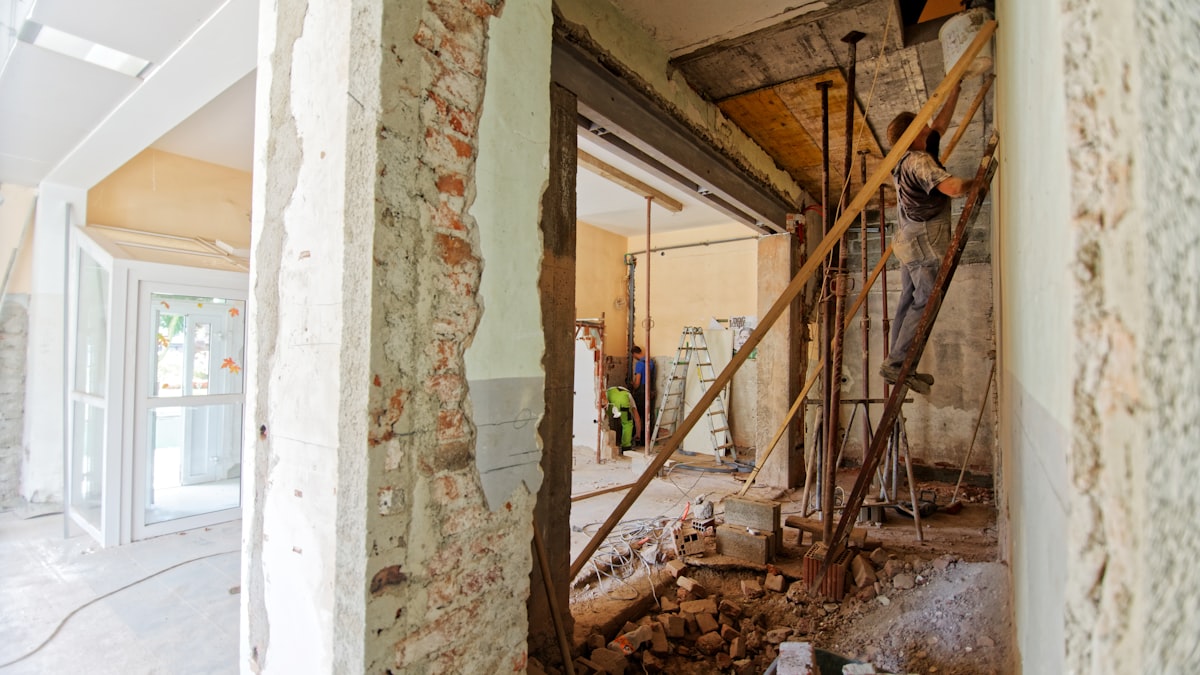
Brick is one of Australia’s most enduring building materials. From the double-brick homes of Perth to the brick veneer suburbs of Melbourne and Sydney, brickwork is everywhere. It is strong, fire-resistant, low-maintenance, and lasts well over a hundred years when laid properly. But when brickwork is done badly, it cracks, leans, lets in moisture, and costs a fortune to tear down and redo. The difference between good brickwork and bad brickwork comes down to who you hire.
There are currently 3,434+ licensed bricklayers listed on TradieVerify, covering Queensland, New South Wales, and more. This guide walks you through everything you need to know before hiring one: what to check, what to ask, how much to pay, and what to avoid. By the end, you will have the confidence to hire a licensed bricklayer who does the job right the first time.
Why You Should Only Hire a Licensed Bricklayer
Bricklaying looks simple from the outside. Stack some bricks, slap on some mortar, job done. But structural brickwork is engineering. Walls need to carry loads, resist wind, manage moisture, and stay plumb and level over decades. An unlicensed bricklayer who cuts corners can leave you with a wall that cracks within twelve months or a retaining wall that collapses after the first heavy rain.
Legal protection. In most Australian states, building work above a certain dollar threshold must be performed by a licensed tradesperson. If you hire someone without a licence and the work fails, you may have no legal recourse. Licensed tradespeople are registered with state regulators, which gives you a formal complaints pathway.
Insurance coverage. Licensed bricklayers carry public liability insurance and, where required, home warranty insurance. If an unlicensed worker damages your property or injures themselves on your site, your home insurance may refuse to cover the claim.
Australian Consumer Law. Under the Australian Consumer Law, services must be provided with due care and skill. Hiring a licensed professional makes it far easier to enforce these rights if something goes wrong. You can search for licensed bricklayers in your area on TradieVerify’s search page.
1. Understand the Different Types of Bricklaying Work
Not all bricklaying jobs are the same. The type of work affects which licence is needed, the skill level required, and how much you should expect to pay. Here are the most common residential bricklaying jobs in Australia.
Brick veneer walls. The most common wall type in modern Australian homes. A single layer of bricks is built as a non-structural cladding over a timber or steel frame. The frame carries the structural load; the bricks provide weather protection and appearance. This is standard new-home construction across most of the country.
Double brick (cavity brick) walls. Two layers of bricks with an air gap (cavity) between them. Common in Western Australia and older homes in other states. Double brick walls are structural, meaning the bricks carry the load of the roof and upper floors. Building double brick requires more skill and more bricks.
Retaining walls. Brick retaining walls hold back soil on sloped blocks. Any retaining wall over 600mm in height generally requires engineering design and council approval. A bricklayer building a retaining wall needs to understand drainage, weep holes, and lateral earth pressure.
Brick fences and garden walls. Boundary fences, front fences, and decorative garden walls. These need proper footings, pier spacing, and sometimes engineering if they are over a certain height. For more on fencing, see our fencing contractor hiring guide.
Brick paving. Driveways, paths, courtyards, and entertaining areas laid with clay pavers. This is a different skill to wall bricklaying and some bricklayers specialise in one or the other.
Fireplace and chimney work. Specialist bricklaying that requires knowledge of fire ratings, flue clearances, and heat-resistant mortar. Not every bricklayer does this type of work.
Repairs and repointing. Replacing cracked or damaged bricks and raking out old mortar to refill with new. Repointing is common on older homes where the original mortar has weathered and crumbled. Matching old bricks and mortar colour requires experience.
2. Check Their Licence Before Anything Else
Before you discuss timelines, colours, or costs, check the bricklayer’s licence. This is the single most important step in the hiring process.
How to verify. Search for the bricklayer on TradieVerify’s search page. Enter their name, licence number, or business name. You can also check directly on your state regulator’s website.
What to check:
- Licence status: It must be current and active, not expired, cancelled, or suspended.
- Licence class: Make sure it covers the type of bricklaying work you need. Some licences only cover certain categories.
- Business details: The name and ABN on the licence should match what appears on the quote.
- Disciplinary history: Has the bricklayer had complaints or enforcement actions lodged against them?
State thresholds. In New South Wales, a contractor licence is required for residential building work over $5,000. In Western Australia, the threshold is $20,000. Even below these thresholds, hiring a licensed bricklayer gives you warranty protections and a complaints process you do not get with unlicensed operators.
ABN check. Every legitimate bricklaying business should have an Australian Business Number. No ABN usually means no GST registration, no licence, and no insurance. A licensed bricklayer will give you their licence number without hesitation. If they dodge the question, move on.
3. Verify Their Insurance Coverage
Bricklaying involves heavy materials, scaffolding, mortar saws, and work near boundaries. Accidents happen, and insurance is your safety net.
Public liability insurance. This covers damage to your property or injuries to third parties. Look for a minimum of $10 million in cover. For work near boundaries or involving scaffolding at height, $20 million is better.
Home warranty insurance. For residential building work above your state’s threshold, the bricklayer may need to provide home warranty insurance. This protects you if the bricklayer becomes insolvent before completing the work or fixing defects.
Workers compensation. If the bricklayer has employees, they must hold workers compensation insurance. If a worker is injured on your property and the bricklayer has no workers comp, you could face a liability claim.
Ask for a certificate of currency. This one-page document from the insurer confirms the policy is active and the coverage amount. Check the expiry date covers the period your work will be done.
4. Get at Least Three Written Quotes
Never accept a single quote or a verbal price. Get at least three written quotes from licensed bricklayers so you can compare like-for-like.
What a proper quote should include:
- Description of the work (wall type, dimensions, height)
- Brick type and colour (or allowance amount)
- Footing details (depth, width, concrete grade, reinforcing)
- Number of piers and their spacing (for fences and freestanding walls)
- Scaffolding included or excluded
- Clean-up and waste removal included or excluded
- Start date, estimated completion, and payment terms
- Total price including GST
- Licence number and ABN
Compare like-for-like. Focus on the specifications. Is one quote using a cheaper brick? Has one excluded footings? Is scaffolding extra? The cheapest quote often excludes things the others include.
Red flags in quotes. Watch for quotes that lack detail, have no licence number, or ask for full payment upfront. A standard structure is 10 to 20 per cent deposit, progress payments tied to milestones, and the balance on completion.
5. Ask About Their Experience With Your Specific Job
A bricklayer who builds house walls all day is not necessarily the best person for a decorative brick fence with feature piers and curved sections. Different brickwork needs different skills.
Ask for photos of similar work. If you want a brick fence, ask to see brick fences they have built. If you need repointing on a heritage home, ask to see repointing jobs. The right bricklayer will have a portfolio that matches your project type.
Ask for references. A confident bricklayer will give you contact details of recent clients. Call them. Ask if the job was completed on time, on budget, and to a good standard.
Check their experience with your brick type. Recycled bricks, face bricks with tight tolerances, and oversized format bricks are all harder to lay than standard bricks. Make sure the bricklayer has worked with your chosen brick before.
Specialist skills. Arches, curved walls, decorative bond patterns (like Flemish bond or herringbone), and heritage restoration all require specialist experience. Do not assume every bricklayer can do these.
6. Know the Different Pricing Structures
Bricklayers charge in several different ways depending on the type and scale of the job. Understanding these structures helps you compare quotes accurately.
Hourly rate. Bricklayers typically charge $50 to $120 per hour depending on location and work type. Common for small repairs and repointing. The risk is that the job takes longer than expected, and you carry the cost overrun.
Per square metre. The most common method for wall construction. Rates range from $60 to $200 per square metre depending on wall type, brick, and complexity. Simple brick veneer sits at the lower end; double brick or decorative work at the top.
Per 1,000 bricks. Some bricklayers quote $500 to $1,000 per 1,000 bricks laid. Transparent because you can count bricks, but it typically does not include materials, footings, or scaffolding.
Fixed price. For defined projects like a brick fence or garden wall, a fixed price covers everything. This is the safest option because your total cost is locked in before work starts.
| Pricing Method | Typical Range | Best For |
|---|---|---|
| Hourly | $50 - $120/hr | Small repairs, repointing |
| Per m² | $60 - $200/m² | Wall construction |
| Per 1,000 bricks | $500 - $1,000 | Large-scale bricklaying |
| Fixed price | Varies by project | Fences, garden walls, defined scope |
How Much Does a Bricklayer Cost in Australia?
Bricklaying costs vary by project type, location, brick choice, and site conditions. Here are typical price ranges for common residential bricklaying projects in 2026.
Cost by Project Type
| Project | Typical Cost Range |
|---|---|
| Brick garden wall (per linear metre) | $300 - $700 |
| Brick fence (front, 10-15m) | $5,000 - $15,000 |
| Brick garden wall / retaining wall | $1,100 - $2,700 |
| Brick letterbox with pier | $800 - $1,500 |
| Brick BBQ or outdoor kitchen base | $2,000 - $5,000 |
| Foundation brickwork (new home) | $6,500 - $18,000 |
| Brick garage (single) | $32,000 - $52,000 |
| Repointing (per m²) | $40 - $80 |
| Brick paving (per m²) | $60 - $120 |
Cost by State
Labour costs and brick prices vary across the country. Here is a general guide to bricklaying rates per square metre by state.
| State | Approx. Cost per m² |
|---|---|
| NSW | ~$160/m² |
| QLD | ~$145/m² |
| SA | ~$180/m² |
| VIC | ~$150/m² |
| WA | ~$155/m² |
Factors That Affect Your Price
Brick type. Standard clay bricks are cheaper than face bricks, recycled bricks, or oversized format bricks. Recycled bricks in particular are labour-intensive because they are irregular in size and need more cutting and fitting.
Wall height. Walls over 1.8 metres generally require scaffolding, which adds to the cost. Taller walls also need more engineering, thicker footings, and more piers.
Access. If bricks and mortar need to be carried through a house or up a steep slope, the labour cost increases. Good site access with room for a forklift or crane to deliver brick packs directly to the work area saves time and money.
Site preparation. If the ground needs levelling or old structures need demolishing before bricklaying can start, these costs are additional. For demolition work, see our demolition contractor guide.
Complexity. Straight walls are faster and cheaper than walls with curves, corners, steps, or arches. Feature piers, capping, and decorative bond patterns all add to the labour cost.
State-by-State Licensing Guide
Licensing requirements for bricklayers differ across Australian states and territories. Here is a summary of the key regulators, thresholds, and how many licensed bricklayers are currently listed on TradieVerify.
| State | Regulator | Licence Required? | Active on TradieVerify |
|---|---|---|---|
| QLD | QBCC | Yes, for work over $3,300 | 1,970 |
| NSW | NSW Fair Trading | Yes, for work over $5,000 | 1,464 |
| VIC | VBA | Yes, for domestic work over $10,000 | Coming soon |
| WA | DMIRS | Yes, for work over $20,000 | Coming soon |
| SA | CBS | Yes, for work over $12,000 | Coming soon |
| TAS | CBOS | Yes, for residential building work | Coming soon |
| ACT | Access Canberra | Yes, construction occupation licence | Coming soon |
| NT | NT Building Practitioners Board | Yes, registration required | Coming soon |
A few things to note:
- Dollar thresholds refer to the total contract value including labour and materials.
- Structural brickwork (retaining walls, load-bearing walls, foundations) typically falls under a builder’s licence regardless of dollar value.
- Thresholds change over time. Always verify current rules with the relevant state regulator.
Penalties for unlicensed building work are serious. In Queensland, fines can exceed $40,000. In New South Wales, penalties reach up to $110,000.
7. Red Flags When Hiring a Bricklayer
Certain warning signs come up repeatedly in bricklaying disputes. If you spot any of these, walk away.
Cash only, no paperwork. No invoice means no GST, which usually means no licence and no insurance. You have zero consumer protection.
No licence number on the quote. Every licensed bricklayer has a licence number. If they will not provide one when asked, they are almost certainly unlicensed.
Significantly cheaper than everyone else. If three quotes come in at $8,000 to $10,000 and one comes in at $4,500, that is not a bargain. They are cutting corners: shallower footings, fewer piers, or unlicensed work.
No written contract. Any job over a few thousand dollars should have a written contract specifying scope, materials, timeline, and payment terms.
Pressure to decide immediately. “This price is only good today” is a sales tactic, not a building practice. A professional gives you time to decide.
Unwilling to provide references. If a bricklayer cannot show you photos of completed work or name a single past client, that is a red flag.
When to Hire a Bricklayer vs DIY
Some brickwork is suitable for a confident DIYer. Most is not.
Always hire a licensed bricklayer for: structural walls, retaining walls over 600mm, brick fences, any work requiring engineering or council approval, and any job above your state’s licensing threshold.
Possible DIY projects: small garden edging (a few courses high), a simple garden bed border, or laying a small area of brick pavers on a sand base.
The cost of getting it wrong. Demolishing a failed brick wall costs $50 to $100 per square metre just for removal, before you pay for the rebuild. A leaning fence or retaining wall failure can also damage neighbouring properties, creating legal liability. For anything structural, the cost of hiring a licensed bricklayer is always less than fixing a DIY disaster.
Frequently Asked Questions
How do I check if a bricklayer is licensed?
Search for them by name, licence number, or business name on TradieVerify’s search page. You can also check directly on your state regulator’s website: QBCC for Queensland, NSW Fair Trading for New South Wales, VBA for Victoria, and DMIRS for Western Australia. The search is free and takes less than a minute.
How much does a bricklayer charge per square metre?
Bricklaying rates in Australia range from $60 to $200 per square metre depending on the wall type, brick choice, and complexity. Simple brick veneer sits at the lower end. Double brick, decorative bonds, and feature walls sit at the top. State averages range from about $145/m² in Queensland to $180/m² in South Australia.
Do I need a bricklayer for a retaining wall?
If the retaining wall is over 600mm in height, yes. Most councils require engineering certification for retaining walls above this height, and the work must be carried out by a licensed builder or bricklayer. Even shorter retaining walls benefit from professional construction because they must manage soil pressure, water drainage (via weep holes), and structural loads. For more on retaining walls, see our guide on how much a retaining wall costs in Australia.
What qualifications does a bricklayer need in Australia?
A bricklayer typically holds a Certificate III in Bricklaying/Blocklaying (CPC33020), earned through a three-to-four-year apprenticeship. After completing their trade qualification, they can apply for a contractor licence through their state regulator to run their own business.
How long does bricklaying take?
An experienced bricklayer lays 400 to 500 bricks per day. A brick letterbox might take a day. A front brick fence (10 to 15 metres) typically takes three to five days including footings. A full brick veneer home can take two to four weeks depending on size. Weather delays and curing time for footings add to the timeline.
Can I do my own bricklaying?
Legally, yes, as an owner-builder on your own property with the necessary permits from your state regulator. However, the work must still meet the Building Code of Australia. If you later sell the property, you are liable for defects in owner-builder work for up to six years in most states. For structural work, hiring a licensed bricklayer is strongly recommended.
Summary
Hiring a licensed bricklayer in Australia comes down to a few key steps:
- Check their licence on TradieVerify or your state regulator before you sign anything.
- Verify insurance — get a certificate of currency for public liability at minimum.
- Get three written quotes that detail brick type, footing specs, mortar, piers, and total cost including GST.
- Ask for photos and references of work similar to your project.
- Understand pricing — rates range from $60 to $200/m² or $50 to $120/hr depending on the job.
- Watch for red flags — cash only, no licence number, no contract, or a price that is too good to be true.
Brickwork is permanent. A well-built brick wall or fence lasts a lifetime. A poorly built one costs you twice: once to demolish and once to rebuild. Take the time to hire right.
Ready to find a licensed bricklayer? Search for verified bricklayers in your area on TradieVerify.
Sources
- Queensland Building and Construction Commission (QBCC), Licensing requirements: qbcc.qld.gov.au
- NSW Fair Trading, Home building licensing: fairtrading.nsw.gov.au
- Victorian Building Authority (VBA), Practitioner registration: vba.vic.gov.au
- Housing Industry Association (HIA), Bricklaying trade information: hia.com.au
- Australian Consumer Law, Consumer guarantees: consumerlaw.gov.au
- Australian Business Register (ABR), ABN Lookup: abr.business.gov.au
- National Construction Code (NCC), Australian Building Codes Board: ncc.abcb.gov.au