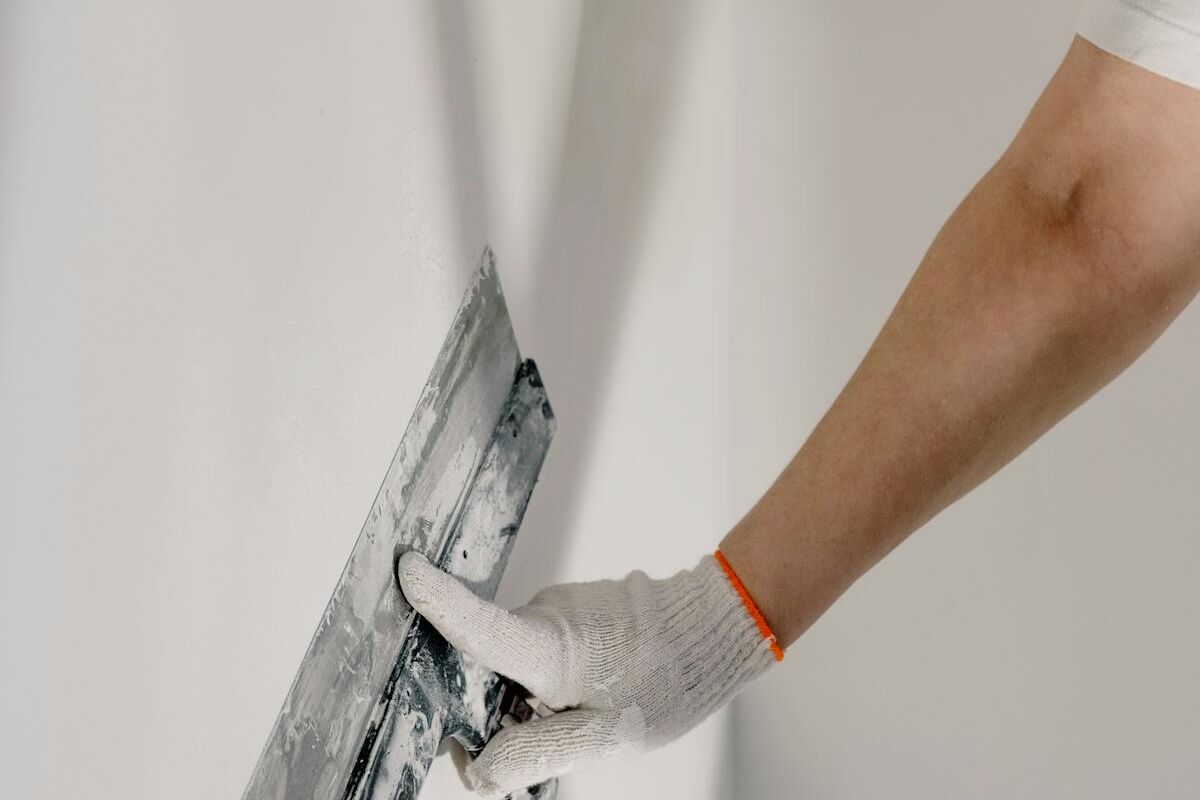
Plastering is the foundation of every interior finish in your home. Paint, wallpaper, and texture coats all sit on top of it, and any imperfection in the plaster shows through under light. Whether you are lining a new build, replacing water-damaged ceilings, or patching holes before a repaint, understanding plastering cost in Australia helps you budget properly and spot overpriced quotes. With over 4,200 licensed plasterers registered across Australia on TradieVerify, competition is strong and pricing varies by job type, location, and finish quality. This guide covers what plasterers charge for every common service so you know what to expect before booking.
Plastering Cost at a Glance
Plastering cost in Australia depends on the type of work, the size of the area, and your location. Here is how three typical project sizes compare.
| Budget Tier | Total Cost Range | What You Get |
|---|---|---|
| Small repair or patch job | $150-$400 | Hole patching, crack repairs, or small area skim coat. Includes filler, sanding, and finish ready for paint. |
| Single room plasterboard + cornice | $1,100-$1,700 | Full plasterboard lining of walls and ceiling for one standard bedroom or living area. Includes cornice, jointing, and sanding. |
| Whole house (new build or renovation) | $7,000-$15,000+ | Complete plasterboard installation throughout a 3-4 bedroom home. Includes all walls, ceilings, cornice, jointing, and final sand. |
These ranges assume standard 10mm or 13mm plasterboard and a smooth finish. Upgrading to fire-rated, acoustic, or moisture-resistant board adds to material costs.
Plasterboard Installation Cost Per Square Metre
Plasterboard (also sold under the brand name Gyprock) is the standard wall and ceiling lining in Australian homes. How much does a plasterer charge for plasterboard installation? Here is a breakdown.
| Service | Cost Per m2 | Notes |
|---|---|---|
| Plasterboard supply + install (walls) | $15-$25 | Standard 10mm or 13mm board, framed walls |
| Plasterboard supply + install (ceilings) | $25-$40 | Higher cost due to overhead work and bracing |
| Install only (board supplied) | $8-$16 | Labour only, homeowner or builder supplies board |
| Moisture-resistant board | $20-$35 | Required in wet areas (bathrooms, laundries) |
| Fire-rated board | $25-$40 | Required for garage walls, party walls, bushfire zones |
| Acoustic board | $30-$45 | Home theatres, bedrooms adjoining living areas |
For a standard 3-bedroom home with roughly 200-250 m2 of wall and ceiling area, expect plasterboard installation to cost between $4,000 and $8,000 fully installed, jointed, and sanded.
What affects plasterboard cost: Ceiling height over 2.7m increases labour time and may require scaffolding ($200-$500 per day hire). Curved walls, bulkheads, and recessed ceilings all push costs higher because they require more cutting, extra framing, and skilled finishing.
Cornice Installation Cost
Cornice (also called coving) is the decorative moulding that joins walls to ceilings. It hides the expansion gap and gives rooms a finished look. Cornice installation cost varies by profile size and material.
| Cornice Type | Cost Per Linear Metre | Notes |
|---|---|---|
| Standard cove (55mm-75mm) | $8-$15 | Most common in modern homes, simple curved profile |
| Medium profile (90mm) | $12-$20 | Slightly more decorative, suits larger rooms |
| Large ornamental (100mm+) | $18-$35 | Victorian, Art Deco, or Federation profiles |
| Square-set (shadow line) | $15-$25 | No cornice; walls meet ceiling with a clean 10mm shadow gap |
| Cornice replacement (remove old + install new) | $15-$30 | Includes removal, surface prep, and new cornice |
A standard 4m x 5m bedroom has roughly 18 linear metres of cornice. At $10-$15 per metre, that works out to $180-$270 for a single room. For a full house with 150-200 linear metres, budget $1,500-$3,000 for standard cove or $3,000-$6,000 for ornamental profiles.
Skim Coat Cost
Skim coating is a thin layer of plaster applied over existing walls or ceilings to create a smooth, paint-ready surface. It is common in renovation work where existing plaster is rough, patched, or has minor damage. The cost of a skim coat in Australia depends on the condition of the surface underneath.
| Skim Coat Type | Cost Per m2 | Notes |
|---|---|---|
| Light skim (good substrate) | $15-$25 | One coat over sound plaster or plasterboard |
| Full skim (rough substrate) | $25-$40 | Two coats over uneven brick, render, or damaged plaster |
| Ceiling skim | $25-$45 | Higher due to overhead work, often needed after removing textured coatings |
| Over existing texture (e.g. removing popcorn ceiling) | $30-$50 | Includes scraping, priming, and two-coat skim |
For a single room with 40-50 m2 of wall and ceiling area, skim coating typically costs $600-$1,500 depending on surface condition. Skim coating an entire house can run from $3,500 to $9,000.
Tip: Skim coating is often the most cost-effective way to refresh tired walls before painting. It costs less than stripping back to bare board and produces a better result than sanding alone. If you are planning a repaint, ask your plasterer about skim coat options. Our house painting cost guide covers what to budget for the painting stage.
Patching and Repair Costs
Small plastering repairs are the most common call-out job for plasterers. Here is what patching and repair work typically costs.
| Repair Type | Typical Cost | Notes |
|---|---|---|
| Small hole patch (fist-sized or smaller) | $80-$150 | Cut out damaged section, insert new board, joint and sand |
| Large hole patch (up to 300mm) | $150-$300 | Requires backing support and matching existing texture |
| Crack repair (per crack) | $80-$200 | Depends on length and whether structural movement caused it |
| Water damage repair (per area) | $200-$600 | Includes removing damaged board, drying check, new board, and finish |
| Ceiling sag repair | $300-$800 | Re-fixing or replacing sagging plasterboard sheets |
| Corner bead replacement | $100-$250 | Replacing dented or damaged external corner protection |
Most plasterers charge a minimum call-out fee of $100-$200 for small jobs, regardless of how quick the repair is. If you have multiple patches or repairs, it is cheaper to batch them into a single visit.
Ornamental and Decorative Plastering Cost
Ornamental plastering covers ceiling roses, decorative cornices, archways, columns, and restoration of heritage plaster features. This is specialist work that commands higher rates than standard plastering.
| Service | Typical Cost | Notes |
|---|---|---|
| Ceiling rose (supply + install) | $150-$500 | Simple plaster rose; ornate heritage reproductions can exceed $800 |
| Decorative cornice (Federation/Art Deco) | $25-$50 per lm | Hand-run or cast profiles, significantly more than standard cove |
| Archway (standard) | $400-$800 | Creating a curved opening between rooms |
| Archway (ornamental) | $800-$2,000+ | Detailed mouldings, keystones, or heritage restoration |
| Column or pilaster | $500-$1,500 each | Decorative half or full columns |
| Heritage plaster restoration | $80-$120 per hour | Specialist rate for matching existing period details |
Ornamental plastering is a niche skill. Not every plasterer does this work, so expect fewer quotes and higher prices. For heritage properties, look for plasterers who specialise in restoration and can match existing profiles. You can search for plasterers in your area on TradieVerify.
Plasterer Hourly Rates by State
How much does a plasterer charge per hour? Rates vary by state and city. Here are typical hourly rates across Australia.
| State/City | Hourly Rate | Notes |
|---|---|---|
| Sydney, NSW | $76-$105 | Highest capital city rates |
| Melbourne, VIC | $70-$90 | Strong demand, competitive market |
| Brisbane, QLD | $65-$89 | Slightly lower than southern capitals |
| Perth, WA | $75-$90 | Mining sector drives rates up |
| Adelaide, SA | $60-$75 | Generally the most affordable capital |
| Hobart, TAS | $60-$80 | Smaller market, fewer specialists |
| Canberra, ACT | $75-$95 | Government building standards drive higher rates |
| Darwin, NT | $70-$90 | Remote location premium |
| Regional areas | $50-$75 | Lower overheads, but travel charges may apply |
Most plasterers charge by the square metre or by the job rather than by the hour. Hourly rates apply more often to repair work, small jobs, or time-and-materials contracts. Daily rates typically sit between $450 and $650 per day.
What drives price differences: Capital city plasterers pay more for insurance, parking, and travel time between jobs. Regional plasterers have lower overheads but may charge travel fees for remote locations. The complexity of the finish matters too. A plasterer working on a straightforward new build can cover more area per day than one doing patchy renovation work in an older home with uneven framing.
State Licensing and Regulations
In Australia, plastering work over certain value thresholds requires a licensed tradesperson. Here is how licensing works in each state for plastering.
| State | Regulator | Licence Required | Active Plasterers on TradieVerify |
|---|---|---|---|
| QLD | QBCC | Yes, for work over $3,300 | 2,998 |
| NSW | NSW Fair Trading | Yes, for work over $5,000 | 1,220 |
| VIC | VBA | Registration required for domestic building work | - |
| WA | DEMIRS | Yes, for work over $20,000 (building contractor) | - |
| SA | CBS | Yes, for work over $5,000 | - |
| ACT | Access Canberra | Yes, for all building work | - |
| TAS | CBOS | Yes, for work over $20,000 | - |
| NT | NT BAS | Yes, for all building work | - |
Always check that your plasterer holds a current licence for your state. You can verify licences through each state regulator or search for licensed plasterers on TradieVerify. Our plasterer hiring guide walks through how to check credentials, get quotes, and spot quality work.
What Affects Plastering Cost?
Several factors push plastering costs up or down beyond the base rate per square metre.
Surface condition is the biggest variable. New framing with straight studs and level noggins is fast to line. Renovation work with old lath-and-plaster, uneven brick, or water-damaged framing takes longer and costs more because of the extra preparation.
Access and ceiling height change labour time. Standard 2.4m ceilings are straightforward. Raked ceilings, voids, stairwells, and rooms over 3m high require scaffolding or stilts and slow the plasterer down.
Finish quality matters. A level 4 finish (standard residential) is cheaper than a level 5 finish (glass-smooth, required under gloss paint or in areas with strong raking light). If you are using flat or low-sheen paint, level 4 is fine. Gloss or semi-gloss paint shows every imperfection, so you need level 5.
Location affects pricing through travel time, parking costs, and local market rates. Inner-city jobs in Sydney or Melbourne cost more than the same work in a regional town.
Job size determines economies of scale. A plasterer can line a whole house more efficiently than a single room because setup, travel, and cleanup time is spread across more billable area.
How to Save on Plastering Costs
You do not need to cut corners to keep plastering costs down. Here are practical ways to reduce your bill.
- Batch small jobs together. Multiple patches, a cornice repair, and a skim coat in one visit avoids repeat call-out fees.
- Prepare the site. Move furniture, remove old fittings, and clear access to walls and ceilings. Plasterers charge for time spent waiting or working around obstacles.
- Get three quotes. Pricing varies significantly between plasterers. Getting at least three written quotes helps you find a fair price. Use TradieVerify to find licensed plasterers in your suburb.
- Choose standard finishes. Ornamental cornice and level 5 finishes look great but cost substantially more. Standard cove cornice and level 4 finish are perfectly good for most rooms.
- Time your project. Plasterers are busiest during the building boom months (spring and summer). Booking in autumn or winter can sometimes get you a better rate.
Frequently Asked Questions
How much does it cost to plaster a room in Australia?
Plastering a standard bedroom (roughly 4m x 5m with 2.4m ceilings) costs between $1,100 and $1,700 for plasterboard, jointing, cornice, and sanding. This assumes new stud framing. If you are re-plastering over existing walls, a skim coat for the same room costs $600-$1,500 depending on surface condition. Larger living areas or rooms with high ceilings will cost more.
How much does a plasterer charge per square metre?
Plasterers in Australia charge between $15 and $90 per square metre depending on the type of work. Standard plasterboard installation runs $15-$25 per m2 for walls and $25-$40 for ceilings. Skim coating costs $15-$45 per m2. Ornamental or decorative work sits at the higher end. These rates include labour and standard materials.
Is it worth skim coating before painting?
Yes, in most cases. Skim coating costs $15-$45 per m2 but produces a noticeably better paint finish, especially under gloss or semi-gloss paint. It fills minor cracks, dents, and imperfections that sanding alone cannot fix. If your walls are in good condition with only minor marks, a light sand and spot fill may be enough. But for walls with multiple patches, texture, or age-related roughness, skim coating before painting saves money in the long run by reducing the number of paint coats needed.
Do I need a licensed plasterer for small jobs?
Licensing thresholds vary by state. In Queensland, any plastering work over $3,300 requires a QBCC-licensed contractor. In NSW, the threshold is $5,000. For small patch jobs under these thresholds, you are not legally required to use a licensed plasterer, but it is still recommended. Licensed plasterers carry insurance, follow Australian Standards, and are accountable through their licensing body if something goes wrong.
How long does plastering take?
A single room typically takes one to two days for plasterboard installation, jointing, and sanding. A full house (3-4 bedrooms) takes five to ten working days depending on the layout and finish quality. Jointing compound needs drying time between coats (usually overnight), so the plasterer may work across multiple rooms simultaneously. Weather and humidity affect drying times, with cold or humid conditions slowing the process.
What is the difference between plastering and rendering?
Plastering refers to interior work using plasterboard (Gyprock) or plaster-based compounds applied to walls and ceilings inside your home. Rendering is an exterior finish applied to brick, block, or concrete walls on the outside of a building. Different materials, tools, and skills are involved, and many plasterers specialise in one or the other. Some do both, so check when getting quotes.
Summary
Plastering cost in Australia ranges from $15 to $90 per square metre depending on the type of work. Plasterboard installation for walls sits at $15-$25 per m2, ceilings at $25-$40 per m2, and skim coating at $15-$45 per m2. Cornice runs $8-$35 per linear metre depending on the profile. Patching and repairs start from $80 for small holes and go up to $800 for ceiling sag repairs.
Key points to remember:
- Get three written quotes from licensed plasterers before committing
- Surface condition is the biggest cost variable in renovation work
- Standard finishes (level 4, cove cornice) are the most cost-effective for most homes
- Batch small jobs into a single visit to avoid repeat call-out fees
- Check licences through your state regulator or search on TradieVerify
For more advice on finding the right tradesperson, read our complete plasterer hiring guide or browse licensed plasterers in your area.
Sources
- ServiceSeeking - Plasterer Prices in Australia 2026
- ServiceTasker - Cost of Plastering Guide for Homeowners
- Airtasker - Plastering Cost Guide
- QBCC - Queensland Building and Construction Commission
- NSW Fair Trading - Home Building Licensing
- VBA - Victorian Building Authority
- Trade Heroes - How Much Does a Plasterer Cost?