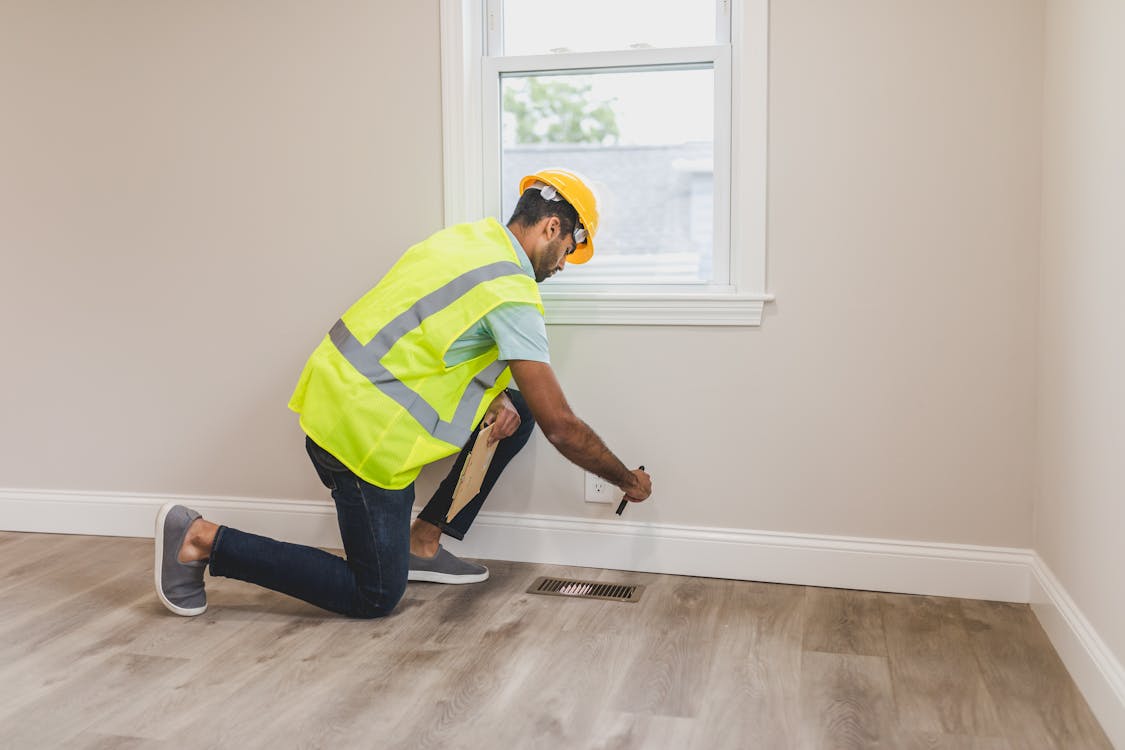
You’re pulling up old lino in the kitchen. The crowbar catches the edge of a sheet underneath and it cracks, sending a puff of dust into the air. That dust might contain asbestos. And if it does, you’ve just created a health risk that could follow you for decades.
This is not a scare story. Roughly one in three Australian homes built before 1990 contains asbestos in some form. The Asbestos Safety and Eradication Agency (ASEA) estimates that between 6.1 and 7.5 million tonnes of asbestos-containing material remains in Australia’s built environment. If you own an older home and you’re planning a renovation, you need to know where asbestos hides, what your legal obligations are, and how to protect yourself and your family.
This guide covers asbestos identification, testing costs, state-by-state removal rules, how to find a licensed removalist, and what to do if you accidentally disturb it during a home renovation.
What Is Asbestos and Why Is It in Australian Homes?
Australia was one of the highest per-capita users of asbestos in the world. Between the 1940s and the mid-1980s, manufacturers mixed asbestos into more than 3,000 different building products. It went into cement sheeting, roofing, insulation, floor tiles, pipe lagging, and even textured paint coatings. The mineral was cheap, fire-resistant, and thermally efficient.
States began banning the most dangerous forms (blue and brown asbestos) in the mid-1980s. A total national ban covering all forms of asbestos, including chrysotile (white asbestos), came into effect on 31 December 2003.
That timeline matters. If your home was built:
- Before 1987: It almost certainly contains asbestos somewhere.
- Between 1987 and 1990: There is a good chance asbestos products were used.
- After 1990: Unlikely, though not impossible, especially in renovations done before 2003.
The health consequences of asbestos exposure are severe. Approximately 4,000 Australians die from asbestos-related diseases each year. The Australian Institute of Health and Welfare recorded 684 mesothelioma cases diagnosed in 2024 alone, with an estimated 898 new cases projected for 2025. Mesothelioma develops between 20 and 60 years after exposure. There is no safe level of asbestos fibre inhalation.
Where Asbestos Hides in Your Home
Asbestos-containing materials (ACMs) were used throughout residential construction. Here are the most common locations, room by room:
Exterior:
- Cement sheet cladding and weatherboards (often called “fibro”)
- Corrugated roofing sheets
- Eaves, soffits, and fascia boards
- Fencing (flat cement sheet fences were extremely common)
- Guttering and downpipes
- Carport and garage roofing
Wet areas (kitchen, bathroom, laundry):
- Cement sheet wall linings behind tiles
- Vinyl floor tiles and the adhesive underneath
- Splashbacks
- Water-resistant sheeting around showers and baths
Interior:
- Textured ceiling coatings and stipple patterns
- Backing boards behind electrical switchboards
- Insulation around hot water pipes and heating ducts
- Internal wall sheeting (particularly in fibro homes)
- Carpet and vinyl underlay
Roof space and subfloor:
- Loose-fill insulation (the most dangerous form, common in ACT and parts of NSW)
- Thermal insulation around flues and pipes
- Dust accumulated from deteriorating ACMs above
Look for brand names that indicate asbestos content: Fibro, Durabestos, Tilux, Hardiflex (pre-1980s versions), Super Six, and Tasbestos. If you see any of these names stamped on sheeting or products, treat the material as asbestos until proven otherwise.
How to Identify Asbestos Before You Renovate
Here is the hard truth: you cannot reliably identify asbestos by looking at it. Cement sheeting with asbestos looks identical to modern fibre cement. Vinyl tiles with asbestos look the same as those without. The only way to confirm whether a material contains asbestos is laboratory testing.
The age test
Start with the age of your home. If it was built or renovated before 1990, assume that any cement sheeting, vinyl tiles, insulation, or textured coatings contain asbestos until a professional confirms otherwise.
Professional testing
A NATA-accredited laboratory will analyse a sample for asbestos content. An occupational hygienist or licensed asbestos assessor can take samples safely. Here is what testing typically costs:
| Service | Typical Cost |
|---|---|
| Asbestos inspection (whole home) | $300 - $700 |
| Individual sample analysis | $40 - $140 per sample |
| Asbestos management plan | $500 - $1,500 |
| Air monitoring (during removal) | $300 - $800 per session |
Most inspections involve taking 5-15 samples from different materials around the property.
The building report gap
This catches many homeowners off guard: a standard pre-purchase building inspection does not test for asbestos. Building inspectors will note suspected ACMs if they spot obvious signs, but they do not take samples or provide laboratory confirmation. If you are buying an older home with plans to renovate, book a separate asbestos inspection before you commit to your renovation budget. Read more in our first home buyer’s guide to building inspections.
How Much Does Asbestos Removal Cost in Australia?
Removal costs depend on the type of asbestos, the quantity, accessibility, and your location. Here are typical 2026 price ranges:
| Job Type | Typical Cost Range |
|---|---|
| Small job (e.g. single bathroom wall, under 10m2) | $1,500 - $3,000 |
| Medium job (e.g. full room of cladding, 10-40m2) | $3,000 - $8,000 |
| Large job (e.g. whole-house re-clad, 100m2+) | $15,000 - $40,000 |
| Roof removal and replacement | $20,000 - $50,000+ |
| Fence removal (per panel) | $80 - $200 |
| Friable asbestos removal | 2x - 3x non-friable rates |
These figures are for non-friable (bonded) asbestos, which accounts for the vast majority of residential ACMs. Friable asbestos (loose, crumbly material that can be reduced to powder by hand) costs significantly more to remove because it requires Class A licensed removalists and more stringent containment.
For a detailed cost breakdown, see our full guide on asbestos removal costs in Australia.
Factor these costs into your renovation budget early. A kitchen renovation in a 1970s fibro home could add $3,000-$8,000 in asbestos removal before any actual renovation work begins. Knowing this upfront prevents nasty surprises. Our renovation project management guide covers how to plan for these hidden costs.
State-by-State Asbestos Removal Rules
Asbestos removal laws vary across Australian states and territories. The biggest differences are around DIY limits and notification requirements.
Who needs a licence?
There are two licence classes for asbestos removal across Australia:
- Class A: Can remove all types of asbestos, including friable. Required for any friable asbestos regardless of quantity.
- Class B: Can remove non-friable (bonded) asbestos only. Required when the quantity exceeds 10 square metres in most jurisdictions.
State comparison table
| State | DIY Limit (Non-Friable) | Special Conditions | Regulator |
|---|---|---|---|
| NSW | Up to 10m2 | Must follow SafeWork NSW Code of Practice | SafeWork NSW |
| VIC | Up to 10m2 | Must complete within 1 hour per 7-day period | WorkSafe Victoria |
| QLD | Up to 10m2 | Homeowner’s Certificate available for residential DIY | Workplace Health and Safety QLD |
| WA | Up to 10m2 | Standard national model rules | WorkSafe WA |
| SA | Up to 10m2 | Standard national model rules | SafeWork SA |
| TAS | Up to 10m2 | Must follow Code of Practice | WorkSafe Tasmania |
| NT | Up to 10m2 | 5 days written notice to NT WorkSafe before licensed removal | NT WorkSafe |
| ACT | No DIY allowed | All removal requires a licensed removalist, no exceptions | WorkSafe ACT |
Key points:
- The ACT stands alone. No exemption exists for any quantity. If you live in Canberra, every piece of asbestos must be removed by a licensed removalist, full stop.
- Victoria adds a time restriction. Even for small amounts under 10m2, you must complete the removal within one hour per seven-day period.
- Queensland offers a Homeowner’s Certificate, which allows residential owner-occupiers to remove asbestos from their own home under specific conditions.
- All friable asbestos, in every state and territory, requires a Class A licensed removalist regardless of quantity.
To understand how licensing works for your specific state, check our builder licensing explainer or search for licensed tradespersons in your area.
Can You Renovate Without Removing Asbestos?
Not every piece of asbestos needs to come out. This is a common misconception that costs homeowners thousands of dollars unnecessarily. The rule is straightforward: asbestos that is in good condition and will not be disturbed is generally safe to leave in place.
When you can leave it
- The asbestos-containing material is intact, undamaged, and in good condition.
- Your renovation does not involve cutting, drilling, sanding, or breaking the material.
- The material is in an area that will not be subject to wear, weathering, or impact.
- You are painting over or cladding over a surface without disturbing what is underneath.
In these cases, you may be able to encapsulate the material instead. Encapsulation involves sealing the surface with a specialised coating that binds loose fibres and prevents them from becoming airborne. This is cheaper than removal and avoids the disposal challenges.
When removal is mandatory
- The material is damaged, crumbling, or deteriorating.
- Your renovation requires cutting into, drilling through, or demolishing the material.
- The material is friable (can be crumbled by hand when dry).
- You are demolishing part or all of the structure.
- The material is in a location where it will be disturbed by ongoing use.
If you are unsure, get a licensed asbestos assessor to inspect the material and provide a written recommendation. This assessment typically costs $300-$700 and could save you from an unnecessary $15,000 removal job.
For demolition projects specifically, see our guide on hiring a licensed demolition contractor, which covers the mandatory asbestos survey requirement before any demolition work begins.
How to Find a Licensed Asbestos Removalist
Hiring the wrong removalist can leave you exposed to both health risks and legal liability. Here is how to find the right one.
Check their licence class
Make sure the removalist holds the correct licence for your job. A Class B licence only covers non-friable asbestos. If there is any chance of friable material (common in insulation, pipe lagging, and loose-fill ceiling insulation), you need a Class A removalist.
You can verify a tradesperson’s licence through your state regulator, or search for licensed tradespersons on TradieVerify to check their credentials quickly.
Verify their insurance
Asbestos removal carries significant liability. Your removalist should hold:
- Public liability insurance (minimum $10 million for asbestos work)
- Workers compensation insurance for all employees on site
- Professional indemnity insurance (for assessors providing reports)
Ask for copies of their certificates of currency. Our guide on verifying a tradesperson’s insurance walks you through what to check and what the documents should look like.
Get multiple quotes
Get at least three written quotes. Each quote should include:
- Scope of work (exactly what is being removed)
- Licence number and class
- Containment and safety procedures
- Air monitoring arrangements
- Disposal method and destination
- Timeline and site access requirements
- Clearance inspection details
Be cautious of quotes that are significantly cheaper than others. Cutting corners on asbestos removal means cutting corners on safety. A removalist who skips proper containment or disposal can leave fibres in your home and contaminated waste in an unauthorised location.
For general advice on evaluating trade quotes, read our guide on getting quotes from tradies.
What about home insurance?
Here is something most homeowners do not realise: standard home insurance policies typically do not cover asbestos removal. Most policies exclude asbestos as a pre-existing condition. The exception is if asbestos removal is triggered by an insured event, such as storm damage to an asbestos roof. Even then, coverage varies between insurers. Check your policy wording before assuming your insurance will contribute to removal costs.
What to Do If You Accidentally Disturb Asbestos
You are pulling up old carpet and the material underneath cracks. Or you drill into a wall and notice fibrous dust. If you suspect you have disturbed asbestos, follow these steps immediately:
-
Stop work. Put down your tools. Do not sweep, vacuum, or try to clean up the dust. Household vacuums do not have HEPA filters and will spread fibres through the air.
-
Leave the area. Get everyone out of the room. Close the door behind you if possible.
-
Wet the area. If you can do so without disturbing the material further, lightly mist the area with water using a spray bottle. Wet fibres are less likely to become airborne.
-
Ventilate. Open windows and external doors to allow fresh air to flow through the affected area. Turn off any air conditioning or ducted heating systems that might circulate contaminated air through the house.
-
Decontaminate yourself. Remove your clothing carefully (do not shake it). Place clothing in a sealed plastic bag. Shower thoroughly, washing your hair and skin.
-
Do not re-enter the area. Seal the room if possible using plastic sheeting and tape over doorways.
-
Call a licensed removalist or assessor. They will assess the contamination, take air samples if needed, and advise on cleanup. This is not a DIY job once fibres are airborne.
-
Seek medical advice. Visit your GP and let them know you may have been exposed to asbestos fibres. Ask for a note to be placed on your medical file. While a single brief exposure is unlikely to cause illness, having the incident documented protects you if health issues arise years later.
A 2021 survey by Asbestos Awareness Australia found that 60.5 percent of DIY renovators reported potential asbestos exposure. More than half said their partners were also present during the exposure. Do not become part of that statistic.
Asbestos Disclosure When Selling Your Home
If you are selling a home that contains asbestos, or if you are buying one, disclosure obligations apply in every state and territory.
| State | Disclosure Requirement |
|---|---|
| ACT | Must provide asbestos assessment report with contract of sale if one exists; otherwise must provide ACT Government’s generic asbestos advice |
| NSW | Must disclose if property is on the Loose-Fill Asbestos Insulation Register; agents must disclose all known material facts |
| VIC | Since March 2020, vendor or agent must disclose all known material facts including asbestos |
| QLD | General obligation not to mislead or deceive; asbestos is a material fact |
| WA | General obligation under Australian Consumer Law |
| SA | General obligation not to mislead or deceive |
| TAS | General obligation under Australian Consumer Law |
| NT | General obligation not to mislead or deceive |
Penalties for non-disclosure can be severe. Knowingly concealing a material fact such as asbestos can attract fines of $19,000 or more and, in some jurisdictions, up to 12 months imprisonment. If you know your home contains asbestos, declare it. Trying to hide it creates far bigger problems than being upfront about it.
If you are buying an older home, do not rely on the vendor’s disclosure alone. Commission your own asbestos inspection before settlement, especially if you plan to renovate. Our building inspections guide explains how to arrange this as part of your due diligence.
Frequently Asked Questions
Can I renovate a house that has asbestos?
Yes, but you need to know where the asbestos is before you start. Get a professional asbestos inspection, then work with your builder and a licensed removalist to plan which materials need to be removed and which can safely remain in place. Never cut, drill, or sand any material you suspect contains asbestos.
Do I have to remove asbestos before renovating?
Only if the renovation involves disturbing the asbestos-containing material. If you are working in areas away from ACMs, or if the asbestos is in good condition and will not be touched, you may be able to leave it in place or encapsulate it. A licensed assessor can advise on the best approach for your specific situation.
How do I know if my home has asbestos?
If your home was built before 1990, it likely contains asbestos in some form. You cannot confirm this visually. The only reliable method is to have samples taken by a professional and analysed at a NATA-accredited laboratory. A whole-home asbestos inspection typically costs $300-$700.
Can I remove a small amount of asbestos myself?
In most states, homeowners can remove up to 10 square metres of non-friable (bonded) asbestos without a licence. The ACT is the exception, where all removal must be done by a licensed removalist. Even where DIY removal is legal, you must follow your state’s code of practice, use appropriate PPE (P2 respirator, disposable coveralls, gloves), wet the material before handling, and dispose of it at an approved facility.
Does home insurance cover asbestos removal?
Generally, no. Most standard home insurance policies exclude asbestos as a pre-existing condition. Coverage may apply if the removal is triggered by an insured event like storm damage. Check your specific policy wording and speak with your insurer before assuming coverage.
Where do I dispose of asbestos waste?
Asbestos waste must be taken to a licensed disposal facility. You cannot put it in your regular bin or take it to a standard tip. Your local council or state EPA can provide a list of approved disposal sites. Waste must be double-wrapped in heavy-duty plastic (200 micron minimum), sealed with tape, and clearly labelled “CAUTION: ASBESTOS”. In NSW, loads exceeding 100 kilograms must be tracked through the EPA’s WasteLocate system.
Key Takeaways
- One in three Australian homes built before 1990 contains asbestos. If yours is one of them, know what you are dealing with before you pick up a tool.
- You cannot identify asbestos by sight. Get a professional inspection and lab testing before any renovation on an older home.
- Standard building inspections do not test for asbestos. Book a separate asbestos inspection, especially if you are buying a home to renovate.
- Not all asbestos needs to be removed. If it is undamaged and will not be disturbed, encapsulation or leaving it in place may be the safer and cheaper option.
- DIY limits vary by state. Most states allow removal of up to 10m2 of non-friable asbestos, but the ACT allows none. Check your state’s rules.
- Factor removal costs into your renovation budget early. A typical removal adds $1,500-$8,000 to a renovation project.
- If you accidentally disturb it, stop immediately. Do not clean up. Wet the area, leave, and call a licensed professional.
Planning a renovation on an older Australian home? Search for licensed tradespersons in your area on TradieVerify to verify your builder’s and removalist’s credentials before work begins.
Sources
- Asbestos Safety and Eradication Agency, “Background on Asbestos in Australia,” asbestossafety.gov.au
- Asbestos Safety and Eradication Agency, “Summary of ACM Production in Australia,” products.asbestossafety.gov.au
- Australian Institute of Health and Welfare, “Mesothelioma in Australia 2024,” aihw.gov.au
- Safe Work Australia, “Model Code of Practice: How to Safely Remove Asbestos,” safeworkaustralia.gov.au
- SafeWork NSW, “Unlicensed Asbestos Removal,” asbestos.nsw.gov.au
- Asbestos Victoria, “Unlicensed Asbestos Removal,” asbestos.vic.gov.au
- WorkSafe ACT, “Asbestos Licensing,” worksafe.act.gov.au
- Asbestos Awareness Australia, “Home Renovations, DIY and Asbestos,” asbestosawareness.com.au